Hey everyone, let’s cut to the chase – if you run a large-scale poultry farm (think 10k+ birds, not your grandma’s backyard 20-chicken setup), you’ve probably spent way too many late nights stressing about predators, bird injuries, feed waste, or just keeping your flocks organized. As a poultry net supplier I’ve been in this game for 8 years now, talking to farm owners every single week, and one question pops up more than any other: is a poultry net actually worth it for big operations? Poultry Net

Spoiler: it’s not a one-size-fits-all answer, and I’ve seen it work miracles for some massive farms and flop for others. Let’s break this down with real on-farm stuff, not just the sales jargon I’d normally hold back for big meetings.
First, let’s talk about the big problem every large farm deals with: predators. For big operations, predators aren’t just a stray cat or a fox getting through a fence like it would for a small hobby farm. We’re talking about coyotes, raccoons, hawks, even bears in some states – and if one gets in at 2 a.m. when night shift is asleep, you could lose hundreds of birds in a single hour. I had a client in Iowa last year who’d lost 1800 layer hens in one night to coyotes because their old wooden fencing rotted out in spots; he switched to heavy-duty poultry netting after that and hasn’t had a single predation incident in 14 months. Wait, but hold on – not all netting is the same. The stuff he bought wasn’t that cheap lightweight plastic netting you hang for your garden; it was 50mm (2-inch) gauge knotted nylon, UV-stabilized so it doesn’t turn to mush in 6 months from sun exposure. That’s a key point I drill into large farm owners: cheap netting is a waste of money. Large-scale = constant use, so you need netting built to last, not just cheap enough for a side project.
Next up, bird welfare and productivity. I know, I know – most farm owners care more about keeping their flock alive and their eggs/meat output steady than “welfare trends,” but here’s the thing: stressed birds don’t lay eggs as well, and injured birds eat more feed for less gain. Large flocks get chaotic – birds peck each other, especially when they’re crowded, or fly over makeshift fences into areas they shouldn’t (like where the feed silo is, leading to feed waste or contamination). A properly installed poultry net acts like a physical boundary that’s just flexible enough to reduce pecking injuries without hurting the birds. My client in Georgia who raises broilers (meat chickens) told me that after switching to our netting, his feed conversion ratio (FCR) dropped by 8% – that’s huge when you’re feeding 50k birds at a time. Less pecking also means fewer carcass condemnations at processing, which is direct profit.
But wait, let’s not pretend it’s all perfect for large farms. The big knock on poultry netting for big operations is installation time and cost. If you have 10 acres of free-range land to cover, laying netting isn’t like putting up a fence for your tiny backyard. I’ve had farm owners tell me it took their team 3 days to set up netting for 5k birds, compared to a day for post-and-wire fencing. Also, initial cost: post-and-wire might seem cheaper upfront, but when you factor in maintenance (replacing posts every 3 years, patching wire every time a predator tangles it) vs. netting that lasts 8-10 years with minimal upkeep, netting actually comes out ahead long-term. Oh, and weather – if you live in a super windy area, you have to secure the netting properly with ground stakes every 10 feet, or it’ll blow away. I had a client in Texas try to skip that step during a spring thunderstorm, and his entire 12-acre net setup ended up spread across a cornfield. Lesson learned, but it’s not a “net is bad” problem – it’s an installation problem.
Another thing that’s super specific to large-scale: biosecurity. If you’re buying day-old chicks from a hatchery, you don’t want wild birds or rodents crossing into your flock’s area and bringing in diseases like avian influenza or salmonella. Poultry netting acts as a barrier there too, keeping wild fowl out and your confined flock safe. I had a client in Minnesota who had a minor avian flu scare a few years back; farms without proper netting in his area lost 20-30% of their flocks, but his net setup kept it out, so he only had to quarantine a small section, not the whole 25k-bird operation. That’s a lifesaver when you’re dealing with regulatory fines and lost revenue.
Wait, but what about operations that are totally enclosed in barns? Do they need poultry netting? For that, it depends on how they’re managing the flock. A lot of large barns use “range shelters” – open-sided buildings where birds go out during the day. A net perimeter around the range area keeps birds from wandering off and predators from sneaking in while they’re outside. If your barn is fully enclosed with no outdoor access, netting might not be as necessary, but even then, I’ve had barn owners use interior netting to section off sick birds temporarily, or separate different age groups to control growth rates. It’s versatile, not just for outdoor use.
Let’s get real about common mistakes I see large farm owners make with poultry netting. First, buying the wrong gauge netting. For big flocks, you need at least 50mm (2-inch) mesh – smaller mesh is for small backyard chickens, and bigger mesh lets small predators (like raccoons, which can fit through a 3-inch gap) get through. Second, not burying the edge of the netting. Coyotes and raccoons will dig under fencing, so burying the bottom 6 inches of netting 4-6 inches deep keeps them from burrowing under. Third, skipping the top line. Hawks and eagles are a huge problem for free-range flocks, especially in areas with lots of raptor activity. A lot of farm owners forget that regular fencing only keeps ground predators out, so adding a net over the top of the range area stops birds of prey from swooping in. I can’t tell you how many times I’ve heard someone say “hawks don’t bother my flock” until they lose 500 birds in a week because they didn’t have a top net.
Now, let’s talk about when poultry netting isn’t the right call for large farms. If your operation is fully indoor, zero-access, with a strict closed-flock policy and no outdoor range, netting is probably an unnecessary cost. Also, if you’re on extremely rocky or uneven ground where burying netting edges is impossible, you might need a different solution like electric fencing. But even then, I’ve had a farm in Colorado with super rocky terrain use weighted netting (we make weighted ground stakes that don’t need burying) and it worked way better than their old wire fence.
I’ve been doing this long enough that I’ve seen netting go from a niche product for small farms to a staple for large-scale operations. Just last quarter, I supplied netting to a 75k-bird layer farm in Ohio, and their manager told me that in the first 6 months, they saved over $120k in predator losses, feed waste, and processing condemnations. That’s not a small number – that’s like a whole new set of barn equipment for a year.
Here’s the thing I want all large farm owners to remember: when you’re running a big operation, every little thing that reduces risk boosts profit. Poultry netting isn’t a silver bullet, but it’s way more than just a “net to keep chickens in.” It’s a tool that solves multiple problems at once: predator control, bird safety, feed waste, biosecurity. The key is choosing the right type, installing it correctly, and not cutting corners on quality.
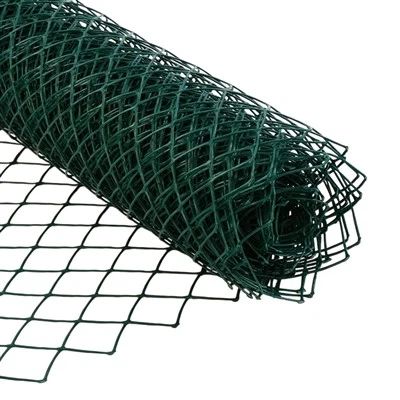
If you’re a large-scale poultry farm owner and you’re tired of dealing with predation, wasted feed, or flock stress, don’t guess what works – reach out to us to chat through your specific setup. We don’t do one-size-fits-all quotes; we’ll walk through your farm size, predator types, climate, and flock type to help you figure out if poultry netting is right for you, and what kind will work best. No hard sales pitches, just real advice from someone who’s worked with hundreds of farms just like yours.
Plastic White Garden Fence References:
- North American Association of Poultry Industry, 2022. "Predation Losses in Large-Scale Poultry Operations"
- Journal of Applied Poultry Research, 2021. "Impact of Physical Barriers on Broiler Welfare and Productivity"
- USDA Agricultural Research Service, 2023. "Biosecurity Barriers for Commercial Poultry Flocks"
- University Extension Poultry Science Department, 2022. "Best Practices for Installing Poultry Netting in Free-Range Systems"
Shaoxing Yongte Plastics Co., Ltd.
We are one of the most reliable poultry net manufacturers and suppliers in China, specialized in providing high quality customized products. We warmly welcome you to wholesale discount poultry net for sale here from our factory. Contact us for pricelist and free sample.
Address: INDUSTRIAL PARK, LIZHU TOWN, KEQIAO DISTRICT, SHAOXING CITY, ZHEJIANG PROVINCE
E-mail: support@sxxyongte.com.cn
WebSite: https://www.fenceplastic.com/
