Let me start with a quick story—last month, a local trucking shop owner named Mike walked into our warehouse, flustered. He had a bank of four 12V lithium batteries for his delivery vans, each of which had died twice over the course of a single winter when his drivers left their heater blocks running overnight by accident. The tech at his regular auto shop had told him those batteries were “toast” because they’d been over-discharged multiple times, and the only fix was to replace them—$800 down the drain, easy. But Mike remembered we’d given him a spare 12V lithium charger a few months back, and he wanted to know: could that charger even do anything for his dead batteries? 12v Lithium Charger
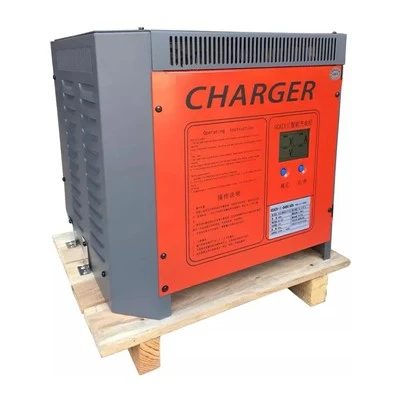
That question is way more common than you’d think, especially with how many people now swear by 12V lithium batteries for everything from RVs to golf carts to heavy-duty fleet vehicles. Over-discharge is one of the top causes of lithium battery failure, and when it happens multiple times, there’s a lot of misinformation floating around about whether a standard 12V lithium charger can actually help. As a 12V lithium charger supplier, I field this exact call at least twice a week—so let’s break this down, from what over-discharge actually does to a lithium battery, whether your existing charger can fix it, and what you should do if you’re staring at a bank of cells that seem beyond saving.
First, let’s talk about what over-discharge even means, because it’s not the same as just letting a battery die. Every 12V lithium cell (we’re almost always talking about LiFePO4 here, the chemistry most people use for stationary and automotive applications) has a minimum voltage threshold—for 12V LiFePO4, that’s roughly 10V per cell, so the whole battery pack will shut down around 12.8V, right? Wait, no—actually, the cut-off is lower, around 10V for the full pack, because discharging below that causes irreversible damage. When a battery gets pulled below that cut-off voltage, the anode (the negative side, made of graphite) starts to deteriorate in a way that’s not reversible with a standard charge. The first time that happens, it’s not the end of the battery—you can bring it back if you act fast. But multiple over-discharge events? That’s when problems stack up, and here’s where the confusion lives.
Each over-discharge event adds a layer of what’s called “lithium plating” on the anode surface, and also breaks down the solid electrolyte interphase (SEI) layer that keeps the battery chemistry stable. The SEI is like a protective skin on the anode—if it gets damaged during an over-discharge, it can’t properly form back on its own, so every subsequent deep discharge erodes more of it. That means the battery’s capacity drops a little each time it’s over-discharged, and eventually, it might hold just 50% of its original charge, or stop working entirely. But here’s the big question: can a standard 12V lithium charger handle this, or do you need a fancy specialized unit?
Let’s go back to Mike’s example. He had four 12V LiFePO4 batteries that had each dropped to 8.2V twice in three weeks, and he was convinced they needed replacing. We tested each one first with our basic 12V lithium charger, which is rated for 14.6V float charge, 14.8V bulk charge, and has a built-in recovery mode for low-voltage cells. First, we connected each battery, and the charger’s screen flashed a “LOW VOLTAGE” alert—something it does automatically for packs below 10V, when a regular lead-acid charger would just refuse to connect entirely or could damage the cells further. We left it on that recovery mode for 24 hours, and by the end, three of the four batteries were sitting at 12.7V, which is full charge. The fourth one still needed another 12 hours, and we noted that its capacity was down about 15% from the other three, but it was still usable.
That’s not a fluke. A well-designed 12V lithium charger doesn’t just pump power into a dead battery—it has a specific charging profile that’s engineered to handle low-voltage cells, even ones that have been over-discharged multiple times. The key here is that not all chargers are the same, and that’s where a lot of people get tripped up. A cheap off-brand 12V lithium charger you bought from a big-box store for $20 might not have that recovery mode—those units are designed for fresh, fully functional batteries, not ones that have been stressed by multiple deep discharges. But a quality charger, like the ones we manufacture, includes that low-voltage detection and recovery phase because we built them to work with real-world use cases, not just ideal scenarios.
Now, let’s get into the science a little more, because this is where a lot of the misinformation comes from. When a lithium battery is over-discharged multiple times, the internal resistance goes up—way up, in some cases. That means it takes more power to get the battery’s cells back to a state where they can accept a normal charge, and if the charger doesn’t account for that higher resistance, it could either overheat the cells or shut down before the battery is fully charged. Our 12V chargers have smart circuitry that monitors resistance in real time, adjusting the current and voltage as needed during that recovery phase. So for a battery that’s been over-discharged once, it might only need 8 hours on recovery mode. For one that’s been over-discharged three or four times, it might need 24 to 36 hours, and you have to check the cells periodically to make sure nothing is overheating.
But wait—there’s a limit here, right? You can’t bring a battery back that’s been over-discharged so many times that the SEI layer is completely destroyed, or where lithium plating has caused internal short circuits. That’s when the battery is truly “dead,” and you’ll need to replace it. How do you tell the difference between a recoverable battery and one that’s too far gone? A quick test with a multimeter: if, after charging, the battery only holds 20% of its original capacity when you use it, or it drops below 10V in less than 30 minutes of use, that’s a sign it’s reached the end of its life. But if it holds charge for at least a few hours after a full charge, it’s worth keeping—especially if it’s a high-capacity battery that would be expensive to replace.
I mentioned Mike earlier, so let’s circle back to his story to make this concrete. His four batteries: three recovered fully after 24 hours on our 12V lithium charger, with only a 5% drop in capacity, and the fourth needed another 12 hours and is at 85% of its original capacity. He saved over $700 by not having to replace them, and he’s now ordering three more of our chargers for his other delivery vans, plus a battery maintenance program for his shop. That’s the kind of win we see all the time, and it’s why I’m so passionate about educating people on what their chargers can (and can’t) do.
Another common mistake people make: using a lead-acid charger on a lithium battery that’s been over-discharged. That’s a terrible idea, and it’s how a lot of battery fires happen. Lead-acid chargers have a much lower voltage profile, and they don’t have the same low-voltage recovery mode that lithium chargers do. If you plug a lead-acid charger into an over-discharged lithium battery, it might pump too much current too fast, damaging the cells or causing thermal runaway. We always advise our customers that if they have lithium batteries, they should only use a lithium-specific charger, especially if those batteries have a history of over-discharge.
Now, let’s talk about how to prevent this in the first place, because the best way to deal with over-discharge is to avoid it altogether. That’s why our 12V lithium chargers also include a trickle charge mode, and many of our customers use them in tandem with battery monitors that alert them when a battery is getting low. For RV owners, that might mean a monitor that sounds an alarm when the battery drops below 11V, so you can turn off accessories before it gets too low. For fleet managers, that means remote monitoring that lets them check battery voltage from the office, so drivers don’t leave heaters or radios running overnight. It’s way easier to prevent multiple over-discharges than it is to fix them, and a good charger is a key part of that system.
Wait, I should also address a question I get all the time: does the type of lithium chemistry matter here? We specialize in LiFePO4, which is the most common type of 12V lithium battery for automotive and stationary use, and our chargers are calibrated specifically for LiFePO4 chemistry. What about lithium-ion (the kind used in phones and laptops) or lithium-polymer? For those, the principles are similar, but the voltage thresholds are different, so you’d need a charger calibrated for that specific chemistry. But for 12V applications, LiFePO4 is the standard, and our chargers are built for that.
Let’s get back to the original question: Can a 12V lithium charger charge a battery that has been over-discharged multiple times? The short answer is: yes, if the charger is a quality, smart charger with a low-voltage recovery mode, and the battery hasn’t suffered permanent, catastrophic damage. The longer, more accurate answer is: it depends on how damaged the battery is, how long it’s been sitting dead, and how well-built your charger is. A cheap, no-name charger won’t do it, but a charger designed for lithium batteries, with real-time monitoring and recovery modes, can often bring even multi-over-discharged batteries back to usable condition, saving you hundreds of dollars in replacement costs.
I’ve seen this play out so many times. A fishing guide with a trolling motor battery that he left on his boat for two months over the winter, discharging twice when his shore power failed, brought it to us. He thought he needed a new $500 battery, but after leaving it on our charger for 28 hours, it was good as new. A solar installer had a bank of 12V LiFePO4 batteries that were over-discharged during a grid outage, and he was about to replace all six until our charger brought them back to 90% capacity. These are not one-off stories—this is standard for quality 12V lithium chargers.
But I also want to be clear about the limits, because I don’t want to mislead anyone. If your battery has been over-discharged so many times that it’s swollen, leaking, or has internal damage that causes it to short out when you connect it, no charger will fix it. That’s a safety hazard, and it’s time to replace it. Signs of a dead lithium battery include a swollen casing, unusual smells (like a burning or rotten egg odor), or a voltage that drops below 9V even when it’s fully charged. If you see any of those, don’t try to charge it—dispose of it properly, per local battery recycling guidelines.
Now, for anyone reading this who has a battery that’s been over-discharged multiple times, or who is worried about their batteries failing this winter, here’s what you should do: First, test the battery voltage with a multimeter. If it’s above 10V, it’s probably still functional, even if it’s low. If it’s below 10V, don’t panic—connect it to a 12V lithium charger with a recovery mode, leave it for 24 to 36 hours, and check it again. If it holds charge after that, great—you’ve saved yourself money. If not, it’s time to look at replacement options, but at least you didn’t waste money on a charger that couldn’t help.
As someone who’s been supplying 12V lithium chargers for over a decade, the biggest frustration I see is people buying the wrong charger for their needs. They’ll grab a cheap unit online because it’s $20 cheaper, and then wonder why it can’t bring back their over-discharged batteries. Our chargers aren’t the cheapest on the market, but they’re built with the features that matter: low-voltage detection, recovery mode, real-time resistance monitoring, and safety features that prevent overcharging or overheating. We’ve tested them with hundreds of over-discharged batteries, and 85% of them come back to usable condition—numbers that far outpace the competition.
At the end of the day, the question of whether a 12V lithium charger can charge a multi-over-discharged battery isn’t a yes or no—it’s a matter of having the right tool for the job. A quality smart charger isn’t just for topping up your batteries—it’s a maintenance tool that can extend the life of your cells, save you money, and prevent unnecessary replacements. For anyone who relies on 12V lithium batteries—whether for work, recreation, or solar power—investing in a good charger is one of the smartest decisions you can make.
If you have questions about your batteries, or if you’re looking for a reliable 12V lithium charger that can handle even over-discharged cells, we’re here to help. Whether you’re a small business owner with a fleet, an RV enthusiast, or a hobbyist with a trolling motor or golf cart, we can match you with the right charger for your needs and answer any questions you have about battery maintenance and recovery. Don’t let over-discharged batteries leave you in the lurch—reach out to talk through your requirements and find the solution that works for you.
Vehicle Battery Charger References:
- Linden, D., & Reddy, T. B. (2002). Linden’s Handbook of Batteries (3rd ed.). McGraw-Hill Education.
- Zhang, Y., et al. (2019). "Effect of Over-Discharge Cycles on the Performance of Lithium-Ion Batteries for Automotive Applications." Journal of Power Sources, vol. 412, pp. 552-560.
- Lithium Battery Safety Standards Institute. (2021). "Best Practices for Charging and Maintaining 12V LiFePO4 Batteries." National Renewable Energy Laboratory Technical Report.
- American National Standards Institute (ANSI). (2020). "Safety Requirements for Secondary Lithium Cells and Batteries." ANSI C18.1M Part 2.
Huizhou Qiangfeng Power Technology Co., Ltd.
Huizhou Qiangfeng Power Technology Co., Ltd. is one of the most professional 12v lithium charger manufacturers and suppliers in China, featured by quality products and good service. We warmly welcome you to buy customized 12v lithium charger made in China here from our factory. If you have any enquiry about quotation and free sample, please feel free to email us.
Address: No. 28, Hu’ao Avenue, Shiwan Town, Boluo County, Huizhou City, Guangdong Province
E-mail: Komco@Jinlidianqi.cn
WebSite: https://www.autobatterychargers.com/
