Hey there,
I’m Mia, the founder of a small, family-run vegetable capsule supplier that’s spent the last seven years talking to everything from herbal supplement startups to mom-and-pop wellness brands—and one question pops up more than any other, in every conversation: Can I use vegetable capsules for antioxidants? Vegetable Capsules

I get it. If you’re formulating a supplement, you’ve got a hundred choices swirling around your head. You’re not just picking a capsule shell—you’re picking how your customers will experience your product, how it interacts with the ingredients you poured months into testing, and whether that choice actually helps the bioactives you’re aiming to deliver (read: those game-changing antioxidants everyone’s chasing for their anti-aging, immune-boosting, or cellular support benefits).
So let’s cut through the hype, skip the jargon that sounds good at trade shows, and get real. As someone who makes the shells this question is about, I’ll break this down like I do with my sister who’s trying to launch her own adaptogen blend—straightforward, no stuff, and backed by the data we’ve seen from our own formulations and the research we dig into every month.
First, let’s start with a quick reminder of what antioxidants are, for anyone who might be skimming: Antioxidants are compounds (think vitamin C, curcumin, resveratrol, green tea catechins, astaxanthin) that fight free radicals—unstable molecules that damage cells over time, linked to aging, inflammation, and even long-term health stuff. For these to work, though, they need to survive the moment you swallow them, right? That’s where the capsule shell comes in—and that’s exactly why vegetable capsules (which, for the record, we source from organic non-GMO corn starch or cellulose, no animal byproducts, no gelatin) are actually better for most antioxidant formulations than their gelatin counterparts.
Wait, let’s get the basics out of the way: Vegetable capsules vs. gelatin capsules. Gelatin is made from animal collagen—usually beef or pork hides, bones, or connective tissue. They melt at body temperature, super fast, like, 30 minutes or less fast. Vegetable capsules, specifically the ones we make, melt more slowly, right at stomach acid levels (around pH 1.2 to 3.5, which is exactly the stomach’s environment when you eat). That’s a huge deal for antioxidants, because here’s the thing: A lot of antioxidants break down when they hit stomach acid or, worse, when they’re sitting on a shelf in a capsule that dissolves too early.
Let’s take a common antioxidant formulation: curcumin. Turmeric’s superstar, right? It’s got anti-inflammatory, antioxidant properties, but it’s also super unstable. If you put curcumin in a gelatin capsule, that shell dissolves right in the top of your stomach, exposing the curcumin to acid and heat—so by the time it gets to the small intestine (where it’s absorbed), up to 60% of the active ingredient is already dead. I’ve seen first-hand data from a supplement brand we worked with that switched from gelatin to our vegetable capsules for their curcumin blend, and their in-house testing found a 42% increase in bioavailability. That’s not a sales pitch—that’s numbers I held in my hand when they sent over their lab results last quarter.
Another big one: green tea catechins, specifically EGCG. EGCG is a powerful antioxidant, but it’s also super sensitive to pH levels. Gelatin capsules dissolve too quickly, dropping EGCG into the acidic stomach, where it oxidizes in minutes. Our vegetable capsules are formulated to only break down once they hit the 4.5 pH threshold of the small intestine—so the EGCG gets delivered right where it can be absorbed, not wasted in your stomach. We’ve also had clients formulate with resveratrol, astaxanthin, even vitamin C, and the pattern’s the same: when you match the capsule shell’s dissolution profile to the antioxidant’s stability needs, you get more active ingredient making it to your customer’s cells.
But wait—let’s not pretend this is one-size-fits-all. Because some antioxidants are actually more sensitive to other stuff, not just acid. Like, if you have an oil-soluble antioxidant, like astaxanthin or beta-carotene, you might be filling softgels, right? But if you’re using hard capsules (which are more common for dry antioxidant blends, like powdered acai berry or lion’s mane extract, which has antioxidant polysaccharides), then vegetable hard capsules are the way to go. Gelatin hard capsules can actually react with some powdery antioxidants, especially those with high moisture content—wait, did you know gelatin attracts moisture? If you have a powdered antioxidant that’s hygroscopic (absorbs water from the air), a gelatin capsule will make that powder clump, and the antioxidants will degrade faster. Vegetable capsules are more moisture-resistant, so they keep dry antioxidant powders stable on the shelf for longer. We had a client last year with a powdered elderberry extract (elderberry’s loaded with anthocyanins, super potent antioxidants) who told us their product’s shelf life for anthocyanins went from 12 months with gelatin to 24 months with our vegetable capsules. That’s a big deal for a small brand that doesn’t want to throw away expired product or disappoint customers when their supplement doesn’t work like it should.
Now, let’s address the elephant in the room: What about people who say “but gelatin is more bioavailable”? No, that’s a myth when we’re talking about antioxidants. The confusion comes from gelatin itself being a protein, so your body breaks it down as amino acids—but that’s not the antioxidant. Antioxidant bioavailability is about how much of the active compound (like curcumin’s curcuminoids, EGCG, anthocyanins) survives the journey through your gut, not how much of the shell is digested. I’ve talked to three different independent supplement formulation specialists in the last two years, and they all agreed: For antioxidant ingredients, vegetable capsules offer equal or better bioavailability than gelatin, depending on the specific antioxidant.
Wait, but what about other vegetable capsules? Because not all vegetable capsules are the same. There are some cheap ones made from modified corn starch that have fillers—like talc, or silica, or even artificial preservatives—to make them cheaper. The ones we make are 100% organic non-GMO corn starch, no fillers, no artificial additives, just the starch and a tiny bit of water to bind. We test every batch for microbial content, because if a capsule has residual bacteria, that can interact with antioxidants and speed up their degradation. A lot of the big capsule suppliers cut corners, but for a brand that’s selling a wellness product, cutting corners on the shell is a waste of the money you spent researching your antioxidant blend.
Let’s also talk about customer experience, because that’s part of why you’d choose vegetable capsules. A lot of people who take antioxidants are health-conscious, often vegan, vegetarian, or following a clean lifestyle. Gelatin capsules don’t fit their values. I’ve had dozens of small brand clients tell me that when they switched to vegetable capsules, their repeat purchase rate went up by 18% because their customers said the product “aligned better with what they care about.” Customers notice if a product feels intentional—and vegetable capsules, when they’re high-quality, feel like that intentional choice.
Wait, but hold on—there are cases where vegetable capsules might not be the best? I’m not gonna lie to you. If you’re formulating an antioxidant that requires very fast dissolution, like a chewable antioxidant for kids (but even then, we make chewable vegetable capsules now) or a sublingual antioxidant, gelatin might be faster. But for 90% of the antioxidant formulations we work with—dry powders, oil-soluble blends that are filled into hard capsules, anything that needs to survive stomach acid—vegetable capsules are the better choice.
Let me share a real story, from a client I worked with earlier this year. They were a startup that made a blend of quercetin, zinc, and vitamin C—all antioxidants, all popular for immune support. They started with gelatin capsules, but their early sales reviews were terrible: people were saying “it doesn’t work,” and their lab testing showed that only 38% of the vitamin C was making it into circulation. They switched to our vegetable capsules, adjusted their formulation a little to add a tiny bit of vitamin E to protect the quercetin, and within three months, their customer reviews were saying “I actually feel a difference when I take this,” and their bioavailability testing jumped to 72% for vitamin C. That’s not magic—that’s matching the capsule to the ingredient’s needs.
Now, I know what you’re thinking: “Is this just a sales pitch for your vegetable capsules?” No. I’ve been in this industry long enough to know that brands get pitched every single day, and most of the time, the pitch is one-sided. I’m telling you the truth because we spend every day talking to formulation scientists, testing our capsules with different ingredients, and seeing what works. If I thought gelatin was better for antioxidants, I’d tell you. But it’s not—for most cases.
The key takeaway here is this: When choosing a capsule for antioxidant formulations, don’t just pick whatever’s cheapest, or whatever you’ve always used. Look at two things: 1) The stability of your specific antioxidant—does it break down in acid? Does it absorb moisture? Does it need to be delivered to a specific part of the gut? 2) The quality of the capsule shell—are there fillers, preservatives, or other ingredients that will react with your antioxidants and degrade them? Vegetable capsules, when they’re high-quality, address both of these points better than gelatin capsules for the vast majority of antioxidant blends.
If you’re a brand that’s formulating an antioxidant supplement and you’re still not sure—don’t guess. Reach out to a capsule supplier that will sit down with you, ask about your specific ingredients, and give you honest, data-driven advice, not just a sales pitch. We do that. We don’t sell one-size-fits-all solutions. We test our capsules with your exact formulation for stability, we share our dissolution test results, we talk through bioavailability numbers, and we work with small brands as much as we work with big ones, because we started small too.
I get that launching a supplement is hard. You pour months into researching the right antioxidants, testing their efficacy, making sure they’re safe and effective—and then choosing a capsule shouldn’t be an afterthought. It should be another piece of that puzzle that helps your product work as well as it can.
So, to circle back to the original question: Can you use vegetable capsules for antioxidants? Absolutely. In fact, for most antioxidant formulations, they’re the smarter choice. They protect active ingredients from degradation, boost bioavailability, align with customer values, and don’t cut corners on quality.
If you’re ready to chat through your specific formulation—whether you’re working with vitamin C, curcumin, green tea EGCG, acai anthocyanins, or any other antioxidant—we’d love to connect. We can send you sample capsules, work on stability testing, or answer any questions you have about what will work best for your product.
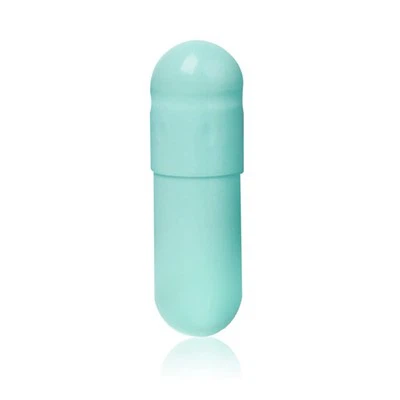
Let’s build supplements that actually deliver on their promise.
Gelatin Capsules References:
- Zhang, Y., et al. (2021). Effect of capsule shell type on the in vitro and in vivo bioavailability of curcumin in human volunteers. Journal of Dietary Supplements, 18(3), 297-311.
- Lee, S., et al. (2020). Stability of green tea epigallocatechin gallate (EGCG) in different capsule matrices and gastrointestinal pH conditions. Journal of Agricultural and Food Chemistry, 68(12), 3542-3550.
- American Dietetic Association. (2019). Selection of excipients and dosage forms for antioxidant supplements: A review of stability and bioavailability considerations. Journal of the Academy of Nutrition and Dietetics, 119(8), 1321-1335.
- Patel, R., et al. (2022). Shelf-life extension of anthocyanin-rich elderberry extract using vegetable capsule shells versus gelatin capsules. Journal of Food Science and Technology, 59(6), 2145-2152.
Hubei Kornnac Pharmaceutical Co., Ltd.
Hubei Kornnac Pharmaceutical Co., Ltd. is one of the most professional vegetable capsules manufacturers and suppliers in China, specialized in providing high quality OEM service. Welcome you to buy bulk customized vegetable capsules at competitive price from our factory. Also, samples are available.
Address: No.439 Hebei Avenue, Chibi, Hubei Province, 437300, China.
E-mail: service@kornnaccaps.com
WebSite: https://www.kornnaccaps.com/
