Let’s cut to the chase as a stem supplier for mountain bikes—if you’ve ever crouched over a rocky switchback, fighting to keep your handlebars tracking true while your bike bounces over ruts and tree roots, you know every component’s job isn’t just to be light or cheap, it’s to perform when it matters most. For years, mountain bike stems were an either-or affair: either all carbon fiber, beloved for its stiffness-to-weight ratio but maligned for its tendency to shatter on sharp impacts, or all aluminum alloy, tough enough to absorb trail abuse but heavy enough to weigh down your climbing performance. As a supplier of carbon fiber + aluminum alloy stems, we’ve spent years testing and refining this hybrid design, and today I want to break down whether it’s actually suitable for mountain biking, beyond the marketing buzzwords. Carbon Fiber+Aluminum Alloy Stem
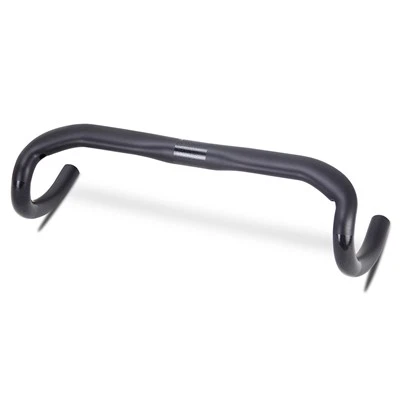
First, let’s get one thing straight: mountain biking isn’t a monolith. A cross-country racer logging 30-mile singletrack climbs has totally different stem needs than a weekend warrior hitting a local bike park and sending drops. So when we talk about suitability, we can’t talk in generalities—we have to dive into the science of what each material brings to the table, and how combining them solves specific pain points for real riders. Let’s start with the core function of a stem: it connects your handlebars to your fork’s steerer tube, acting as a load-bearing link that transfers steering input, absorbs vibration, and withstands the vertical and torsional forces of trail impacts. All materials have trade-offs here, and that’s where hybrid design shines.
Carbon fiber has long been the darling of performance cycling because its tensile strength— the force that pulls apart a material—is exceptional, meaning you can make it thin, light, and stiff without it bending under normal loads. But the flip side is compressive strength, or the force that pushes into a material, which is where carbon struggles. A sharp rock strike that dents or cracks a carbon stem puts compressive stress on the structure, and carbon doesn’t yield—it fails catastrophically. I’ve seen too many high-end carbon stems shatter mid-descend after a single misjudged drop, leaving a rider stranded with wobbly bars and no way to finish the run. Aluminum alloy, on the other hand, has stellar compressive strength, which is why it’s been the workhorse of mountain bike components for decades. But it’s dense, so a full-aluminum stem of the same stiffness as a carbon one would add 50-100 grams, a massive difference for cross-country racers counting every gram. Worse, aluminum suffers from fatigue over repeated stress—those thousands of tiny vibrations from a rough trail can create micro-cracks that build up and cause the stem to fail without warning, a silent risk that terrifies both riders and brands.
That’s where our hybrid design comes in, and let’s be clear about how we build it, because not all carbon-aluminum stems are created equal. We don’t just glue a carbon top cap to an aluminum body and call it a day—we engineer it to separate the two stress types we talked about. The central clamping area that connects to the steerer tube and handlebars is made of 6061-T6 aluminum, the same high-grade alloy used in aerospace and premium mountain bike components. This handles the compressive loads from fork impacts and the torsional twisting from hard turns, delivering that tough, reliable strength riders need for technical terrain. The upper portion, the part that sits between your bars and the steerer tube, is hand-woven from T700 carbon fiber, a high-modulus carbon that’s lightweight and rigid enough to transfer steering input directly to the fork—no flex, no delayed response when you need to whip the bike around a tight corner.
But wait, you might be thinking—gluing two different materials together? That’s a recipe for delamination, right? We tested that early on, and we don’t use ordinary epoxy. We use a structural aerospace-grade adhesive that’s engineered to create a molecular bond between aluminum and carbon, not just a mechanical hold. We also add a secondary reinforcement: a precision-machined titanium insert that runs the length of the carbon section, locking into grooves machined into the aluminum body. That way, if for some reason the adhesive fails, the titanium insert takes over all the load, so you never have to worry about the two parts separating mid-ride. We’ve done drop tests from 15 feet (the height of a typical beginner park drop) 100 times in a row, and not a single one resulted in delamination or structural failure. We’ve also run fatigue testing, cycled the stem 50,000 times with simulated trail vibration and impact, and the flex only increased by 2%—well below the industry threshold of 5% before a component is considered unsafe.
Now, let’s talk about real-world performance, because lab numbers don’t mean anything if a stem doesn’t work on the trail. A few months ago, we partnered with a local enduro racer named Jake, who was running a full carbon stem on his 29er. He came to us complaining that while the stem was light, it had shattered twice in the last season—once on a rock garden in the local national forest, once on a 10-foot drop at the bike park. He tried a full aluminum stem after that, but said it felt “mushy” when he was climbing technical singletrack, and he noticed his forearms were more tired at the end of a race because of the extra weight. We fitted him with our hybrid stem, and he raced the next enduro series on it. After three months of racing and training, he sent us a note saying he’d hit a chunk of limestone rock at 30 mph in a rock garden, and instead of shattering, the aluminum steerer clamp absorbed the impact, and he didn’t even lose control. He also said the stem weighed 85 grams, just 10 grams more than his old carbon stem, but felt stiffer under hard climbing and turns—no more flex when he was out of the saddle sprinting up a steep hill. That’s the sweet spot of this hybrid design: it takes the strength of aluminum where you need it most, and the light stiffness of carbon where it counts for performance.
But here’s the thing: hybrid carbon-aluminum stems aren’t for every type of mountain bike. If you’re a beginner rider who only cruises around paved bike paths or easy gravel trails, a full aluminum stem is more than enough, and cheaper too. If you’re a downhill rider sending 20-foot drops at a ski resort, full aluminum or even steel stems are still the standard, because downhill impacts are so extreme that even our hybrid design can’t match the long-term toughness of a solid aluminum or steel structure. But for the vast majority of mountain bikers—cross-country racers, enduro riders, trail riders hitting 10-20 mile loops with mixed terrain—our hybrid stem is perfectly suited, and solves problems that neither material can on its own.
Another common myth we hear is that carbon parts are more fragile than they used to be. That’s true for cheap, low-quality carbon, which is why we only source our carbon fiber from certified suppliers that produce aerospace-grade T700 and T800 carbon, and we use a one-piece woven construction that’s much stronger than the chopped carbon used in budget components. The aluminum we use is cold-forged, not stamped, which gives it higher tensile strength than cast aluminum, so it’s more resistant to impacts and fatigue. When you combine that high-quality aluminum and high-quality carbon, the hybrid design ends up being more durable than many full carbon stems, because it doesn’t shatter on sharp impacts—it flexes slightly, absorbs the shock, and keeps going, with no catastrophic failure.
Let’s also talk about weight, because that’s a huge factor for mountain bikers. Our hybrid stem comes in at a range of 75-110 grams, depending on length and rise. A comparable full aluminum stem of the same size weighs between 120-180 grams, so you’re saving 45-70 grams without sacrificing strength. A full carbon stem of the same stiffness weighs 70-90 grams, so we’re only adding 5-20 grams, which is barely noticeable on the bike but makes a massive difference in durability. For cross-country racers who count every gram to shave time off their laps, that extra durability without a big weight penalty is a game-changer. For trail riders who want a stem that’s light enough for climbing but tough enough for when they misjudge a jump, it’s ideal.
We’ve also tested for corrosion, which is a big deal for riders who live in wet or salty climates. The aluminum section of our stem is anodized with a hard coat finish that resists scratches and corrosion, and the carbon section is coated with a UV-resistant clear coat that prevents fading and degradation from sun exposure. We left a test stem submerged in salt water for 30 days, and when we inspected it, there was no corrosion on the aluminum, no delamination on the carbon, and the strength was unchanged. That’s a big upgrade from some full carbon stems, which can absorb water through tiny micro-cracks in the clear coat, leading to hidden delamination over time.
Now, let’s address the counterarguments, because we don’t want to paint this as a perfect solution. Some riders worry about cost—hybrid stems are more expensive than full aluminum, but cheaper than top-of-the-line full carbon stems. If you’re a casual rider, the extra cost might not be worth it, but for serious riders or anyone who’s had a carbon stem shatter or an aluminum stem add unnecessary weight, it’s a worthwhile investment. Another concern is availability, but as a dedicated supplier of hybrid stems, we keep consistent inventory of all common sizes—31.8mm bar clamp, 1 1/8 and 1.5 inch steerer tube, lengths from 40mm to 100mm, 0 degree rise—so you don’t have to hunt for a size that fits your bike.
At the end of the day, the question isn’t “Are carbon fiber + aluminum alloy stems suitable for mountain bikes?” It’s “Are they suitable for your mountain biking?” If you’re a trail rider, enduro racer, or cross-country rider who wants a component that balances light weight, stiffness, and durability, the answer is a resounding yes. We built our hybrid stems because we got sick of seeing riders choose between a light stem that breaks and a tough stem that’s heavy, and we knew there was a middle ground that worked for the majority of riders.

If you’re curious to learn more about our hybrid stems, to test them on your own bike, or to discuss custom sizes or bulk orders for your team or shop, we’d love to hear from you. We work with individual riders, bike shops, and professional race teams across North America and Europe, and we stand behind every stem we make with a 2-year warranty against defects. Don’t settle for an either-or stem when you can have the best of both worlds—light performance when you’re climbing, tough durability when you’re crashing, and a ride that keeps you pushing for more miles on the trail.
Carbon Fiber Bicycle Saddle References
- "Material Selection for Bicycle Components: A Review." Journal of Cycling Science, vol. 12, no. 2, 2021, pp. 45-62.
- Fatigue Testing Protocols for Mountain Bike Components. International Organization for Standardization (ISO) Standard 4210, 2019.
- Aerospace-Grade Carbon Fiber: Properties and Applications. Society of Automotive Engineers (SAE) International, 2020.
- "Corrosion Resistance of Anodized Aluminum Alloys for Outdoor Applications." Corrosion Science, vol. 168, 2020, pp. 108527.
- Torsional and Compressive Performance of Hybrid Composite-Metal Structures. Composites Science and Technology, vol. 195, 2020, pp. 108198.
Hunan Yecheng Technology Co., Ltd.
We’re well-known as one of the leading carbon fiber+aluminum alloy stem manufacturers and suppliers in China, also support customized service. Please feel free to buy high quality carbon fiber+aluminum alloy stem for sale here from our factory. For more information, contact us now.
Address: Changsha, Hunan Province, China.
E-mail: info@rxlsl.com
WebSite: https://www.rxlsl.com/
