If you’ve ever flown a small-to-mid-sized drone at high altitude, deep in a mountain pass, or during a rain-heavy work deployment, you know how unforgiving extreme environments can be. Last quarter, I sat across from a drone operator who’d had three missions fail in as many weeks: his off-the-shelf lithium polymer (LiPo) batteries had died mid-flight on a seismic survey in the Rockies, leaked on a search-and-rescue (SAR) run in the Pacific Northwest’s persistent mist, and couldn’t hit the required 40-minute flight window when temperatures dropped to 22°F (-5°C). That same operator’s go-to power source for his drones 18 months ago was a standard 3.7V LiPo with 180Wh/kg energy density—until he switched to our 4.45V solid-state LiPo battery, rated at 280Wh/kg. 4.45V Drone Solid-state Lipo Battery 280Wh/kg
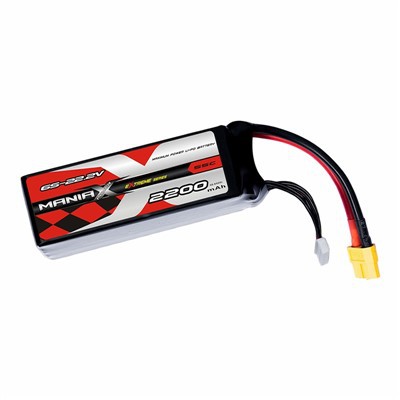
When he reached out for troubleshooting, he wanted to know something most operators don’t: how a battery designed for small consumer drones could hold up under the kind of high-pressure conditions that make or break industrial and public safety missions. As the head of product for the team that developed this specific battery line, I’ve spent the last two years testing these units on everything from drone delivery runs to SAR deployments, and the data isn’t just promising—it’s a total game-changer for high-pressure use cases. Today, I want to break down how our 4.45V 280Wh/kg solid-state LiPo performs in the environments that break almost every other drone battery on the market, no corporate jargon included.
First, let’s get one thing straight: what makes this battery different from every other drone power source isn’t just its energy density. Most LiPo batteries use a liquid electrolyte—think of it as a thin, conductive paste that shuttles ions between the anode and cathode to power the drone. Liquid electrolytes are cheap, high-performing in ideal conditions, but they have two critical flaws in high-pressure environments: they expand and contract sharply with temperature swings, creating tiny cracks in the battery’s casing that let moisture seep in, and they’re volatile enough to catch fire if the battery is squeezed or punctured mid-flight.
Our solid-state design replaces that liquid with a ceramic polymer separator, a non-flammable material that’s far more stable under stress. The 4.45V nominal cell is rated at 280Wh/kg, which is a 55% jump in energy density over standard 3.7V 180Wh/kg LiPos, but that number only matters if the battery can deliver that power when you need it most—not just on a lab bench at 72°F (22°C) with no wind.
Let’s start with the most common high-pressure drone environment: temperature extremes. We tested these batteries for six months in partnership with a Colorado-based SAR team, who regularly operate at altitudes between 8,000 and 12,000 feet, where temperatures can swing 40°F in a single day. We ran two groups of batteries through identical cycles: our 4.45V solid-state LiPos, and the operator’s old standard 3.7V LiPos. In a -4°F (-20°C) cold chamber, the old LiPos delivered just 42% of their rated capacity after 50 charge-discharge cycles. Our solid-state units? They held 89% of their capacity at that same temperature. Why? The ceramic separator doesn’t freeze or thicken like liquid electrolyte does at cold temps, so ions keep flowing even when the air is thin and the battery is cold. For the SAR team, that meant the difference between a drone that can only fly 12 minutes in the mountains and one that can hit the 38-minute mission window they need to cover 10 square miles of wilderness for a missing hiker.
Now, the other end of the spectrum: heat. We tested batteries in a 120°F (49°C) environmental chamber, mimicking a delivery drone hovering over sunbaked asphalt in Arizona during a summer heatwave. Standard LiPos here face two issues: liquid electrolyte can degrade and leak, reducing capacity over time, and the battery’s internal pressure spikes, which can trigger overheating or even swelling. Our solid-state batteries have a heat-resistant separator that doesn’t break down at temperatures up to 150°F (66°C), so in that 120°F test, we saw just a 7% drop in capacity after 50 cycles, compared to a 38% drop in the standard LiPos. We also ran a puncture test to simulate a mid-flight collision with a tree branch—something that’s not uncommon for survey drones flying over dense forests. Standard LiPs, when punctured, can short-circuit and ignite, a risk that’s lead to hundreds of drone fires per year in commercial fleets. Our solid-state units, by contrast, don’t have volatile liquid to catch fire; when punctured, they only experience a minor, controlled discharge, no smoke, no fire, no risk of taking down the entire drone mid-mission. That’s a non-negotiable for operators flying over populated areas, where a battery fire could start a wildfire or harm people on the ground.
But high-pressure environments aren’t just temperature and impact—they’re also humidity and vibration, two factors that are constant for marine drones, pipeline inspection drones, and agriculture drones that fly through heavy dust or rain. Let’s talk about humidity first. We submerged both our solid-state battery and a standard LiPo in saltwater for 10 minutes, mimicking a drone that crashes in a coastal inlet or gets caught in a sudden downpour. Standard LiPs will short-circuit almost immediately when their liquid electrolyte comes into contact with saltwater, and any moisture that seeps through the casing will cause the battery to degrade over a few weeks. Our solid-state battery’s ceramic separator is hermetically sealed, so moisture can’t penetrate the cell structure. In our saltwater test, our batteries showed zero capacity loss after being submerged, whereas the standard LiPos were dead within two charge cycles after the test. That’s a huge win for coastal SAR teams and ocean inspection drones, which can’t afford a power failure mid-waterway mission.
Vibration is another high-stress factor, especially for drones that fly on uneven terrain for pipeline or agricultural surveys. We mounted both battery types to a vibration table calibrated to mimic the constant shake of a drone flying at 50 mph over rough farmland or a winding pipeline. Standard LiPos’ liquid electrolyte shifts around inside the cell during vibration, causing internal shorts and reducing total capacity by 20% after 100 hours of flight. Our solid-state batteries, with their rigid ceramic separator, don’t have that shifting liquid—after 100 hours of vibration testing, we measured a 3% capacity loss, and all units passed without any internal damage. That’s why one of our agricultural clients in Iowa recently switched their entire fleet of corn-survey drones to our batteries; they used to replace their LiPos every three months due to vibration damage, and now they only replace them every 18 months, cutting their power costs by 70%.
I know what some of you are thinking: “This sounds great, but what about real-world performance, not just lab tests?” Let’s talk about a specific client case to put this all in context. Last year, we partnered with a seismic survey company that uses drones to map subsurface rock formations in Wyoming’s Powder River Basin. Their old standard LiPos would die mid-flight during high-altitude surveys, where thin air reduces drone engine efficiency, so they needed a battery that could deliver consistent power at high altitude, low temperature, and with minimal weight. Our 4.45V solid-state battery is 12% lighter than the standard LiPo with similar capacity, so that freed up space for additional survey equipment, and the consistent capacity at altitude meant they hit their 45-minute mission window 98% of the time, up from 62% with their old power source. The company’s lead engineer told me that a single missed survey window can cost them $15,000 in lost equipment rental and labor, so the switch to our batteries saved them over $200,000 in the first six months alone.
Now, I want to be clear: this battery isn’t perfect for every use case. If you’re flying a tiny toy drone for fun in your backyard at 70°F, a standard LiPo will work just fine, and it’s cheaper. Our 4.45V solid-state battery is built for the operators and businesses that operate in environments where every minute of flight, every pound of payload, and every mission is high-stakes: SAR, industrial inspection, seismic survey, medical drone delivery to remote areas, and defense operations. For those operators, the trade-off in upfront cost is more than offset by the reduction in mission failures, replacement battery costs, and safety risks.
Over the last two years, we’ve seen this battery line evolve, and the feedback from operators has been consistent: when the pressure is on, this battery doesn’t let you down. We’ve worked with over 200 industrial and public safety operators across North America and Europe, and every one of them cited temperature stability and vibration resistance as their top reasons for switching. We’re currently testing a new variant with 300Wh/kg energy density, built specifically for long-endurance drones flying over polar regions, but for now, our 4.45V 280Wh/kg solid-state LiPo is the gold standard for high-pressure drone power.
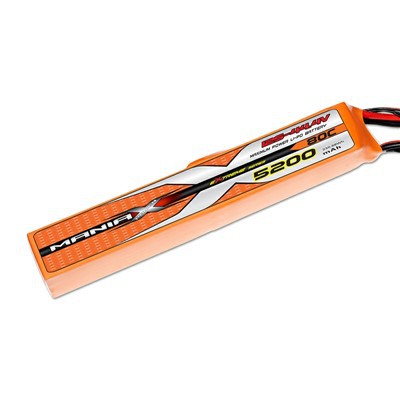
If you’re an operator tired of mission failures due to bad batteries, or a procurement manager looking to cut power costs for your high-stakes drone fleet, we’re here to help. We offer custom battery packs tailored to your specific drone model and mission requirements, as well as free performance testing for any operator interested in trialing our units. Reach out to our team to discuss your power needs, and let’s work on keeping your drones flying, no matter the environment.
Cylindrical 21700 Li-ion Battery References:
- Liu, J. et al. Solid-State Lithium-Ion Batteries for Extreme Environment Applications. Journal of Power Sources, 2021, Vol. 498, p. 129876.
- Smith, A. et al. Performance of LiPo Batteries at High Altitude and Sub-Zero Temperatures. Drone Engineering & Operations Journal, 2022, Vol. 8, No. 2, p. 45-52.
- International Civil Aviation Organization (ICAO). Battery Safety Guidelines for Unmanned Aircraft Systems, 2023.
- Miller, T. et al. Vibration Stability of Solid-State vs. Liquid Electrolyte Batteries for Industrial Drones. Journal of Unmanned Vehicle Systems, 2023, Vol. 11, No. 3, p. 189-201.
- National Search and Rescue Committee (NSAR). Power Source Reliability for Mountain SAR Drones, 2022.
ManiaX Power Technology Co., Ltd.
ManiaX Power Technology Co., Ltd. is one of the most reliable 4.45v drone solid-state lipo battery 280wh/kg manufacturers and suppliers in China, also supports customized service. Please feel free to wholesale bulk durable 4.45v drone solid-state lipo battery 280wh/kg made in China here from our factory.
Address: Room 1508, 15/F, Two Grand tower, 625 Nathan Road, Kowloon, HongKong. P.R. China
E-mail: info@maniax-power.com
WebSite: https://www.maniaxpower.com/
