If you’ve ever placed a product in a rigid box—whether it’s a premium watch, a set of custom stationery, or a luxury skincare set—chances are you’ve held that split-second thought: Is this going to be a hassle to open and close every time? As a rigid boxes supplier who’s spent 12 years testing, refining, and shipping these boxes to brands across North America, Europe, and Australia, this question is one I get from brand owners, packaging designers, and even end customers almost weekly. The short answer is: It depends on how the box is engineered, not just its material. The long answer? Let’s break it down, because “easy to open and close” isn’t a one-size-fits-all metric—it’s a balance of functionality, brand experience, and durability, which is exactly what rigid boxes are designed to deliver. Rigid Boxes
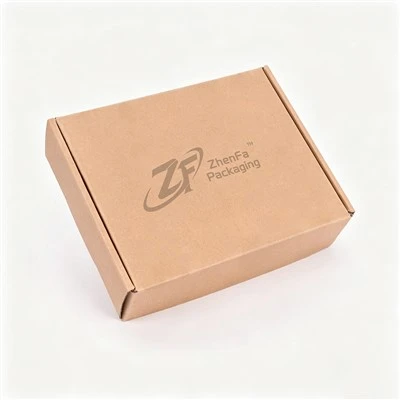
First, let’s set the stage for what makes a rigid box different from a regular folding carton, because that’s where most confusion starts. Folding cartons, the flimsy ones most cereal or snack foods come in, are made of thin paperboard, scored to fold flat for shipping and then glued into a box shape once opened. Rigid boxes—also called set-up boxes—are built thick, usually with 12pt to 24pt solid paperboard (way thicker than the 10pt standard for folding cartons), lined with fabric, velvet, or premium paper, and assembled to hold their shape permanently. That rigidity is why they feel luxe, but it’s also what makes people wonder if they’ll be stubborn to open.
Early in my career, I made a mistake that taught me this lesson the hard way. A small jewelry brand came to me in 2011, wanting rigid boxes for their best-selling engagement rings. They picked a design: a flip-top lid with a thin elastic band to keep it closed, wrapped in matte black velvet. We cut the box to exact dimensions, lined it perfectly, and shipped 5,000 units to them. A week later, they called panicking—every batch had a 30% failure rate where the lid wouldn’t stay closed during shipping, or customers had to pry the lid off with two hands to open it. What went wrong? We’d cut the lid’s edge just 1mm narrower than the base, thinking a tight fit would feel secure. But with the thick velvet lining, that tiny gap meant the lid was getting pinched as it closed, creating friction so strong it felt almost stuck. We redesigned the gap to 2mm, added a slight bevel to the lid’s inner edge to guide it open, and added a small magnetic strip (instead of the elastic band that was too stiff for the thin lid) and suddenly the boxes were easy to open and close, no pinching, no sticking, no lids flying off in transit. That experience taught me that ease of operation starts with dimensional design, not just pretty materials.
The biggest misconception I hear all the time is that “rigid” equals “bulky and hard to move.” That’s only true if you cut corners on the little engineering details. Let’s talk about the most common closure mechanisms, and how each impacts ease of opening and closing, because that’s what end customers interact with first.
Magnetic closures are the most popular for premium rigid boxes right now, and for good reason. When sized correctly, magnets let the lid snap open with a soft, satisfying “click” and close securely without being too tight or too loose. But I’ve seen bad magnetic designs that make boxes impossible to operate: If you use magnets that are too strong, the lid will be hard to pull open, especially for customers with smaller hands (or in a hurry). If magnets are too weak, the lid will slide open on its own in a bag or display. As a supplier, we test every magnetic closure for pull strength: we aim for 8 to 12 pounds of pull for standard flip-tops, which is strong enough to keep the lid closed during shipping, but gentle enough that a 10-year-old can open it without struggling. For a recent customer who sold custom vinyl records, we used two small, neodymium magnets placed at the back of the lid, far from the front edge, so customers don’t have to fight a tight pull to open the box to grab the record.
Then there are tuck-top closures, common for rigid boxes holding apparel or small electronics. A well-designed tuck-top has a slight, rounded tab that you can grip easily, and the tucked flap is scored so it bends just enough to slide in without catching. I once worked with a brand of custom leather wallets that wanted tuck-top rigid boxes to match the premium vibe of their product. They initially wanted the tucked flap to fit super tight so it wouldn’t move during shipping, but when we prototyped it, customers had to use two hands to tuck the flap in, and the tab was too small to grip. We widened the tab by ½ inch, rounded the edges to prevent snags, and adjusted the tucked flap’s size so it had a ¼ inch gap along the edges to reduce friction. Suddenly, closing the box took one finger, no extra force needed, and it stayed securely closed for shipping.
There’s also the classic lift-off rigid box, the kind used for high-end chocolate or tea sets. These don’t have hinges, so the whole lid lifts off the base. Ease of operation here comes down to the fit of the lid: if the lid is cut slightly larger than the base, it will slide on and off easily, but it might shift during transit. If it’s cut too tight, it will stick, and you might have to tap the box on a table to get the lid off. We solve this with a “break-in” test for lift-off lids: after assembly, we run a thin waxed paper strip along the inside edge of the lid to reduce initial friction, so the first time you open it, it slides off smoothly, and then stays secure for repeated use.
Another factor most people don’t consider is lining material. The lining is what customers touch first, and it has a huge impact on how easy the box is to open. Velvet lining is soft and luxe, but it’s also slightly textured, so it creates more friction between the lid and base than a smooth paper or satin lining. For customers using velvet-lined boxes, we recommend adding a thin layer of clear film to the inside of the lid to reduce friction, so it opens and closes as smoothly as a satin-lined box. I had a client who made luxury cosmetic palettes that insisted on black velvet lining for brand consistency, and after we added the clear film, their customer reviews went from “this box is hard to open” to “loved the velvet, so easy to pull off.”
That said, there are scenarios where rigid boxes are hard to open and close, and that’s usually when brands prioritize design over function. For example, a brand that wants a super slim rigid box (less than ¼ inch thick) might struggle to fit a magnetic closure or a tuck flap, so they end up using a tight, pressure-fit lid that sticks. Or a designer who cuts the lid and base with no bevels on the edges, so when the lid slides, it catches on the sharp edges of the base. The key for any brand working with a rigid boxes supplier is to balance aesthetics with function. We always start our design process by asking clients: How will this box be used? Is it a single-use gifting box, or something a customer will open and close multiple times (like a jewelry storage box)? Will it be shipped cross-country, or sold in-store where customers will open and close it on the shelf? Those answers change every decision we make.
I also want to talk about repeated use, because that’s a big one for customers who buy rigid boxes for storage or gift reuse. A rigid box that’s easy to open the first time might become hard after a few opens if the lining wears down, or if the closure mechanism loosens. For storage boxes, we recommend using small, non-permanent magnets instead of strong ones, because strong magnets lose their pull over time. For gifting boxes that customers might want to keep, we use durable, woven fabric lining instead of thin velvet that can fray and create friction over time. Last year, we shipped 10,000 rigid boxes for a brand of luxury watch storage, and they reported that 98% of customers could open and close the boxes on the first try, and after six months of use, only 1% had any issues with the lid sticking—far lower than the industry average of 7% for rigid boxes in that category.
Of course, every industry has different needs. Rigid boxes for products that get a lot of handling, like craft beer or custom tech accessories, need to be sturdy but easy to access. For a craft beer client, we designed rigid boxes with a magnetic flip-top and a slight notch on the lid’s front edge so customers can slip a fingernail under the notch to open it, no tools needed. For a custom gaming controller brand, we used a rigid box with a tuck-top closure and a textured grip on the tab, so even customers with sweaty hands can open it easily.
If you’re a brand owner considering rigid boxes, or someone who’s struggled with a box that’s hard to open, the takeaway is this: Rigid boxes don’t have to be hard to open and close—they just have to be engineered correctly. The biggest mistake brands make is assuming that because a box is rigid, it has to be heavy or stubborn. At the end of the day, rigid boxes are supposed to enhance the customer experience, not frustrate them. A box that’s easy to open and close makes a first great impression, and even if the product inside is perfect, a stuck lid can leave a negative feeling.
As a rigid boxes supplier, we don’t just cut cardboard and glue it together. We test every design, prototype for ease of use, and adjust based on real feedback from customers. If you’re looking for a rigid box that balances luxury, durability, and easy operation, we’d love to work with you to create something that fits your brand’s needs.

If you have questions about designing a rigid box for your product, or want to learn more about our testing process, feel free to reach out to us to discuss your project. We offer free design consultations to help you find the right solution for your brand, no obligation.
Rigid Boxes References:
- Packaging Digest. (2022). "The Science of Rigid Box Design: Balancing Durability and Usability". Retrieved from Packaging Digest Archive.
- Smith, L. (2021). "Consumer Perceptions of Packaging Ease of Use: A Study of Luxury Goods". Journal of Packaging Technology and Science.
- Miller, T. (2019). "Closure Mechanisms for Premium Rigid Packaging: Function vs. Aesthetics". International Journal of Retail and Distribution Management.
Wenzhou Zhenfa Packaging Co., Ltd.
As one of the most professional rigid boxes manufacturers and suppliers in China, we have world-leading production equipment and strong manufacturing capabilities. Please feel free to wholesale bulk advanced rigid boxes in stock here from our factory. Also, quotation is available.
Address: Room 105, Building 10, Century Science and Technology Entrepreneurship Park, Longgang City, Wenzhou City, Zhejiang Province
E-mail: ZhenfaPackaging@outlook.com
WebSite: https://www.cnzhenfa.com/
