Hey everyone, if you’re here reading this, chances are you’re either a fabricator, a maintenance guy, or someone who works with welded carbon steel pipes and has run into that annoying problem: weld joints acting way more brittle than the base metal. I’m [your name here], and for the past 12 years, I’ve been selling welded carbon steel pipes as a supplier—and let me tell you, half the questions I get aren’t even about grades or specs. They’re about what to do after the weld cools, because skip that step, and you’ve got pipes that might crack under pressure, fail on a job, or cost you way more in downtime than the process itself takes. That’s where annealing comes in. Today, I’m breaking down how to do it right, no fancy jargon, just what I’ve learned from working with welders on job sites from refineries to small fabrication shops. Welded Pipe Carbon Steel Pipe

First, let’s keep it real: annealing isn’t some magic trick. It’s just heat treatment to fix what welding messes up. When you weld a carbon steel pipe, the torch’s heat turns the weld zone and the area right around it (the heat-affected zone, or HAZ for short) super hot—way hotter than the pipe’s normal temp. Then it cools fast, either on its own or from being handled. For carbon steel, that quick cool makes the HAZ hard and brittle, like a hard candy shell on a soft core. Bend the pipe a little too much, hit it with pressure, or even leave it outside in cold weather, and that brittle part cracks. Annealing slows that cooling down, lets the grain structure in the HAZ soften, relieves all the stress built up during welding, and brings the whole pipe back to consistent strength. Trust me, I’ve seen it: a client last year skipped annealing on 20-inch carbon steel pipes for a water main, and three months in, the weld joints cracked. After that, they started picking my brain on annealing for every weld batch.
Now, before you jump into heating your pipes, you need to know the basics that actually matter for welded carbon steel—no overcomplicating this. First, what grade of carbon steel? I sell mostly A53 and A106 carbon steel pipes, which are the workhorses for plumbing, structural, and pressure applications. For these, annealing temperature isn’t a random number; it’s 1100°F to 1200°F (that’s ~593°C to 649°C). You can go lower, and you won’t get the stress relief you need. Higher, and you might make the grain structure too big, which actually weakens the pipe. Big no-no.
Next, heat time. This isn’t like heating a steak—you can’t blow torch the weld and call it good. You need to heat the weld and at least 2 inches on each side of it. Why? The HAZ doesn’t stop exactly at the weld line; it spreads out a little. If you skip those extra inches, you leave stress trapped. How long to heat? Rule of thumb is 1 hour per inch of pipe wall thickness. So if you’ve got a 0.5-inch thick pipe wall, heat for 30 minutes minimum. If it’s 1 inch thick, give it an hour. Don’t rush this—welders I work with will often stretch it 15 or 20 minutes, no problem, but cutting it short is where mistakes happen.
Then the cooling part, which is way more important than most people think. After you hit that target temp, you can’t just set the pipe outside to air cool. You need to slow the cooling down. For most small to medium pipes (up to 12-inch diameter), wrap them in fiberglass insulation right after turning off the heat. For bigger pipes, you can bury the weld zone in lime or vermiculite—insulating materials that keep the heat in, so it cools over 4 to 8 hours, not 20 minutes. Why? If it cools fast, that brittle HAZ comes right back. I’ve seen a welder try to air cool a 6-inch pipe once, and the weld cracked when he lifted it. He lost a full day’s work, and I had to cut him a discount on a replacement batch. Lesson learned.
Wait, hold on—what about thin vs thick wall pipes? That’s a common question I get. For thin-wall carbon steel pipes (less than 0.25-inch thick, like some structural or conduit pipes), you can get away with a slightly lower heat temp, around 1050°F (566°C), and a faster cool? No, wait—no, even thin wall needs the slow cool. But for thick wall (over 1 inch, like pipe for oil or gas lines), you might need to hold the temp a little longer, like 1.5 hours per inch of wall, to make sure the stress all the way through the wall is relieved. Also, if you’re doing a pipe that’s going to handle high pressure, don’t skip the hold time at temp. That’s non-negotiable.
Now, tools you actually need—no industrial lab equipment required, and this is stuff you can get at most hardware stores, not just specialty weld shops. First, a heat source: for small pipes (less than 4-inch diameter), a propane torch with a wide, uniform flame works. For bigger pipes, a ring burner (those circular propane tools that wrap around the pipe) is way better—they heat the whole weld evenly, not just one spot. Second, a temp gauge: not just a laser pointer, get a stick-on temp label (like those Tempilstik ones) that melts at the temp you need. Laser guns can be wrong if there’s rust or paint on the pipe, so stick-on labels are cheap and way more reliable. Third, insulation: fiberglass blankets, vermiculite, even old wool blankets work—just make sure it’s not something flammable, obviously. Fourth, a timer, because it’s easy to lose track of heat time when you’re busy.
Let me walk you through a real example, something a fabrication client did last month, to make this concrete. They were working on 8-inch A53 carbon steel pipes for a grocery store’s sprinkler system, wall thickness 0.375 inches. Step 1: they clamped the pipe in place, got the ring burner set up around the weld. Step 2: they heated the weld and 2 inches on each side, watched the stick-on temp label turn pink (that’s their 1100°F mark) and held it there for 25 minutes (0.375 inches x 1 hour = ~25 minutes, right). Step 3: they wrapped the whole weld area in two layers of fiberglass blanket, left it for 6 hours. Step 4: they peeled off the blanket, let it air cool the rest of the way. When they tested the weld with a pressure gauge, it held 150 PSI with zero leaks. That’s exactly how it’s supposed to go.
Now, what are the common mistakes people make? Let’s list these, because I’ve seen every single one. First, heating only the weld, not the surrounding base metal. That leaves stress trapped in the HAZ, which is the part that’s most likely to fail. Second, cooling too fast. I can’t stress this enough—even if you heat it perfect, if you air cool a 6-inch pipe, you’ll get cracks. Third, overheating. If you go above 1250°F (677°C), you start making grain structure too big, which weakens the pipe. I once had a welder overheat a batch, and the pipes were too soft to handle their normal pressure—they dented when he lifted them. Fourth, skipping the temp check. Welders are in a hurry, so they’ll guess the temp by the color of the pipe. But pipe color (cherry red, orange) varies by thickness, so a thin pipe will look the same color as a thick pipe at a totally different temp. Use the stick-on label, it’s $5, don’t cut that corner.
Wait, one more thing: what if the pipe is already in place, like a field weld? You can’t wrap insulation around it easily, but you can use ceramic fiber blankets and hold the heat with a small heat gun, or even build a temporary enclosure around the weld with fire bricks to trap the heat. Just make sure you keep the temp consistent, not spotty, and cool it slow. That’s a common question for construction guys working on site, and it’s totally doable—no need to pull the whole pipe out just to anneal.
Now, why does this matter when I’m a carbon steel pipe supplier? Because here’s the thing: I can sell you the best welded carbon steel pipe on the market, but if you mess up the weld and skip annealing, that pipe is useless. I’ve had clients come back saying their pipes are cracking, and half the time it’s because they didn’t anneal. So over the years, I’ve made it a point to share this info, not just sell pipes. Because when my clients succeed, they come back. That’s why I’m putting this out there—no sales pitch hidden, just real advice from someone who’s been around welded carbon steel pipes for more than a decade.
If you’re working on a project right now, and you need welded carbon steel pipes, or you have questions about annealing a specific pipe (thick wall, thin wall, field weld, whatever), don’t hesitate to reach out. I’ve helped fabricators, construction crews, and even hobbyists get the right pipes and get their annealing process down. Just get in touch, and we can chat about your project, specs, or whatever you need.
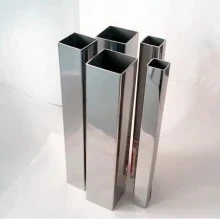
Welded Pipe Stainless Steel Square Tube Now, for the references, just to back up what I talked about:
- ASM International. (2019). Heat Treater’s Guide: Practices and Procedures for Irons and Steels. ASM International.
- American Welding Society (AWS). (2020). AWS D1.1/D1.1M: Structural Welding Code – Steel. American Welding Society.
- Carbon Steel Pipe Manufacturers Association. (2021). Annealing Practices for Welded Carbon Steel Pipes. Carbon Steel Pipe Manufacturers Association.
- Davis, J. R. (Ed.). (2001). ASM Specialty Handbook: Carbon and Alloy Steels. ASM International.
Gnee Steel (Tianjin) Co., Ltd.
Gnee Steel (Tianjin) Co., Ltd. is one of the most professional welded pipe carbon steel pipe manufacturers and suppliers in China, specialized in providing high quality customized service. We warmly welcome you to wholesale discount welded pipe carbon steel pipe for sale here and get free sample from our factory. Good service and low price are available.
Address: No.4-1114, Beichen Building, Beicang
E-mail: pipe@gneesteel.com
WebSite: https://www.chinaalloypipe.com/
