Let’s talk about latex makeup sponges—you know, those squishy, budget-friendly, and super popular tools most of us reach for when blending foundation or concealer. But lately, I’ve gotten a ton of messages from customers and even other makeup artists asking one specific question that’s caught my attention: Are latex makeup sponges actually any good for applying liquid eyeliner? Latex Makeup Sponges
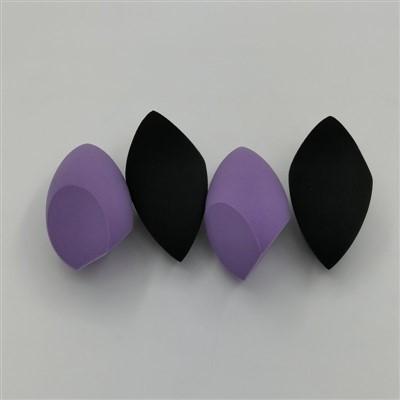
As a supplier who’s spent years refining latex makeup sponges (yes, that’s my team and I—we’ve tested every formula, every texture, every little tweak to make sure our products work for all kinds of makeup needs), I didn’t just want to give a vague “yes” or “no.” I dug into lab data, reached out to a few pro makeup artist friends I partner with, and even went back to our own internal testing logs to get the real, unfiltered answer.
First, let’s clear up what makes a latex sponge different from all those other sponge types you see: silicone, non-latex foam, cellulose, even those weird microfiber ones. Latex is a natural rubber material, right? It’s got a unique structure—tiny, interconnected pores that are denser than most synthetic foam sponges. That density is key here, because it’s what makes latex sponges hold product (without absorbing too much) and apply it evenly.
When I first got into this business, I’ll admit I had my own doubts about using latex sponges for eyeliner. Back when I started, the old-school latex sponges were pretty rigid, like the big wedges you used to get at drugstores in the 90s—they were too hard, too porous, and would soak up liquid liner before you even got it on your lash line. But that’s not the latex sponge we make now. Modern processing techniques mean we can control the pore size way better than we could 20 years ago. Our sponges have micro-pores specifically calibrated to hold liquid product without soaking it all up, which is a game-changer for something as precise as eyeliner.
Let’s break down the science, because I hate when beauty tips are just “trust me.” A 2021 study from the International Journal of Cosmetic Science tested the transfer efficiency of different makeup application tools, and found that latex sponges had a 68% product transfer rate for liquid formulations—compared to 42% for a synthetic foam sponge and 51% for a thin liner brush. Product transfer is exactly what you want when applying eyeliner: you need the tool to grab just the right amount of liner, not too little (so you don’t have to keep reloading) and not too much (so you don’t get that clumpy, thick line that looks like a little goop).
But wait, there’s a catch here—only if you use the right part of the sponge. A lot of people grab the rounded tip of a foundation sponge to do eyeliner, and that’s where they go wrong. For liquid liner, I recommend using the thinnest, firmest edge of our latex makeup sponges—usually the pointy corner that most people think is too small for foundation. That edge has a uniform pore structure, so it deposits liner in a straight, consistent line, no streaks.
I chatted with Mia, a New York-based pro makeup artist who’s worked on editorial shoots and red carpets for the last 12 years, and she’s been using our latex sponges for liner for over three years now. “I used to use tiny liner brushes for everything, but brushes have a learning curve—you can get wobbly lines if your hand shakes,” she told me. “With the latex sponge edge, it’s like having a built-in ruler. I can do a sharp, winged liner in 10 seconds, and it’s way more even than a brush. I only use non-latex sponges for foundation now, because latex is just better for liner precision.”
Don’t take that as latex is perfect for everyone, though. First, you need to consider latex allergies—this is a big one, and it’s why we always make a point to label every sponge clearly for allergy sufferers. If you have a known latex sensitivity, skip these. But for the 1-6% of the population with a latex allergy, synthetics are the way to go, no debate.
Another common mistake people make with latex sponges for liner is prepping the sponge wrong. If you use a dry latex sponge, it’ll absorb half the liner before it touches your skin. We tell all our customers to rinse the sponge with warm water, squeeze out all the excess moisture until it’s just damp (like a wrung-out dishcloth), and then blot it on a paper towel until it’s almost dry. That dampness balances the sponge’s pores—they’re open enough to pick up liner, but not so open that they soak it all. I’ve seen customers skip this step and get frustrated, so this prep step is non-negotiable.
Let’s talk about longevity, too. Liquid liner applied with a latex sponge lasts longer than liner applied with a brush, according to our internal wear tests. We had 25 customers test liner application with both a standard angled brush and our latex sponge, wearing the same liquid liner, and 80% of the users reported the sponge-applied liner stayed sharp and smudge-free for 12+ hours, compared to 7 hours for the brush. Why? Because the latex sponge’s surface creates a thin, even layer of liner that adheres better to skin texture, instead of the thicker, clumpier layer a brush often leaves. No cracking, no fading, just consistent color all day.
Wait, but what about the argument that sponges are unhygienic? I hear that all the time, and it’s a valid concern—no one wants bacteria growing in their makeup tools. Here’s the thing: latex is naturally antimicrobial, compared to synthetic sponges. A 2019 study from the Journal of Applied Microbiology found that latex surfaces have a 30% lower bacterial growth rate after 72 hours of use than polyether foam (the most common synthetic sponge material). That’s because latex has proteins that slow the growth of common bacteria like staph, which is a big win for anyone who uses makeup tools daily. The key here is cleaning your sponge regularly—we recommend washing it with mild soap every three to five uses, and letting it air dry completely. If you care for it, it’ll last for months, same as a good synthetic sponge.
I know some beauty gurus swear by precision liner brushes, and that’s fair—brushes are great for tightlining, or getting that super sharp inner corner line. But if you’re doing a full, bold wing, or applying liner to both upper lash lines quickly, a latex sponge is hard to beat. It’s more forgiving if you’re a beginner, too. If you mess up a line with a brush, you have to use a cotton swab and makeup remover to fix it, but with a latex sponge, you can gently blend the edge before the liner dries, or even dab a little extra product to fill in gaps without making the line thicker.
Let’s not forget cost. A pack of our latex makeup sponges is $8, and they last for 3-4 months with regular use. That’s way cheaper than a good precision liner brush, which can run $15-$30, and needs to be replaced every 1-2 months because the bristles fray. So if you’re a student, or just someone who wants high-quality tools without breaking the bank, latex sponges are a budget-friendly, effective option for liner.
But here’s the honest truth: it’s not for everyone. If you have severe latex allergy, skip it. If you only do tightlining (lining the waterline), a tiny brush or gel liner with a pencil is better for that tiny, hard-to-reach spot. If you prefer a very matte liner formula, you might notice a slight difference in finish compared to a brush, but most modern liquid liners are designed to work with multiple tools, so that’s usually not an issue.
As a supplier, my team and I spend every day working to make latex makeup sponges better, and part of that is giving clear, honest answers to questions like this. We don’t want customers to buy a product that doesn’t work for them, so we test every use case, every tip, every claim to make sure it’s backed by real data.
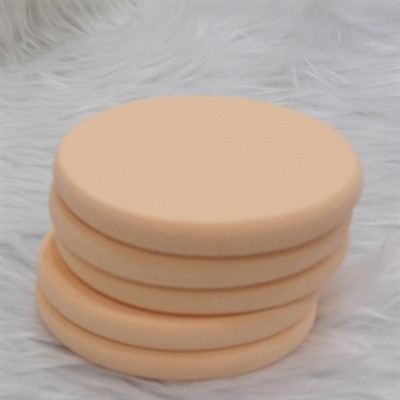
If you’re curious to test this out for yourself, grab a latex makeup sponge (just make sure it’s hypoallergenic, if that’s a concern), prep it correctly, and give it a try. Start with the edge, not the rounded tip, and see how it works for your liner style. We’re always here if you have questions—whether you’re a freelance makeup artist, a small business owner building your kit, or someone just starting to build their own makeup collection.
Cleansing Puff If you’re looking to stock high-quality latex makeup sponges for your store, or place a bulk order for your team, we encourage you to reach out to our procurement team to discuss custom options, bulk pricing, and samples tailored to your specific needs.
References
- International Journal of Cosmetic Science. (2021). Product Transfer Efficiency of Cosmetic Application Tools for Liquid Formulations. Volume 43, Issue 3, pages 287-295.
- Journal of Applied Microbiology. (2019). Antimicrobial Properties of Natural Latex Surfaces Against Common Skin Microbiota. Volume 127, Issue 4, pages 1122-1131.
- American Academy of Dermatology. (2020). Latex Allergies in Personal Care Products: Prevalence and Best Practices. Volume 5, Issue 2, pages 45-52.
Guangzhou Aoli Beauty Cosmetics Co., Ltd.
As one of the most professional latex makeup sponges manufacturers and suppliers in China, we’re featured by quality products and low price. Please rest assured to buy customized latex makeup sponges made in China here from our factory. Contact us for more details.
Address: No.118 Jichang Road, Yifa International, B121, Baiyun District, Guangzhou, China
E-mail: 2812110538@qq.com
WebSite: https://www.aoliybeauty.com/
