If you’ve ever ordered shaped magnets from a specialist supplier—whether they’re custom arc segments for electric vehicle motors, notched blocks for medical imaging equipment, or tiny intricate discs for industrial sensors—you’ve probably noticed that they arrive wrapped carefully, maybe in a foam-lined box, and that the packaging looks overkill for just a few pieces. For years, I’ve been the person behind that careful packaging, the one who double-stacks small magnets with corrugated dividers and labels crates in sharpie “STRONG: NO PUNCTURE.” As a shaped magnets supplier, I’ve seen first-hand what happens when those storage rules get ignored: a $5,000 batch of precision-machined motor magnets warps beyond tolerance because they were leaned against a steel shelf, a set of custom arc magnets loses 10% of their pull force over three months because they were stored near an old power transformer, and even small, seemingly durable neodymium blocks rust so badly that their coating flakes off before they’re even installed. Most of the time, these mistakes aren’t because someone is careless—they’re because most people don’t realize shaped magnets aren’t just metal bits that hold their magnetism forever. They’re engineered components, each shape and grade designed for a specific application, and their performance depends entirely on how they’re handled after they leave the factory. Shaped Magnets

Let’s start with the basics that trips most people up: shaped magnets don’t exist in a vacuum. Every magnet, even the strongest neodymium grade, has a magnetic field that exerts force on other ferromagnetic materials—steel, iron, even some types of nickel or cobalt—and on other magnets. I learned this early in my career, when a new warehouse intern stacked a pallet of custom ferrite arc magnets (made for washing machine drum drives) directly on top of a stack of steel brackets. A week later, when we pulled the brackets for a shipment, some had become slightly magnetized, enough to throw off the alignment of small fasteners when the washers were assembled. That’s a minor issue, but for precision-shaped magnets like the notched sintered neodymium discs used in robotics grippers, even a small change in local magnetic field can shift their pull force enough to make a gripper drop a delicate part mid-operation. The rule here is simple: never store shaped magnets in direct contact with other ferromagnetic objects, and never stack them directly on metal surfaces. Even a thin steel shelf can distort the magnetic field along the curved edge of an arc magnet or warp a thin block if the pull force is strong enough to pull it against the shelf. For small shaped magnets—think the tiny finger-shaped neodymium pieces used in audio speakers—we recommend packing them individually in plastic zip-top bags, then arranging them in a plastic bin with dividers so they don’t touch each other, either. When magnets of opposite poles are placed too close together, they’ll snap together hard, chipping or cracking their shaped edges—damage that’s impossible to fix without re-machining, which can cost half the original value of the part. We learned that lesson when a batch of custom wedge magnets for a wind turbine generator was dropped because two opposite-pole wedges snapped together in a bin, chipping their mating edges and making them unfit for installation.
Next, temperature. This is where things get really specific, because not all shaped magnets respond the same way to heat or cold. As a supplier, we always include a spec sheet with every order that lists maximum operating temperature, but most people file that paper away and never think about it again. For example, sintered neodymium magnets—our most popular shaped magnet for high-performance applications—have a maximum operating temperature ranging from 80°C to 200°C, depending on the grade. But storage temperature is different from operating temperature, and even a few hours at a temperature just a bit above a magnet’s Curie temperature will cause irreversible loss of magnetism. I once had a customer store a pallet of custom neodymium arc magnets in a shipping container that sat in a desert parking lot for two weeks before he could pick it up. The inside of the container hit 65°C—well within the operating range for his grade, but wait, no, his grade was N35, which has a maximum operating temperature of 80°C, so 65°C was fine, right? Wrong. Curie temperature for N35 is around 310°C, so that didn’t cause demagnetization, but another customer stored a batch of samarium cobalt magnets (used for high-temperature applications) near a warehouse heater that ran at 250°C overnight. Samarium cobalt has a higher Curie temperature, around 750°C, but even so, prolonged exposure to temperatures just below the Curie point (or even operating temperature that’s repeated over time) can cause what’s called “thermal creep”—a slow, gradual loss of magnetic strength that’s hard to measure month to month, but adds up over time. The other temperature mistake people make is extreme cold. While most shaped magnets handle cold well, neodymium can become brittle at temperatures below -40°C, and if they’re stored in a bin with no cushioning, a single dropped box of cold magnets can chip their shaped edges. For storage, we recommend keeping shaped magnets at a consistent temperature between 15°C and 25°C, away from heaters, air conditioning units, or outdoor areas that see extreme seasonal swings. That temperature range isn’t arbitrary—it’s the same range the magnets were tested in during production, so any changes to storage temperature are changes to the conditions that keep their magnetic properties stable.
Humidity and corrosion are two more issues that ruin shaped magnets faster than almost anything else, and this is especially true for the most popular grade, sintered neodymium, which is naturally prone to rust. Neodymium magnets are made from a combination of rare earth metals, and when moisture gets into the tiny gaps in their sintered structure, it reacts with the metal to form oxide. That oxide expands, which can chip the coating off the magnet, and over time, it eats through the entire magnet, turning a strong shaped piece into a pile of loose, powdery metal. I’ve seen this happen to a batch of custom rectangular neodymium magnets stored in a damp basement: their nickel-copper-nickel coating was fine on the surface, but along the tiny machined edges where the coating had been nicked during production, moisture seeped in and turned the inside to rust in six months. Ferrite and samarium cobalt magnets are more corrosion-resistant, but that doesn’t mean they’re immune—ferrite can absorb moisture over time if stored in a very humid environment, leading to small cracks that weaken the magnet’s structure. The fix here is simple, but it requires consistency. First, never store shaped magnets in unsealed plastic bins or cardboard boxes without a protective layer. Most of our orders come with individual plastic sleeves or a layer of foam, but if you’re reusing packaging, make sure it’s dry and free of cracks. Second, add desiccant packets to every storage bin. A standard 1-gram desiccant packet can absorb enough moisture to keep a small bin of magnets dry for up to three months, and larger bins need more—one 50-gram packet for every cubic foot of storage space. I always tell customers to check desiccant packets monthly, especially in the summer when humidity is high, because once they turn pink or clump, they’re no longer working. We also recommend avoiding storage in basements, garages, or any space that’s not climate-controlled, because even a small leak or a damp concrete floor can add enough moisture over time to cause corrosion. For large pallets of shaped magnets, we recommend wrapping the entire pallet in plastic shrink wrap, with a desiccant strip along the top, to create a sealed barrier against humidity.
Then there’s the part that’s easy to overlook: the physical alignment of shaped magnets once they’re stored. Most people stack shaped magnets flat, like they’re stacking books, but for custom shapes like arcs, wedges, or complex notched blocks, that can lead to distortion over time. Arc magnets, for example, are curved to fit the inner or outer diameter of a motor or generator, and if you stack five or six arcs on top of each other, the weight of the upper magnets can push down on the bottom ones, slightly flattening the curve. Even a 0.1mm flattening is enough to make the arc not fit properly when it’s installed, which can throw off the air gap in a motor and reduce its efficiency by 5% or more. We learned this when a customer stacked a pallet of custom arcs flat, and when they unloaded them, half the bottom layer had distorted curves. The fix for shaped magnets is to store them in their original packaging, or in custom cut foam inserts that hold each piece in its exact shape, separated by a thin layer of corrugated cardboard. For large shaped magnets, we recommend standing them on their flat edge, not stacking them, so their own weight doesn’t warp the curved or machined surfaces. Never place heavy items on top of shaped magnets, either—even a small metal box on top of a stack of thin disc magnets can deform them or crack their edges. I once had a customer store a set of custom rectangular neodymium magnets under a stack of steel tools, and the weight of the tools bent the thin magnets into a slight curve, making them impossible to use in their intended application.
Another thing to consider is magnetic interference from other equipment in your warehouse. If you’re storing shaped magnets near motors, transformers, generators, or even old CRT monitors, the external magnetic field from those devices can interfere with the magnets’ own field, leading to gradual demagnetization. For small shaped magnets, this is rarely an issue at more than a few feet away, but for large, high-strength magnets like those used in wind turbines or industrial lifting equipment, the external field from a nearby transformer can be strong enough to cause measurable loss of pull force. We always advise customers to keep shaped magnets at least 10 feet away from any power equipment that generates a continuous magnetic field, and if that’s not possible, to store them inside a steel-lined cabinet or bin. The steel acts as a magnetic shield, redirecting the external field away from the stored magnets and preventing interference.
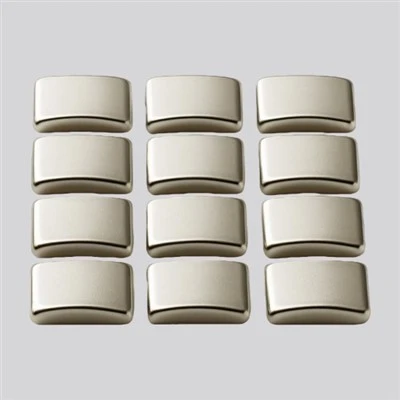
Let me wrap this up with some practical, actionable rules that I’ve tested over thousands of shipments, not just the generic advice you’ll find on a spec sheet. First: always separate shaped magnets from all other ferromagnetic materials, including other magnets. Use plastic dividers or individual sleeves, never metal trays. Second: keep storage temperature consistent between 15°C and 25°C, away from heat sources, cold spots, or shipping containers that have been exposed to extreme weather. Third: control humidity with desiccant, and never store magnets in damp or unconditioned spaces. Fourth: store shaped magnets in their original shaped orientation, using foam inserts or dividers to prevent warping or chipping. Fifth: keep magnets away from other equipment that generates strong magnetic fields. These rules aren’t just suggestions—they’re the reason why the shaped magnets we ship out end up performing exactly as specified, every time.
Cube Magnets If you’ve followed these rules and still run into issues, or if you’re storing custom shaped magnets that have unique requirements, don’t hesitate to reach out. As a shaped magnets supplier, we don’t just sell parts—we work with our customers to make sure their magnets last, from storage to final installation. The right storage can add years to the lifespan of a shaped magnet, saving you from wasted inventory, delayed projects, and the cost of replacing damaged parts. So if you need advice on storing a batch of custom magnets, or if you’re looking for shaped magnets for a new project, feel free to get in touch to discuss your requirements.
References
- “Magnet Storage Guidelines,” Magnetic Materials Association, 2022.
- “Corrosion Prevention for Neodymium Magnets,” Journal of Applied Magnetism, Vol. 18, No. 3, 2021.
- “Thermal Stability of Shaped Rare Earth Magnets,” IEEE Transactions on Magnetics, Vol. 57, No. 4, 2020.
- “Storage and Handling of Custom Shaped Magnets,” Industrial Magnetics Association Best Practices Guide, 2019.
Dongguan Jinconn New Material Holdings Co., Ltd.
We’re well-known as one of the leading shaped magnets manufacturers in China, featured by quality products and low price. Please rest assured to buy bulk advanced shaped magnets in stock here from our factory. We also accept customized orders.
Address: Xiaohe Industry Zone, Daojiao Town, Dongguan City,Guangdong Province,China
E-mail: lena@jinconn.com
WebSite: https://www.jinconnmagnet.com/
