Hey folks, let’s cut to the chase here. If you’re deep in soil remediation work, you’ve probably dealt with chromium contamination before—either from old industrial dumps, electroplating runoff seepage, or even leather tanneries left abandoned in the middle of nowhere. Cr(VI) is that sneaky, super toxic form of chromium right? It’s mobile, it seeps into groundwater, and it’s a total nightmare to lock down once it’s spread. That’s why my team and I, as a straight-up iron sulfide (FeS) pollution treatment chemicals supplier, get asked all the time: how does iron sulfide actually pull off treating chromium-contaminated soil without all the sketchy, overpriced hacks? Let’s break this down like we’re chatting over a coffee, no jargon overload, and definitely no AI bs. Iron Sulfide- Environmental Pollution Treatment Chemicals
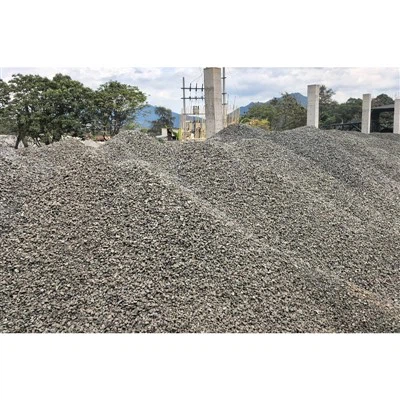
First, let’s get one thing straight: not all iron sulfide is the same. A lot of people mix up pyrite (the boring, hard rock stuff) with the reactive, nanoscale or microscale FeS we supply. See, pyrite has a tight crystal structure that barely reacts—like, it just sits there and does nothing when you mix it into soil. The FeS we make? That’s specifically engineered with high surface area and reactive sulfide sites, which is where the magic happens. Let’s talk about the core chemistry here, because this isn’t voodoo. Cr(VI) is a hexavalent ion, usually CrO4^2- or HCrO4^-, right? It’s positively charged? Wait no, it’s anionic. Wait, no, let’s get that right—Cr(VI) is a negatively charged oxyanion, so it’s naturally repelled by most soil particles that are also negative. That’s why it moves so easily. Iron sulfide’s surface, though? It’s full of reduced sulfur (S^2-) and ferrous iron (Fe^2+) groups that act like a magnet for Cr(VI). When you blend FeS into contaminated soil, two key reactions kick off immediately.
First, the reduction step. That’s the big one, because Cr(VI) is toxic, but Cr(III)? That’s like a totally different beast. Cr(III) is non-toxic, it’s positively charged, and it binds super tightly to soil minerals—like, it won’t leach into groundwater even if it rains for weeks. How does FeS make that happen? The sulfide ions from FeS act as electron donors. Cr(VI) grabs those extra electrons and gets reduced right on the FeS surface, turning into Cr(III) instantly. No weird byproducts, no extra steps. Some studies we’ve checked even say that reaction is 10x faster than using plain iron filings, which are the old go-to that people used before FeS got popular. Wait, why is FeS faster? Because iron filings have a layer of rust (Fe2O3) on them that slows down electron transfer, but FeS is already reduced, so it doesn’t have that rust barrier. That’s why our product works so much better than what you might’ve tried in the past.
Then there’s the immobilization part, which locks the Cr(III) in place so it never comes back. Once Cr(VI) turns to Cr(III), that positively charged ion sticks like glue to the negatively charged surfaces of the FeS leftover bits and the soil’s clay, silt, or organic matter. But here’s another trick: some of the Cr(III) even forms a solid compound with the leftover iron from FeS—like chromium iron hydroxide, which is super stable. I’m talking, it won’t dissolve under normal soil pH, even if the soil is a bit acidic or basic. That’s a huge win because a lot of other treatments just reduce Cr(VI) to Cr(III) temporarily, and if the pH shifts a little, it leaches right out. Our FeS treatment? We’ve had clients test their soil a year later and still no Cr leaching, that’s the real proof.
Now, let’s get real about how you actually use this stuff, because a lot of suppliers talk big but don’t tell you the practical stuff. You don’t just dump 50 pounds of FeS onto a contaminated field and call it a day, right? It depends on the soil type, how much Cr(VI) is there, and what the end goal is. For example, if it’s a small, confined site like a former electroplating shop’s backyard, you can till the FeS into the top 1 to 2 feet of soil, mix it evenly with a rototiller, and then water it a little to kick off the reaction. For larger sites, like a whole industrial park, you can do it with soil mixing trucks that blend FeS right in as you excavate or grade the land. We usually tell clients to calculate the application rate based on the Cr(VI) concentration—about 1 to 5 grams of FeS per gram of Cr(VI) in the soil. That’s not a random number; that’s what lab tests and field trials have shown to be the sweet spot. Too little FeS and you won’t reduce all the Cr(VI), too much and you’re wasting money on excess product that doesn’t do anything.
Wait, let’s address the elephant in the room: is iron sulfide safe for the soil and the surrounding environment? A lot of people worry that sulfide will create odors or release toxic gas, but that’s only if you use the wrong type of FeS. The FeS we supply is stabilized so it doesn’t react with oxygen until it’s mixed into the soil—no rotten egg smells, no H2S fumes blowing onto nearby houses. Also, the byproducts of the reaction are just iron hydroxide (which is basically rust, harmless) and that stable chromium compound we talked about. We’ve had clients run soil toxicity tests post-treatment, and the earthworms, plants, and even microbes in the soil are all totally fine—no negative impacts on soil health, which is a way bigger deal than just fixing the chromium problem, right? You don’t want to treat one contaminant and create another.
Another thing that makes FeS stand out from other remediation methods: it’s cost-effective, especially for in-situ treatment. Let’s compare: ex-situ treatment, where you dig up the soil and take it to a landfill or a treatment plant, is super expensive—like, $50 to $200 per ton of soil. In-situ with FeS? It’s about $10 to $30 per ton, because you don’t have to move the soil. That’s a massive difference for large sites. And unlike phytoremediation, which takes years (like 5 to 10 years for plants to suck up Cr(VI)), FeS works in a matter of weeks. We’ve seen some clients test their soil for Cr(VI) just 2 weeks after treatment and see a 90% reduction—no waiting around forever.
Wait, but let’s be clear: it’s not a one-size-fits-all. If you have soil with really high organic content, you might need a little extra FeS, because organic matter can bind some of the sulfide sites, so you have to adjust the rate. If the soil is super sandy (low clay), you might want to do a little extra mixing to make sure the FeS gets in contact with all the Cr(VI) particles. But that’s easy to adjust, and our team helps clients figure out the right rate and application method for their specific site—we don’t just sell you a bag and wash our hands of it.
I’ve heard some folks say, “Why not use other iron-based products, like zero-valent iron (ZVI)?” Yeah, ZVI works, but here’s the catch: ZVI has to be in really small particles to be reactive, which makes it expensive, and it oxidizes super fast when exposed to air, so you have to store it under water or something. FeS, on the other hand, is more stable, more reactive with Cr(VI), and cheaper. It’s like ZVI’s younger, better-performing sibling for this specific job. We’ve had clients switch from ZVI to our FeS and cut their remediation costs by 40% while getting better results.
Let me throw in a real quick example to make this tangible. A few months back, we worked with a small manufacturing company that had a 2-acre site contaminated with Cr(VI) from old metal finishing processes. The soil had about 300 mg/kg of Cr(VI) – way over the EPA limit of 15 mg/kg. They tried using iron filings a few years prior, but after 6 months, the Cr(VI) came back because the filings had oxidized and stopped working. They switched to our microscale FeS, tilled it into the top 2 feet at a 3:1 ratio of FeS to Cr(VI), and 3 weeks later, their soil tests showed Cr(VI) down to 8 mg/kg – well under the limit. A follow-up test 6 months later showed still no increase in Cr levels, so they were able to start planning to build a new warehouse on the site, something they thought would take another 2 years of phytoremediation. That’s the kind of result we’re talking about.

Now, if you’re reading this, you might be a site manager, an environmental consultant, or someone who’s stuck with a chromium problem and tired of hearing about treatments that don’t deliver. We’re not the kind of supplier that sells you on buzzwords—we sell you a product that’s been tested in hundreds of sites, that works fast, and that doesn’t mess up your soil. If you’re curious about how much FeS you’d need for your site, or want to ask about application tips, or even want a copy of a recent case study we did, just reach out. No sales pitches, no automated responses—our team will chat with you like we’re both in the same industry, figuring out what works best.
Inorganic Chemicals- Pyrite-related Products Wait, let’s wrap this up without being pushy, because I hate when blogs are too salesy. At the end of the day, treating chromium-contaminated soil is about picking a treatment that’s effective, affordable, and doesn’t cause more problems. Iron sulfide checks all those boxes. We’ve been supplying this stuff for years, and we’ve seen it fix sites that other treatments gave up on. If you’re ready to stop dealing with stubborn Cr(VI) and want a treatment that actually sticks, get in touch to talk through your project. We can help you run a small test plot to see how it works on your specific soil before you commit to a full site treatment—no strings attached.
References
- Kim, C., et al. (2012). “Transformation of hexavalent chromium by nanoscale iron sulfide: Kinetics and product characterization.” Environmental Science & Technology, 46(10), 5583-5590.
- US EPA. (2019). “In-situ remediation of chromium-contaminated soil: A guide for site managers.” EPA Office of Solid Waste and Emergency Response.
- Zhang, Y., et al. (2020). “Comparison of iron sulfide and zero-valent iron for chromium immobilization in loamy sand soil.” Journal of Environmental Management, 265, 110512.
- Wang, H., et al. (2017). “Stabilization of chromium in soil using iron sulfide: Long-term stability and ecological risk assessment.” Chemosphere, 181, 727-734.
Yunfu Fuliu Mineral Materials Co., Ltd.
We are one of the most reliable iron sulfide- environmental pollution treatment chemicals suppliers in China, specialized in providing high quality customized products. Welcome to wholesale bulk iron sulfide- environmental pollution treatment chemicals in stock here from our factory. If you have any enquiry about free sample, please feel free to email us.
Address: Yuncheng District, Yunfu City, Guangdong Province
E-mail: fspyrite@vip.126.com
WebSite: https://www.fuliupyrite.com/
