Hey there, let’s cut to the chase—if you’re running a small retail shop, pop-up store, or even a big-box location, you know how much of a headache countertop displays can be. You’ve probably struggled with this: you find a cardboard countertop display that looks perfect for your new snacks, skincare samples, or impulse buys, but it’s too long for your narrow checkout counter, or it’s too short to hold all your top-tier products, or half the time it wiggles because it’s not sized right. As someone who’s been in the cardboard countertop display game for years, I see this every single day with shop owners and brand reps hitting me up, frustrated because one-size-fits-all garbage just doesn’t work. Cardboard Countertop Display
Wait, don’t get me wrong—generic displays work for some people, but if you’re actually trying to move product on a countertop that’s, like, 24 inches wide vs. 36 vs. even 18 (yeah, those tiny corner checkout counters at convenience stores exist), forcing a display that doesn’t fit just looks messy, and shoppers notice that. A wobbly display that sticks out past your counter and knocks over a customer’s phone? That’s a loss in sales and a bad review. So today I’m breaking down exactly how to make a cardboard countertop display fit whatever counter size you’ve got—no fancy tools, no weird materials, just practical stuff we test every single day for our clients.
First off, let’s get one thing straight: cardboard is way more flexible than people give it credit for. But not all cardboard is the same, right? I’m not talking about the flimsy stuff you get from a pizza box—we use 200 ECT (Edge Crush Test) double-wall corrugated for most displays, because it’s stiff enough to hold 20+ pounds of product without bending, but it’s still cuttable and adjustable. That’s the base of everything we do, because if your display can’t hold product, it’s just a decoration. So before you even start tweaking, make sure your display is made with the right cardboard—otherwise any adjustments will be flimsy and fall apart in a week. That’s a tip I wish more shop owners knew.
Let’s start with the most common issue: counter width. Like, you order a display that’s 30 inches wide, but your checkout counter is only 22 inches. What do you do? You don’t have to chop it down to a weird uneven size and tape it haphazardly—we use a trick called “modular end caps” for exactly this. Wait, no, not those boring plastic ones—cardboard end caps. Let me walk you through it. Every good cardboard countertop display has pre-scored cut lines, right? We design them that way on purpose so you don’t need a ruler or a saw. So if your display is 30 inches and you need to trim it to 22, just line up the pre-scored line that’s 8 inches from the edge, cut that off with a sharp utility knife (or even heavy scissors if you’re careful—just don’t try this with flimsy cardboard), and then you have a raw edge. Now, to cover that and keep it sturdy, grab a matching piece of corrugated cardboard (we always include extra stock in our shipments for this exact reason) and cut it to the height and depth of the edge you just cut—about 4 inches deep, 12 inches tall for that example. Then you just glue it on to the raw edge with hot glue or craft adhesive (hot glue is faster for in-store tweaks, but liquid glue is stronger long-term) and crease the top of the end cap to match the angle of your display’s shelf tops. Boom—you’ve got a perfectly clean 22-inch wide display, no one will ever tell it was trimmed, and it holds the same amount of product as the full-sized version.
Wait, but what if your counter is wider than the display? Like, you got a display made for a 28-inch counter, but your counter is 40 inches. That’s another super common problem, and people usually just leave a huge gap that looks ugly. The fix here is “gap fillers” that are built into the display, not just random cardboard stuck on. Here’s how we do it: first, measure the gap exactly—say 12 inches in that example. Cut two strips of corrugated cardboard that are the same height as your display’s side panels and 6 inches deep (so they fit the gap). Then, on the inside of these strips, cut notches every 2 inches that line up with the display’s existing shelf notches. That way, you can slide the gap fillers right into the display’s existing structure, so they hold up the shelves without needing extra support. Then, cover the front of the gap filler with a piece of paper or vinyl that matches your display’s graphic—we do custom graphics for all our displays, so we can just send a tiny matching strip for the gap, but if you’re using a pre-made one, you can tape or glue a plain matching strip over it (or even decorate it a little for an extra impulse spot—win-win). Pro tip: don’t make the gap fillers too deep (over 6 inches) because then they’ll take up space that could be for product. Keep them shallow, just enough to fill the gap.
Now let’s talk about counter depth, which is another big one. Most checkout counters are either 18 inches deep (standard) or 12 inches (tiny convenience store counters) or even 24 inches (some long pharmacy counters). Cardboard displays have a standard depth too—usually 16 inches for a countertop display—so if your counter is only 12 inches deep, that display will stick out past the front edge of your counter, which is a huge no-no because it will get knocked by customers or staff walking by. The fix here is “recessing the base” of the display, and it’s way easier than you think. First, take your display’s base panel (the flat part that sits on the counter) and measure how much you need to trim off the front—so if you need to make it 12 inches deep instead of 16, trim 4 inches off the front of the base. Now, this is the key part: don’t just cut the base straight. Leave 2 inches of the original base on the sides, so you have little “feet” on the back and sides of the display. That way, when you slide the display back onto your counter, the feet rest on the back of the counter, and the front edge of the display sits flush with the front edge of the counter. No sticking out, no wiggling—because the back feet are holding the display up. If you’re extra worried about it sliding, put a tiny strip of non-slip shelf liner under the feet, and it’s solid. I’ve done this with dozens of clients, and they say it’s the best tweak they’ve ever made for their displays.
What if your counter is deeper than the display? Like, you’ve got a 24-inch deep pharmacy counter, and your display is only 16 inches deep. Then you’ve got extra space at the back, which is wasted product space. The fix here is adding “back shelves” that are adjustable, which is perfect for displaying larger items you don’t want on the front. Cut two small vertical strips of corrugated cardboard that are the height of your display’s side panels, and then cut shelf pieces that are 8 inches deep (to fill the back 8 inches of the counter). Then, notches in the side strips every 2 inches, same as the front shelves, so you can slide the back shelves in at whatever height you want—perfect for larger bottles, travel-sized products, or even a sign for a sale. We usually suggest making these back shelves a little higher than the front ones, so customers can see them easily.
Now, what if you’re dealing with a counter height issue? Wait, most countertop displays are 12-18 inches tall, but some checkout counters are lower (like the accessible checkout counters for wheelchairs) so a 18-inch tall display is too high for someone in a wheelchair to reach. That’s another problem we solve all the time, and it’s not as hard as it sounds. You just need to add “height-adjustable feet” to the bottom of the display. Cut four small squares of corrugated cardboard—wait, no, make them rectangles that are 2 inches tall (or whatever height you need) and 3 inches wide. Glue two squares to the back two corners of the display, and that’s it. Because the front of the display sits on the counter, only the back is raised, so it tilts slightly forward, which makes it even easier to reach for people, plus it fits the lower counter height. For taller counters, if you need to raise the display a little, just add a square of cardboard under each foot of the base—no need to rework the whole thing.
Wait, let’s talk about the most important part, though—sturdiness. Because if you tweak your display to fit, it’s useless if it falls apart after a week. I see shop owners use too much tape, or flimsy cardboard, or trim off key structural parts, and that’s why their displays break. Rule number one: never trim the main vertical side panels of the display. Those are what hold all the shelves. Only trim the base, end caps, or gap fillers, which are structural but secondary. Rule number two: use the right adhesive. Hot glue is great for quick fixes, but if you want it to last more than a month, use a heavy-duty corrugated adhesive or even double-sided industrial tape (not the cheap stuff from the dollar store—get the 3M kind, it’s worth it). Rule number three: test the weight. After you tweak the display, put a few products on it to make sure it doesn’t wiggle. If it does, add a small piece of cardboard in the back gap between the display and your counter to prop it up—super simple, and works every time.
Also, a quick pro tip that most people miss: if you’re ordering a custom display, ask the supplier to add “adjustable trim lines” to the design. That’s a small thing, but it means pre-scored lines every 2, 4, or 6 inches along the width and depth, so you don’t have to measure or guess—just trim along the line and it fits perfectly. We do this for all our clients for free, by the way, because we know counter sizes vary so much. It’s a no-brainer, but so many suppliers skip that step, making you do all the work.
Let me throw in a real example to make this concrete. Last month, I worked with a local coffee shop that had a tiny corner checkout counter that was only 18 inches wide and 12 inches deep. They ordered a display for their custom latte syrups that was 24 inches wide and 16 inches deep. We added adjustable trim lines, cut 6 inches off the width (so it fit the 18-inch counter) and 4 inches off the base’s depth, added small feet so it recessed into the 12-inch deep counter, and covered the raw edges with a matching cardboard end cap. They put 12 bottles of syrup on it, and it’s been holding up for three months—no wiggles, no broken parts, and they said sales of syrup went up 30% because the display actually fit, so it wasn’t crammed in the corner or sticking out. That’s the difference between a display that works and one that’s just taking up space.
Wait, what about pop-up shops? Because pop-up counters are usually even more random sizes—some are folding, some are custom, some are even wooden tables you’re using as a counter. The same rules apply, but we usually add a removable base panel that fits any folding table, so if you move your pop-up to a different space, you can adjust it again. No need for a new display every time, which saves you money. That’s a big one for small business owners who don’t have a huge marketing budget.
Now, if you’re reading this and thinking, “This sounds like a lot of work, I just want something that fits my counter exactly without guessing”—that’s why we’re here. We specialize in cardboard countertop displays that are built to adapt, not just one-size-fits-all. We test every design to make sure they can be trimmed, adjusted, tweaked for any counter size, and still hold the weight you need. Whether you’ve got a tiny 18-inch convenience store counter, a big 48-inch pharmacy checkout, or a random pop-up counter that’s 22 inches deep, we can hook you up. No rigid designs, no hidden fees, no confusing jargon—just displays that work for your space, not the other way around.
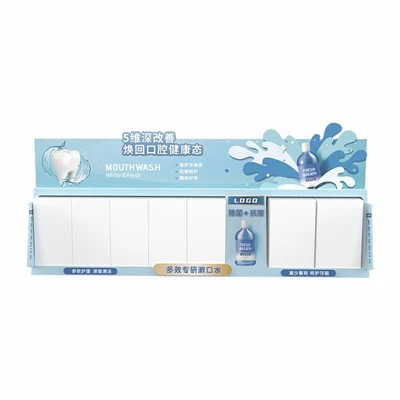
If you’re tired of displays that don’t fit, or you want to build something that will actually boost your sales on the countertop, hit us up to talk through your needs. We can walk you through exactly what adjustments will work for your counter size, send you samples of our adjustable displays, and work with you to get something that fits like a glove. No long sales pitches, no pressure—just straight talk about making displays that work for your space.
Freestanding Display Stand References:
- Corrugated Packaging Council. (2022). Best Practices for Modular Cardboard Displays. Retrieved from industry guidelines for retail packaging
- National Retail Federation. (2021). In-Store Display Optimization: Fit and Stability Impact on Sales. Retail Tech Report
- Corrugated Packaging Design Association. (2020). Adjustable Structural Modifications for Countertop Displays. Technical Guide for Retail Merchandising
Guangzhou Guangjie Display Products Manufacturing Co., Ltd.
We’re well-known as one of the leading cardboard countertop display manufacturers in China, also support customized service. Welcome to buy bulk high quality cardboard countertop display at competitive price from our factory. If you have any enquiry about pricelist and quotation, please feel free to email us.
Address: No. 16-1 Lilv Road, Dashi Street, Panyu District, Guangzhou City, Guangdong Province
E-mail: guangjie_dp888@163.com
WebSite: https://www.gjdisplaystand.com/
