Hey there, it’s Jake from the Power Plug and Cord team—thanks for dropping by our little corner of the web. Today, I’m answering one of the most common questions we get from electricians, DIYers, and shop owners alike: What gauge power plug cord do you need for 1500 watts? If you’ve ever stood staring at a spool of cord at the hardware store, wondering if you’re grabbing something safe enough for your space heater, workshop saw, or commercial coffee machine, this one’s for you. I’ve been selling these cords for 12 years now, and I’ve seen way too many people cut corners on gauge and end up with overheating cords, blown fuses, or even worse. Let’s break this down like we would over a coffee at our warehouse loading dock—no fancy jargon, just real-world advice. Power Plug and Cord

First, let’s get the basics right because this isn’t something you want to guess at. The gauge of a power cord tells you how thick the copper wire inside is. Thinner wire is a higher gauge number, right? So 14-gauge is thicker than 16-gauge, which is thicker than 18-gauge. Got that? Now, watts alone don’t tell the whole story. You need two more numbers: voltage and distance. That’s right—how far the cord runs between your device and the outlet makes a huge difference. Most homes in the U.S. use 120-volts for standard outlets, and commercial spaces might use 240-volts for heavy equipment. I’ll stick to 120-volts first because that’s what 90% of our customers use for 1500-watt tools and appliances.
Let’s do the math quick, no calculators needed. Ohm’s Law says amps = watts / volts. So 1500 watts divided by 120 volts is 12.5 amps. That’s the amperage your device pulls. Now, every gauge of cord has a maximum safe current it can carry without overheating. The National Electrical Code (NEC) sets these standards for the U.S.—they’re non-negotiable, I promise. For 120-volt circuits, the NEC says: 18-gauge cord is safe for up to 10 amps, 16-gauge is up to 13 amps, and 14-gauge is up to 15 amps. Wait, so if your 1500-watt device is 12.5 amps, that means 16-gauge is enough? Not so fast. Here’s the catch most people miss: voltage drop over distance.
Voltage drop is when the electrical current loses power as it travels through the cord. The longer the cord, the more voltage drops. If you have too much voltage drop, your device won’t work correctly—a space heater won’t put out full heat, a saw will run slow, or a motor might burn out over time. The NEC recommends that voltage drop for a 120-volt circuit shouldn’t be more than 3% for branch circuits (that’s the cord running from your outlet to your device). Let’s calculate that: 3% of 120 volts is 3.6 volts. So we can only lose 3.6 volts max, and we need to make sure that at the end of the cord, the device still gets at least 116.4 volts to work properly.
Now let’s test this with 16-gauge vs. 14-gauge. Let’s say your cord is 10 feet long. For 16-gauge, at 12.5 amps, the voltage drop for 10 feet is roughly 1.8 volts—way under the 3% limit. That’s fine, right? But what if the cord is 25 feet long? Let’s check that: 16-gauge at 25 feet, 12.5 amps gives a voltage drop of 4.5 volts. That’s over the 3.6 volt limit we can safely have. Oops. Now, what about 14-gauge at 25 feet? The voltage drop is only 2.8 volts—way under the limit. Same thing if your cord is 50 feet long: 16-gauge would drop 9 volts, which is almost 8% of your 120 volts—that’s a huge problem. 14-gauge at 50 feet only drops 5.6 volts, which is still over the 3% limit, wait—hold on, that’s where 10-gauge comes in? No, wait, most people don’t run 50-foot cords for a 1500-watt device. Wait, let’s adjust that for a second. If you’re using a 1500-watt commercial appliance that needs 240 volts, that changes the math. 1500 watts divided by 240 volts is 6.25 amps. Oh, that’s half the amperage! So for 240-volt circuits, voltage drop is lower too—3% of 240 is 7.2 volts. So a 16-gauge cord at 50 feet would only drop 2.25 volts, which is totally fine for 6.25 amps. That’s a big difference, so always note if you’re on 120 or 240 volts.
Now, let’s talk about real-world use cases because theory is great, but what do you actually buy? We get so many questions about space heaters first. A standard 1500-watt space heater is 12.5 amps, right? If you’re running it from a standard outlet, and the cord you’re using is 10 feet or less, 16-gauge is okay—BUT wait, let’s check the fine print on the space heater. Most manufacturers will specify that you shouldn’t use an extension cord longer than 6 feet with a 1500-watt space heater, and even then, they recommend 14-gauge for anything over 6 feet. Why? Because extension cords are usually thinner than permanent wiring, and they’re not designed to be run through tight spaces or in areas where they might get stepped on. I’ve had a customer bring in a 10-foot 16-gauge extension cord that overheated and melted the plug end because he was running a space heater from his garage outlet 25 feet away. He thought 16-gauge was enough for 1500 watts, but he forgot the distance.
Then there are workshop tools: a 1500-watt table saw or a heat gun. Those get moved around a lot, so flexibility matters too. Thicker cords (14-gauge) are a bit stiffer than 16-gauge, but they’re more durable for frequent movement. If you’re plugging it into a fixed outlet that’s only 15 feet away, 14-gauge is the safer bet, no questions asked. For commercial customers—like coffee shops with 1500-watt espresso machines, or retail stores with display lighting—they often use 14-gauge cords for runs up to 50 feet, because commercial circuits need to handle more load for longer distances. We also sell water-resistant 14-gauge cords for outdoor use, like for patio heaters or power tools on job sites, which is non-negotiable for safety in damp conditions.
Wait, what about the common myth that higher gauge is always better? No, if you only need a 6-foot cord for a 1500-watt device, paying for a 14-gauge cord is a waste of money. 16-gauge is perfectly safe for short runs, but only if it’s rated for the amperage and distance. But here’s the thing: most people underestimate how far they need the cord to reach, or they buy a longer extension cord “just in case.” So our general rule of thumb at the shop is: if your cord is longer than 15 feet, go 14-gauge for 1500 watts on 120 volts. If it’s 15 feet or shorter, 16-gauge works, but we still recommend 14-gauge for any high-use devices that get plugged in and out often.
Now, let’s talk about safety, because this is the big one. Using the wrong gauge cord can lead to overheating. When a wire is too thin for the current it’s carrying, the copper gets hot—hot enough to melt the insulation, start a fire, or damage your device. I saw a case last year where a homeowner used a 100-foot 18-gauge extension cord for his 1500-watt snow blower. The cord got so hot it burned through the floor of his garage, and the snow blower wouldn’t even start. That’s why following NEC guidelines isn’t just a suggestion—it’s a rule that’s been written in blood, basically. We stamp the gauge and amperage rating on every cord we sell, so you never have to guess what you’re getting. You’ll see something like “14/3 SJTW 15A 125V” on the plug end—14 is the gauge, 3 is the number of wires (hot, neutral, ground), SJTW is the type of insulation, 15A is the max amperage, 125V is the voltage. That’s all the info you need at a glance.
Another thing to consider: the number of devices on the same circuit. Wait, this is a common mistake. If your 1500-watt space heater is on a circuit that also has a microwave, a TV, and a fridge, that’s not just the 12.5 amps from the heater—those other devices add more load. So even if your cord is the right gauge, if the circuit itself is overloaded, you’ll have issues. That’s why we always advise checking your circuit breaker box: standard 120-volt circuits are 15 amps, so they can handle roughly 1800 watts total. So a 1500-watt device is most of that, so don’t plug another high-wattage thing into the same circuit. If you’re on a 20-amp circuit, that’s 2400 watts, so a 1500-watt device is fine, but still don’t skimp on the cord.
Let’s summarize this real quick so you don’t have to scroll back. For 1500 watts:
- 120-volt circuits, cord length 0-15 feet: 16-gauge is safe, but 14-gauge is recommended for durability and extra safety.
- 120-volt circuits, cord length 16-50 feet: 14-gauge is required to stay under 3% voltage drop.
- 240-volt circuits, any length under 50 feet: 16-gauge is more than enough, 14-gauge is only needed if you need to go longer than 50 feet.
- Always check the device’s manual first—manufacturers almost always specify the minimum cord gauge for their product.
Wait, I should mention a common question we get: what about the “jumper cords” or cheap extension cords from big box stores? A lot of times, those are underrated—they’ll say they’re 16-gauge, but the actual copper is thinner, so they can’t handle the full amperage. At Power Plug and Cord, we use pure annealed copper, which is the standard for electrical cords, and we test every batch to make sure it meets NEC standards. That’s why our cords cost a little more upfront, but they last longer and keep you safe. We’ve had customers come back after 10 years saying their cord is still working, while the cheap one they bought at the grocery store burned out in a month.
Now, if you’re someone who’s planning a big project—like wiring a workshop, or outfitting a commercial kitchen—we can help you figure out the exact gauge you need. We work with electricians, small business owners, homeowners, and contractors, so we’ve seen every scenario. For example, a customer last month needed cords for 6 commercial fryers, each 1500 watts, running on 240 volts from 30 feet away. We recommended 12-gauge cords for that, because the total load per circuit was higher, and the distance was longer than standard. That’s not a problem most DIYers will run into, but it’s why it’s always good to double-check with a supplier who knows their stuff.
Let’s also address a mistake I’ve made in the past. Early on at the shop, I sold a customer a 25-foot 16-gauge cord for his 1500-watt table saw. He came back a week later saying the cord was hot and the saw was running slow. I checked the math, saw that the voltage drop was over 3%, and gave him a 14-gauge cord for free. He ended up being a regular customer, and he told all his friends at the local woodworking club. That’s when I realized that the little details matter—when we sell a cord, we’re not just selling a product, we’re selling safety. That’s why we never push a cheaper cord that doesn’t meet the needs of the job.
So to wrap this up, the answer to “what gauge power plug cord for 1500 watts?” isn’t one-size-fits-all. It depends on your voltage, how long the cord needs to be, and what you’re using it for. If you’re keeping it short (under 15 feet) on 120 volts, 16-gauge is okay, but we stand by 14-gauge as the smarter, safer choice for almost every scenario. If you’re running it longer, on 240 volts, or using it frequently for heavy devices, go with 14-gauge. Always check your device manual, and never cut corners on cord gauge for anything over 1000 watts—1500 is right at the threshold where a too-thin cord becomes a hazard.
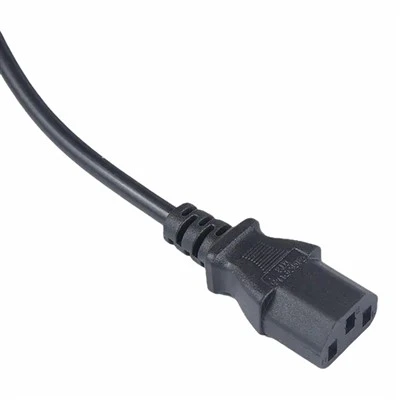
If you’re not sure which cord you need, or you’re ordering in bulk for your business, we’d love to help you pick the right one. Drop our team a line to discuss your specific needs, and we’ll point you to the perfect plug and cord for your application. No generic advice, no pushy sales—just real answers from people who’ve been in this business for over a decade, and care as much about your safety as you do.
Power Plug and Cord References:
National Electrical Code (NEC) Article 400: Flexible Cords and Cables
Underwriters Laboratories (UL) Standard 62: Flexible Cord and Cable Assemblies
Electrical Construction Maintenance (EC&M) Magazine: Voltage Drop Calculations for Electrical Circuits, 2022
Yuyao Mideal Electric Co., Ltd.
Yuyao Mideal Electric Co., Ltd. is one of the most professional power plug and cord manufacturers and suppliers in China, also supports customized service. With abundant experience, we warmly welcome you to wholesale cheap power plug and cord in stock here from our factory. For price consultation, contact us.
Address: No.28, Lujiafan Road, Langxia Street, Yuyao City, Zhejiang Province, China
E-mail: manager@nbmideal.com
WebSite: https://www.midealcord.com/
