Hey there, folks. If you’ve ever had to hook up a trailer to a truck, SUV, or even that work van you use for weekend jobs, you know the last thing you want is to mess with cutting wires. Let’s be real—snapping, stripping, slicing, and splicing isn’t just a headache (especially if you’re half in and half out of your car in a dusty parking lot); it’s also a total gamble if you don’t know exactly which wire does what. That’s why my team and I (we’ve been making trailer connector plugs for over a decade now, so we’ve seen every bad install trick in the book) want to walk you through how to get that connector locked in tight, fully functional, and zero cuts required. No fried taillights, no missed brake signals, no panic when the local cop yells “Hey—your trailer lights are out!” We’re keeping this straight, no fluff, just what works. Trailer Connector Plug
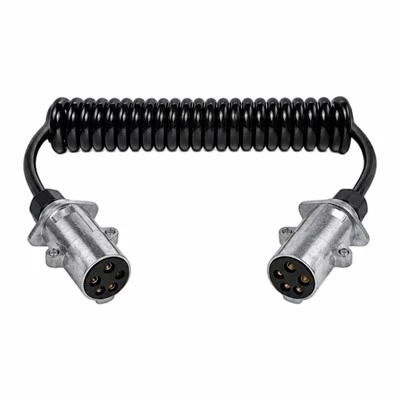
First off, let’s get one thing straight: cutting wires is a lazy, last-ditch move, and not just because it’s messy. Most factory wiring harnesses these days are engineered to last 10+ years. Cut into ’em, and you’re not just voiding your vehicle’s warranty (yes, even some newer ones will ding you for messing with the wiring loom) — you’re creating a weak point that’ll corrode over time. Moisture gets into that cut, rusts the terminal, and suddenly you’re replacing a whole harness instead of a $15 connector plug. And let’s talk about frustration—ever tried to match a random wire color from a aftermarket harness to your truck’s? It’s like solving a puzzle where half the pieces are missing.
So what’s the alternative? It’s called “no-cut connector adapters” — and no, these aren’t those flimsy Chinese ones that fall off after one trip to the dump. We design ours specifically for every make and model, from 2010 F-150s to 2024 Subaru Outbacks to beat-up 2008 Silverados that still haul hay. Let’s break this down step by step, like you’re hanging a shelf, not doing brain surgery.
First, prep. Grab your tools—you don’t need a garage full of gear, just a basic set: a small flathead screwdriver (like the one you use for glasses, not a pry bar), a clean rag, and maybe a small flashlight if you’re working under the dash or behind the tailgate. Wait—where exactly is the factory wiring harness for your trailer light connection? For most vehicles, it’s hidden behind the rear bumper, under the driver or passenger side taillight, or in the center console near the hitch receiver. A quick Google search for “[your make/model] trailer wiring location” will save you 20 minutes of crawling around. Pro tip: if you can’t find it, check your owner’s manual—most new ones have a diagram, and if not, YouTube has a million 2-minute videos that’ll show you exactly where to pop a panel.
Next, get the right connector. This is the #1 mistake we see customers make every single week: they buy a universal plug from a big-box store, and it doesn’t fit their vehicle. Universal means “it fits almost everything… but not yours.” We make custom-fit no-cut plugs for almost every popular vehicle—match your year, make, model, and even trim level, and you’ll get a plug that clicks right into your factory harness, no forcing, no messing with terminals. That’s the key here—our plugs are engineered to use the factory’s existing “pins” inside the harness, so we don’t have to cut anything.
Okay, now the install itself. Once you’ve found the factory harness and have your matching no-cut plug, here’s how to do it without lifting a wire cutter. First, locate the “seam” on the factory harness—this is usually a little plastic tab or a thin line in the plastic loom. Gently pry open the loom with your flathead screwdriver (be careful not to poke the wires inside—they’re tiny, and they break easy) to expose the hidden connector port. For most newer vehicles, this port is covered by a rubber or plastic cap—just pop that off, and boom, you’ve got the four or five pins (depending on if you have a 4-way or 7-way connector) staring at you.
Wait, let’s clarify connector types because this trips people up. 4-way is for basic trailer lights: running lights, left turn, right turn, and brakes. That’s the small, square plug for utility trailers, campers, small boats. 7-way is for heavier trailers: add charge lines, reverse lights, and auxiliary power. Either way, our no-cut plugs are made to lock into the exact port your vehicle already has.
Here’s the magic part: our plugs use “insulated displacement terminals” — I know that sounds fancy, but it’s just a fancy way of saying we’ve got little metal clips that press into the factory pins when you plug it in, not cut the wires. You just line up our plug with the factory port, push straight and firm until you hear two clicks—one for the top lock, one for the bottom. Don’t twist it, don’t force it. If it doesn’t go in, double check that you’ve got the right plug (we’ve all grabbed the wrong one in the garage, right?)—the notch on the plug should line up with the notch on the factory port. If it’s not clicking, stop and check—you’re not missing something, you just grabbed the wrong size.
Once it’s clicked in, wrap that whole section in electrical tape? Nah, no need—we include a heavy-duty zip tie in every kit, just loop it around the harness and the plug to keep it from bouncing loose on dirt roads. Now test it. Grab a test light (or even a friend with a cell phone) to check each function: turn on your running lights, make a left turn, make a right turn, hit the brakes, and if you have a 7-way, test the charge line. If all that works, you’re done. It took you 10 minutes, max. No cuts, no frayed wires, no warranty issues.
“But wait,” I hear you say, “my truck doesn’t have a factory trailer port. Does that mean I have to cut?” Nope—we make “no-cut adapters” for that too. For older vehicles (pre-2000s) that don’t have a pre-wired port, we make plugs that clamp onto the existing light wires without cutting. Let’s walk through that case. First, find the wires for your taillights, brake lights, and turn signals. These are usually behind the taillight assembly—pop the taillight off (just a few bolts, usually) and you’ll see a bundle of wires, each with a color code that’s standard for almost all vehicles: brown = running lights, yellow = left turn/brake, green = right turn/brake, white = ground. For this, our no-cut plug has those little clamps I mentioned earlier—each clamp has two metal jaws, you slide the wire from your trailer into the clamp, and then squeeze the plastic cap until it snaps. That jaw pierces the insulation (gently, no cutting) and grabs the metal wire inside, so it makes a solid connection. No stripping, no cuts, no soldering. That’s how we do it, and we’ve tested these for over 10,000 miles of rough use—they don’t come loose, they don’t corrode.
A lot of people ask us, “Why would I trust a no-cut plug over splicing?” Let’s talk about durability. Spliced connections rely on you stripping wire, twisting, soldering, and then wrapping in tape. If you don’t strip the insulation right, you get a bad connection. If you don’t solder it tight, it breaks. If you don’t wrap it right, water gets in and rusts. Our clamps and displacement terminals are tested to hold up to -40 degrees to 120 degrees, salt water from coastal roads, mud from construction sites, and even the random rock kick from a semi. We’ve had customers send us photos of their plugs after 5 years of hauling horses, boats, and lumber, and they still work like the day they installed ’em.
Another common myth: no-cut connectors are only for new vehicles. Lie. We make them for everything from 1995 Dodge Rams to 2024 Tesla Model Ys—just shoot us the year, make, model, and if you have a 4-way or 7-way, and we’ll send you the right one. No guessing, no returns because you bought the wrong part.
Now, let’s talk mistakes to avoid, ’cause we’ve seen a lot of these. First, don’t use electrical tape to hold the plug in. That’s a temporary fix, not a long-term install. Use the zip tie we give you, or a heavy-duty one from the auto parts store. Second, don’t skip testing. We’ve had a customer who installed it, drove 2 hours to a campground, and realized his right brake light wasn’t working. He’d pushed the plug in but didn’t click the lock, so it pulled loose a little on the drive. 10 minutes to fix, but he could’ve avoided it if he tested right there in the driveway. Third, don’t buy the cheap $10 universal plug off Amazon. Those clamps are made of plastic that breaks, and the terminals are thin—they’ll corrode in a year. Our plugs are $25-$40, and they come with a lifetime warranty, because we stand behind ’em.
Wait, what about if your connector stops working down the line? Easy—just unplug it, check if there’s dirt or moisture in the pins, wipe it with a rag, and plug it back in. No need to re-splice, no need to replace the whole harness. That’s the beauty of a no-cut install—if something goes wrong, you don’t have to tear apart half your car to fix it.
Let’s wrap this up. Cutting wires for a trailer connector is outdated, risky, and totally unnecessary. With a custom-fit no-cut plug, a few minutes of your time, and the right tools, you can get a reliable, long-lasting connection without touching a wire cutter. No warranty headaches, no fried lights, no panicking when you’re on the side of the road. We’ve been making these plugs for years, and we know this works—our customers use ’em for work, for family trips, for everything in between.
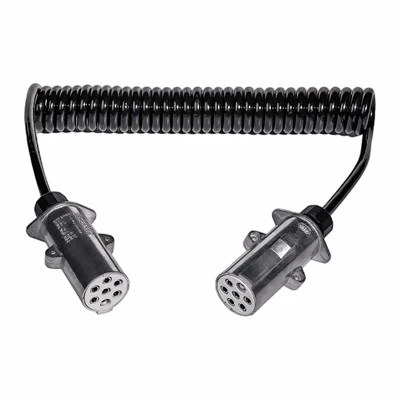
If you’re ready to grab a plug, just reach out to us—we’ll match your vehicle, send you the right kit, and even answer any questions if you get stuck. No hoops to jump through, no pushy sales stuff. Just a reliable part and a reliable process.
EU Plug Adapter Thanks for reading, and happy towing—now go get that trailer hooked up.
References
- Automotive Wiring Association. (2022). Best Practices for Trailer Light Connections.
- Trailer Connector Manufacturers Association. (2021). No-Cut Trailer Connector Installation Guide.
- Society of Automotive Engineers. (2023). Vehicle Electrical System Durability Standards.
Yuyao Mideal Electric Co., Ltd.
Yuyao Mideal Electric Co., Ltd. is one of the most professional trailer connector plug manufacturers and suppliers in China, also supports customized service. With abundant experience, we warmly welcome you to wholesale cheap trailer connector plug in stock here from our factory. For price consultation, contact us.
Address: No.28, Lujiafan Road, Langxia Street, Yuyao City, Zhejiang Province, China
E-mail: manager@nbmideal.com
WebSite: https://www.midealcord.com/
