Yo! I’m part of a time and frequency synchronization supplier crew, and today I wanna dig into the algorithms that are the real MVPs in this field. Time and frequency synchronization is super crucial in a bunch of areas, like telecommunications, power grids, and aerospace. It ensures that different devices can play nice together, sharing data and signals at the right time and frequency. So, let’s jump into the cool algorithms that make this all happen. Time and Frequency Synchronization
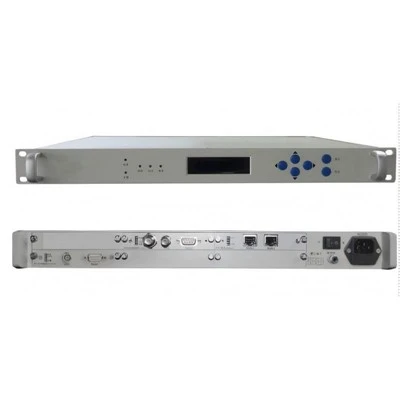
1. The Phase-Locked Loop (PLL) Algorithm
The Phase-Locked Loop, or PLL for short, is like the OG of time and frequency synchronization algorithms. It’s been around for ages and is still widely used today. The basic idea behind a PLL is to lock the phase of an output signal to the phase of a reference signal.
Here’s how it works in a nutshell. You’ve got a reference signal, which is your gold standard. Then, you have a voltage – controlled oscillator (VCO) that generates the output signal. The PLL compares the phase of the reference signal and the output signal using a phase detector. If there’s a difference in phase (a phase error), the phase detector spits out an error voltage. This error voltage is then filtered by a loop filter to smooth it out and remove any noise. Finally, the filtered error voltage is fed into the VCO, which adjusts the frequency and phase of its output signal until the phase error is minimized.
In the real world, you’ll find PLLs in radio receivers, clock recovery circuits in digital communications, and even in some clock distribution systems. For example, in a mobile phone, a PLL is used to generate the local oscillator signals that are needed for up – conversion and down – conversion of radio frequencies. It’s a simple yet powerful algorithm that has stood the test of time.
2. The Delay – Locked Loop (DLL) Algorithm
Another important algorithm is the Delay – Locked Loop, or DLL. While the PLL focuses on phase and frequency, the DLL is all about timing and delay. It’s designed to adjust the delay of a signal to match a reference delay.
A DLL has a delay line, which can change the delay of the input signal. Similar to a PLL, it has a phase detector that compares the phase of the output of the delay line with a reference signal. If there’s a difference in phase, an error signal is generated. This error signal is then used to control the delay of the delay line. The goal is to make the delay of the output signal equal to the reference delay.
DLLs are commonly used in high – speed digital circuits, like microprocessors and memory interfaces. In a microprocessor, for example, a DLL can be used to synchronize the clock signals between different parts of the chip. It ensures that all the logic gates receive the clock signal at the right time, which is essential for the correct operation of the processor.
3. The Maximum – Likelihood Estimation (MLE) Algorithm
The Maximum – Likelihood Estimation algorithm takes a more statistical approach to time and frequency synchronization. Instead of just locking the phase or delay, MLE tries to find the most likely values of time and frequency offsets based on the received signals.
In a communication system, the received signal is often affected by noise, fading, and other impairments. The MLE algorithm analyzes the received signal and tries to estimate the time and frequency offsets that would have most likely produced the observed signal. It does this by maximizing a likelihood function, which is a measure of how likely the observed signal is given a particular set of time and frequency offsets.
MLE is used in many modern communication systems, such as 4G and 5G cellular networks. In these systems, accurate time and frequency synchronization is crucial for high – speed data transmission and reliable communication. The MLE algorithm can provide very accurate estimates of time and frequency offsets, even in noisy environments.
4. The Discrete Fourier Transform (DFT) – Based Algorithms
The Discrete Fourier Transform is a powerful mathematical tool that can be used for time and frequency synchronization. The idea behind DFT – based algorithms is to convert the received signal from the time domain to the frequency domain.
Once the signal is in the frequency domain, it’s easier to analyze its frequency components. By looking at the peaks and troughs in the frequency spectrum, we can estimate the frequency offset between the received signal and the reference signal. Some DFT – based algorithms also use the phase information in the frequency domain to estimate the time offset.
DFT – based algorithms are often used in wireless communication systems, especially in orthogonal frequency – division multiplexing (OFDM) systems. OFDM is a popular modulation technique used in Wi – Fi, 4G, and 5G networks. In an OFDM system, accurate time and frequency synchronization is essential to avoid inter – carrier interference. DFT – based algorithms can quickly and accurately estimate the time and frequency offsets, which helps to improve the performance of the system.
5. The Kalman Filter Algorithm
The Kalman filter is a recursive algorithm that can be used for time and frequency synchronization. It’s a powerful tool for filtering and estimating the state of a system based on a series of noisy measurements.
In the context of time and frequency synchronization, the Kalman filter can be used to estimate the time and frequency offsets of a signal. It takes into account the dynamics of the system, such as the way the frequency offset may change over time. The Kalman filter uses a prediction step to predict the state of the system at the next time step, and an update step to correct the prediction based on the new measurements.
The Kalman filter is often used in satellite communication systems and other applications where the signal environment is complex and the time and frequency offsets can change rapidly. It can provide more accurate and stable estimates of time and frequency offsets compared to some other algorithms.
Why These Algorithms Matter for Our Business
As a time and frequency synchronization supplier, these algorithms are at the heart of what we do. We use them to develop high – quality synchronization products that can meet the needs of our customers. Whether it’s a small – scale wireless sensor network or a large – scale telecommunications infrastructure, our products rely on these algorithms to provide accurate and reliable time and frequency synchronization.
For example, if a customer is running a 5G base station, they need a synchronization solution that can keep the base station in sync with the rest of the network. Our products, which are based on the latest algorithms like MLE and DFT – based algorithms, can ensure that the base station operates at the right frequency and time, which is essential for high – speed data transmission and low – latency communication.
Let’s Talk Business
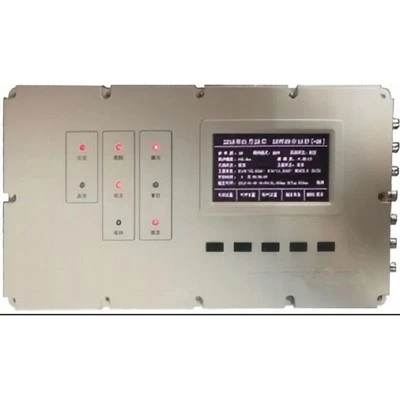
If you’re in the market for time and frequency synchronization solutions, we’d love to chat with you. Our products are designed to be highly accurate, reliable, and easy to use. We’ve got a team of experts who can work with you to understand your specific needs and recommend the best solution for your application.
Time and Frequency Synchronization Whether you’re in telecommunications, power, aerospace, or any other industry that requires precise time and frequency synchronization, we’re here to help. Don’t hesitate to reach out to us and start a conversation about how we can help you achieve your synchronization goals.
References
- Razavi, B. (2016). Design of Integrated Circuits for Optical Communications. McGraw – Hill Education.
- Proakis, J. G. (2001). Digital Communications. McGraw – Hill.
- Simon, M. K., Omura, J. K., Scholtz, R. A., & Levitt, B. K. (1994). Spread Spectrum Communications Handbook. McGraw – Hill.
China Go-Sat Microwave Co., Ltd.
China Go-Sat Microwave Co., Ltd. is one of the most professional time and frequency synchronization manufacturers and suppliers in China. With abundant experience, we warmly welcome you to buy advanced time and frequency synchronization made in China here and get quotation from our factory. All customized products are with high quality and competitive price.
Address: No. 3908 ShiBo Avenue, Baqiao District, Xi’an, China
E-mail: sales@go-satcom.com
WebSite: https://www.go-satcom.com/
