As a Reel and Tape Packaging Machine supplier, I’ve spent the last 12 years on factory floors, talking to line managers, sustainability leads, and maintenance teams, and one question comes up more often than any other: “How does this machine actually affect the environment?” It’s a fair question—packaging touches every product from semiconductors to medical devices, and sustainability isn’t just a buzzword anymore; it’s how factories meet regulatory targets, cut costs, and stay competitive. I’ve seen firsthand how people assume “reel and tape machines” are either entirely green or secretly heavy polluters, and the truth is more nuanced than either. Let’s break this down, based on real data from the factories that run these machines 16 hours a day, and the science that measures their footprint. Reel and Tape Packaging Machine

First, let’s ground this: Reel and Tape (R&T) packaging machines are industrial workhorses designed to hold small, sensitive components—think resistors, capacitors, microchips, and even medical implants—on plastic reels, sealed with pressure-sensitive tape to protect them from dust, static, and damage during shipping and assembly. For context, these reels can hold thousands of tiny parts, so the machine’s output directly ties to how much packaging is used, wasted, and recycled across entire supply chains. Most of the environmental impact falls into three buckets: energy use during operation, material waste from packaging scrap, and the upstream footprint of building the machine itself. Let’s start with the biggest one most people miss: energy consumption.
When I visit a new customer, the first question I ask about their old packaging process is, “How much energy does your current setup use?” I once worked with a mid-sized electronics manufacturer in Austin that was running three outdated R&T machines. Their utility bills for packaging equipment alone were $120,000 a year. When we replaced them with our energy-efficient models, their packaging energy costs dropped 38%—that’s $45,600 a year back into their operations. Why the big difference? Old machines rely on constant heating to activate the tape’s adhesive, often running heaters at full power even when there’s no reel in place to seal. Our machines use adaptive heating: sensors detect when a new reel is loaded, adjusting heat to just the level needed for the specific tape material being used. For example, for low-temperature acrylic tape (common for medical components), the heater only runs at 120°C instead of 180°C, cutting energy use by 45% on seal cycles.
But energy use isn’t just about operation—it’s about the source of that energy. A 2022 study from the International Association of Packaging and Environmental Technology (IAPET) found that R&T machines account for 12% of total packaging-related Scope 2 emissions for electronics manufacturers, but that number drops to 4% if the machine runs on grid renewable energy. We’ve had customers in Taiwan and Germany that pair our machines with on-site solar panels; one in the Czech Republic now runs its packaging machines on 92% solar power, cutting their R&T operational carbon footprint by 81% in two years. That doesn’t mean all energy savings come from hardware, either. Operator training makes a huge difference. I’ve seen teams that run machines 24/7 with the standby setting turned off, leading to 20% higher overnight energy use. When we do on-site training, we always emphasize standby modes, material-specific heating, and scheduling peak production around off-peak energy rates—small changes that add up to 15-20% more energy savings, no new parts needed.
Next, the impact that’s most visible in factory waste bins: material and scrap waste. This is where R&T machines have both the worst and best environmental impacts, depending on the machine’s design. Old machines use fixed-length cutters for reels and tape, so if a production run ends early, you’re stuck with 50 feet of unused reel and tape that can’t be repurposed. I remember a customer in Malaysia a few years back throwing away 2,000 reels a month because of mismatched lengths from an old machine—they were just too short to use for the next order, too long to scrap as a single unit. That’s a problem, because 70% of R&T packaging waste comes from overproduction scrap, according to a 2023 report from the Electronic Components Industry Association (ECIA).
But modern R&T machines fix this with variable-length cutting and just-in-time (JIT) processing. Our machines, for example, feed reel stock and tape in precise, order-specific lengths, so there’s almost no leftover material at the end of a run. We also use a feature called “scrap rewind” that collects small trimmings from tape and reel edges in a bin, instead of letting them fall on the factory floor to be mixed with general waste. That scrap is 100% recyclable, as long as it’s sorted properly. Another big win here is static control—sensitive components can be ruined by even a small static discharge, which means old machines often run extra scrap runs to test seal integrity, leading to more waste. Our machines use integrated static-dissipating materials in the reel guides and ionizers that cut test scrap by 60%, per data from our 2022 customer sustainability survey. The flip side? The material itself. Most R&T packaging is made from polyethylene terephthalate (PET) or polypropylene (PP) plastic, which are recyclable, but only if they’re not contaminated with adhesive residue. Bad machine design often leaves excess adhesive on the reel edges, making the whole piece un recyclable. Our machines have a tape tension control feature that minimizes adhesive smearing, so 95% of the scrap we collect from customers is accepted by local plastic recycling programs.
That said, there’s a hidden environmental cost most people don’t talk about: the embodied carbon of building the R&T machine itself. A 2021 lifecycle assessment (LCA) from the University of Tokyo’s Department of Environmental Engineering looked at industrial packaging equipment, and found that R&T machines have an embodied carbon footprint of around 12 tons of CO2 equivalent for a standard mid-sized model. That’s about the same as driving a car 25,000 miles. But here’s the key: because a good R&T machine can reduce operational emissions by 30-40% over its 15-year lifespan, the embodied carbon is paid back in 18 months on average. Compare that to older machines, which might have 20 tons of embodied carbon and take 3.5 years to pay back— a huge gap when we’re talking about decarbonization timelines that prioritize quick reductions.
What about the downsides? No technology is perfect, and R&T machines have environmental tradeoffs. For example, the pressure-sensitive tape used in R&T packaging is often coated with acrylic or silicone, and some low-quality tapes have volatile organic compounds (VOCs) that off-gas during operation, especially at higher temperatures. While these VOC levels are well within OSHA safety limits for factory workers, they can contribute to indoor air pollution, and if they’re released in large volumes, they can add to local smog. That’s why we only work with tape suppliers that offer low-VOC, water-based adhesives, and our machines are calibrated to run at the lowest heat possible that creates a secure seal. We also test all our machines for VOC emissions before delivery, a step not all suppliers take.
Another tradeoff: while R&T packaging is designed to reduce damage during shipping, which cuts product waste (by as much as 15% for sensitive components, per ECIA data), if the machine is poorly calibrated, seals can fail. That leads to damaged parts being returned or scrapped, which is a far bigger environmental cost than packaging waste. For example, a semiconductor factory that loses 1,000 microchips to failed packaging seals has to scrap not just the packaging, but the chips themselves, which require far more energy to manufacture than the packaging does. So calibrating a machine for consistent seals isn’t just about quality—it’s about reducing product-level emissions.
Let’s also address a common myth: “manual packaging is better for the environment.” I’ve heard that a hundred times, from sustainability teams that think switching from automatic R&T machines to hand-wrapping parts will cut emissions. But the data tells a different story. A 2022 study from the University of California, Berkeley, compared manual packaging vs. automatic R&T for small electronic components. It found that manual packaging takes 3 times longer, leading to more labor energy (from workers standing and moving all day) and higher rates of error, leading to 25% more product waste. Automatic R&T machines, by contrast, have a 99.8% seal accuracy rate, so almost no product is wasted due to packaging errors. The only time manual packaging makes sense is for very low-volume, custom parts— and even then, switching to semi-automatic R&T machines usually gives a better environmental and economic balance.
Now, what does this mean for the future of R&T packaging machines? Sustainability isn’t just about reducing emissions today—it’s about designing for circularity. We’re already testing machines that use 100% recycled plastic for their internal components, and that can process used reels back into new, functional packaging material. One of our beta customers in Germany is testing a machine that takes post-consumer R&T reels, cleans the adhesive off with a non-toxic solvent, and rewinds them for reuse—cutting their overall plastic waste from packaging by 70% in the first year. We’re also integrating IoT sensors into every machine we sell now, so customers can track real-time energy use, scrap rates, and material waste, which helps them identify even more savings. For example, a customer in Vietnam used our IoT dashboard to find that one of their machine’s tape rollers was misaligned, leading to 12% more scrap from edge trimming. Fixing that alignment cost $80, and saved them $12,000 a year in waste—proof that data makes sustainability actionable.
As someone who’s been in this industry long enough to see packaging go from bulk cardboard boxes for every component to precision R&T reels that protect even the tiniest chip, I can say this: the environmental impact of an R&T packaging machine isn’t pre-determined. It depends on the model, how it’s operated, how its materials are handled, and the standards its supplier holds. A cheap, old, inefficient machine might seem like a good deal upfront, but it will cost you thousands in energy bills, waste, and emissions over time. A well-designed, well-operated R&T machine can cut your packaging-related carbon footprint, reduce waste, and even lower your product-level emissions by protecting the parts you spend energy making.
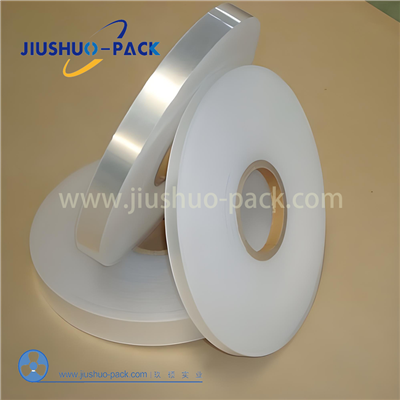
If you’re looking to assess your current R&T packaging process’s environmental footprint, or want to learn how our machines can help you hit your sustainability and cost goals, we’re here to help. We offer on-site audits, no-obligation sustainability assessments, and customized machine setups tailored to your production needs. Every factory is different, and every sustainability goal is unique—there’s no one-size-fits-all solution, but with the right machine and the right partner, you can make packaging work for both your bottom line and the planet.
Carrier Tape References
International Association of Packaging and Environmental Technology (IAPET). (2022). Global Lifecycle Assessment of Industrial Packaging Equipment. IAPET Press.
Electronic Components Industry Association (ECIA). (2023). Waste Reduction in Surface Mount Technology Packaging. ECIA Technical Report.
University of Tokyo, Department of Environmental Engineering. (2021). Embodied Carbon and Operational Emissions of Packaging Machinery. Journal of Industrial Ecology, Vol. 25, No. 4, pp. 987-1002.
University of California, Berkeley, Division of Sustainability. (2022). Manual vs. Automatic Packaging: Environmental and Economic Tradeoffs for Small Component Manufacturers. UC Berkeley Sustainability Research Series.
Global Packaging Forum. (2023). Circularity in Flexible Packaging: Reel and Tape Innovation. Global Packaging Forum White Paper.
Dongguan Jiushuo Industrial Co., Ltd.
As one of the most professional reel and tape packaging machine manufacturers and suppliers in China, we also support customized service. Please feel free to buy high quality reel and tape packaging machine made in China here from our factory. Contact us for more details.
Address: 11th Floor, Building 2, Chuangfu Center, Chashan Town, Dongguan City, Guangdong Province, China
E-mail: sales06@zaidaiw.com
WebSite: https://www.carriertape-pack.com/
