Hey there, warehouse ops folks, forklift drivers, and supply chain nerds – let’s cut to the chase. If you’ve ever wandered a 3PL warehouse, a manufacturing distribution hub, or even a retail backroom, you’ve probably seen the same chaotic, siloed dance: a forklift zipping past a conveyor belt, a pallet jack parked next to a stretch wrapper, and a picker hauling a tote on a separate cart, all moving like uncoordinated ants. For way too long, forklifts’ve been treated like standalone workhorses – your go-to for hauling pallets from dock to rack – but what if they could hook up with every other piece of gear in your space? As a forklift supplier that’s spent years chatting with warehouses big and small, I’m here to say: yeah, they can. And ditching those silos isn’t just a nice-to-have – it’s the difference between chasing daily productivity targets and actually crushing ’em. Forklifts
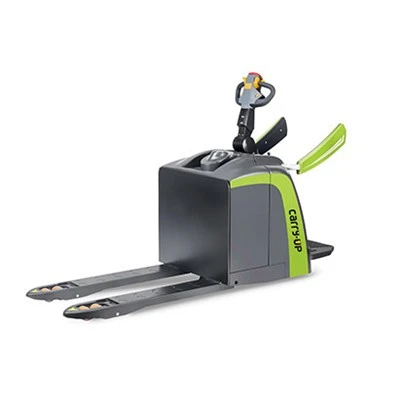
First, let’s get real about the old way most warehouses run: most of ’em still operate like they did in the 90s, right? Forklifts run on their own route, conveyor belts are timed for a different shift, pallet jacks sit idle until someone remembers to move a load, and stretch wrappers are just… there, waiting for a human to feed them a pallet. That lack of integration doesn’t just slow things down – it costs you money. I had a customer last year, a mid-sized food distribution warehouse in Ohio, telling me their forklift drivers spent 2 hours every single day waiting for pallets to get off the dock so they could haul ’em to storage. Turns out, their conveyors weren’t synced to their forklift routes – so the pallets would pile up at the dock, and drivers were stuck staring at the clock instead of moving product. When we started hooking their electric forklifts to their dock conveyors? That wait time dropped by 90%. No more idle forklifts, no more dock backups – just a smooth flow from truck to rack, no extra steps.
Now, let’s break down the actual ways forklifts link up with other warehouse gear, because it’s not just some futuristic sci-fi stuff – it’s happening right now. The most common (and game-changing) integration? Forklifts and conveyor systems. Old-school conveyors dump pallets at the dock or end of a line, and then someone has to grab ’em with a forklift – but modern telematics and machine-to-machine (M2M) tech lets forklifts “talk” to those conveyors. Here’s how it works: when a conveyor detects a full pallet, it sends a signal straight to the forklift’s on-board tablet – which routes the closest available forklift to grab that pallet, no radio call needed. The forklift’s mast even adjusts automatically to match the pallet’s height on the conveyor, so drivers don’t have to fumble with manual adjustments mid-task. I’ve seen this cut pallet handling time by 30% at e-commerce fulfillment centers – think about how many packages you move when every step is faster.
Another big one: forklifts and automated guided vehicles (AGVs), or those little driverless carts you see in some big warehouses. Wait, you might think AGVs replace forklifts, but no – integrating ’em works way better. Let’s say you have a high-bay storage area where forklifts can reach 30 feet up, and a floor area where AGVs move totes around pick zones. Instead of forklifts dropping pallets on the floor for AGVs to load, they’re synced: the forklift delivers pallets directly to the AGV’s charging station, and the AGV splits those pallets into small totes for pickers. One of our clients, a appliance manufacturer in Texas, did this and cut their order fulfillment time by 25% – no more double-handling pallets, no more mix-ups between forklift and AGV loads. Even better, the telematics system lets managers pull up a dashboard that shows exactly where every forklift and AGV is, so you’re not guessing if a load’s at the dock or halfway to storage.
Then there’s forklifts and palletizing equipment – like stretch wrappers, robotic palletizers, even manual pallet jacks. Let’s talk stretch wrappers first: if your forklift is synced to a stretch wrapper, once a pallet is loaded onto the wrapper, the wrapper sends a signal to the forklift that it’s ready to move. No more waiting for a worker to radio the driver, no more pallets sitting wrapped and idle. For pallet jacks, we’ve seen small, electric pallet jacks synced to forklift systems – if a forklift needs a pallet hauled from the staging area, it alerts the closest pallet jack, which rolls over and moves it before the forklift even leaves the rack. Small change, but it adds up: a client in North Carolina with 8 forklifts and 12 pallet jacks cut their total labor time on pallet moves by 15% in 6 months.
Wait, but let’s address the elephant in the room: a lot of warehouse managers think integrating forklifts means ripping out all their old gear and dropping a bunch of cash on new stuff. Yeah, that’s one way, but it’s not the only way. I work with a ton of small to medium warehouses that don’t have a huge budget, and we’ve got low-cost ways to make this happen. For example, if you already have electric forklifts, you can add a basic telematics module (no fancy AI, just plug-and-play) that connects to your existing conveyors or wrappers for a couple hundred bucks. It’s way cheaper than buying a whole new fleet. We also do custom setups – if your warehouse has weird racking or conveyor routes, we can tweak the integration to fit your space, not the other way around. No cookie-cutter solutions here, because every warehouse’s needs are different.
But let’s be real: integration isn’t just about gear – it’s about driver buy-in too. I’ve seen warehouses spend tens of thousands on synced systems, only to have drivers ignore the alerts because they’re used to doing things their way. That’s why our team doesn’t just sell you equipment – we train your drivers on how the integrated system works, explain why it’s easier for them (no more searching for pallets, no more back-and-forth radio calls) instead of just listing productivity stats. Last year, a driver at a small grocery warehouse told us, “Before this, I was running around all day. Now, the system tells me exactly where to go, so I actually get my shifts done without rushing.” That’s the win – integration should make a driver’s job simpler, not more complicated.
Now, let’s talk about the pain points that come with this, because nothing’s perfect. The biggest one is compatibility – if your forklift is 10 years old and your conveyor is 15 years old, they might not play nice. But again, that’s where we come in. We’ve got adapters and retrofits that work with almost any forklift and most older warehouse gear. Another pain point is downtime – if one piece of gear goes down, does the whole system crash? We build our integrated systems with backup plans: if a conveyor breaks, the forklift can default to manual alerts, no full shutdown. We also offer 24/7 support for our clients, so if something goes sideways at 2 a.m. on a busy shift, we’re there to help fix it fast.
Wait, let’s wrap this up with a real example that hit home for me last quarter. We worked with a 50,000 sq ft DIY supply warehouse in Michigan that was losing $12k a month to idle forklifts and pallet handling errors. They had 4 forklifts, 2 conveyors, a dozen stretch wrappers, and a bunch of manual pallet jacks – all running separate. We hooked their electric forklifts to their dock conveyors and stretch wrappers, added a basic telematics dashboard for their managers, and trained their 6 drivers in a 2-hour session. Three months later, they called us saying that monthly loss was down to $1.5k – they were saving almost $10k a month, just from integrating their forklifts with the rest of their gear. That’s not a hypothetical – that’s a real warehouse, real numbers, real results.
At the end of the day, forklifts aren’t standalone machines anymore. They’re the hub that ties your whole warehouse operation together – connecting docks, conveyors, pick zones, and automated gear into one smooth system. If your forklifts are still operating in a vacuum, you’re leaving productivity, money, and even driver satisfaction on the table.
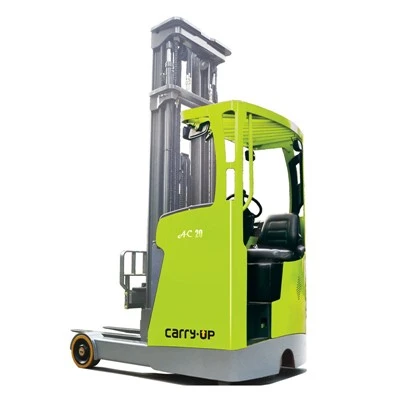
If you’re ready to stop treating your forklifts like solo workhorses and start integrating them with the rest of your warehouse equipment, hit us up for a chat. We don’t do pushy sales stuff – we’ll walk through your space, talk through your pain points, and figure out a setup that works for you, no fluff, no hidden fees.
Manual Stackers References:
- "2024 Warehouse Productivity Report", Material Handling Industry Association
- "Forklift Telematics and Equipment Integration", Modern Materials Handling, Volume 78, Issue 4
- Small Warehouse Efficiency Study, National Small Business Association, 2023
- Electric Forklift Compatibility Guidelines, Occupational Safety and Health Administration (OSHA), 2022
Hangzhou Carry Equipment Co., Ltd.
Hangzhou Carry Equipment Co., Ltd. is one of the most professional forklifts manufacturers and suppliers in China, also supports customized service. Please feel free to buy advanced forklifts for sale here and get quotation from our factory. For price consultation, contact us.
Address: No.360 Tongxiang Rd., Yinzhou Economic Development Zone, Yinzhou Dist., Ningbo, China
E-mail: Sales@carryupmhe.com
WebSite: https://www.carrymhe.com/
