When I first started working in palletizing robot sales, I got asked a lot of questions that felt a little out of left field. One of the most persistent was, “Can palletizing robots be used for layer picking?” At the time, I’d spent years designing, building, and troubleshooting these systems, and I’d always thought of palletizing and layer picking as two separate tasks. But as I talked to more warehouse managers, production supervisors, and logistics leads, I realized this question wasn’t just a curious one—it was a practical one, rooted in the pressure warehouses are under to do more with less. Palletizing Robots
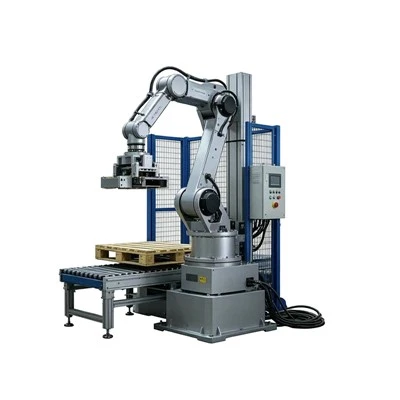
Let me start by breaking down what each term means, because that’s where a lot of the confusion starts. Palletizing, for those who might not be in the space, is the process of stacking individual products, cases, or bags onto a pallet in a specific pattern to prepare for shipping. That pattern is usually consistent layer after layer—like a brick wall, where each row offsets to make the whole stack stable. Layer picking, on the other hand, is the task of lifting an entire layer of products at once from a pallet, rack, or conveyor, and moving it to another location. Traditionally, these two tasks were done by separate equipment: palletizing robots did the stacking, and layer pickers (often more specialized, expensive, and bulkier systems) did the layer-level handling.
For a long time, that split made sense. Palletizing robots were built for precision in stacking—they’d pick one item at a time, place it in the exact spot on the layer, then repeat. Layer pickers needed to grip an entire layer, which required different end-of-arm tooling (EOAT), and they had to handle the unique challenge of lifting a flat, heavy layer without shifting or damaging the products. But over the last decade, as warehouse labor costs have skyrocketed and demand for order fulfillment has accelerated, that one-size-two-machines approach is starting to strain budgets and floor space. That’s where the overlap comes in.
Let’s get specific about what a palletizing robot is capable of. Our systems, like most modern palletizing robots, use 6-axis articulation—meaning the arm can rotate, bend, and extend in almost any direction, just like a human arm. They have programmable EOAT: we can swap out vacuum grippers, mechanical clamps, or custom fixtures depending on the product. For layer picking, that’s a game-changer. If we outfit a palletizing robot with a specialized layer vacuum gripper—something that’s designed to cover the entire surface of a layer of cases, create uniform suction across the whole layer, and release it cleanly onto a conveyor or staging area—it can do the same job a dedicated layer picker does.
I’ve seen this work firsthand at a beverage distribution center in the Midwest a couple of years ago. They had two separate lines: one with a palletizing robot that stacked 24-packs of soda onto pallets, and a layer picker that would pull entire layers for local grocery delivery. When their old layer picker broke down during a peak summer weekend, they were facing a 48-hour shutdown that would have cost them tens of thousands in lost sales. We brought in one of our palletizing robots, swapped its standard case gripper for a layer vacuum gripper, adjusted its programming to recognize the layer pattern, and had it running in under four hours. It picked 12 layers of 24-packs each, moved them to the delivery conveyor, and kept operations going until the layer picker was fixed. That’s not a hypothetical—that’s a real customer problem we solved with a tool they already owned.
But it’s not just a temporary fix. There are key reasons why a palletizing robot is not just a substitute for layer picking, but often a better choice in certain applications. First, floor space. Dedicated layer pickers are big—they need a wide footprint to maneuver, extra space for the layer handling head, and clearance for the lifts. Palletizing robots mount to the floor, a wall, or a ceiling, so they take up 30-50% less space than a layer picker. For small to mid-sized warehouses where every square foot is allocated to storage or order processing, that’s a huge win.
Second, flexibility. A palletizing robot can switch between tasks in minutes, not hours. One day it’s palletizing for bulk shipping, the next it’s layer picking for e-commerce orders, the next it’s loading trucks. Dedicated layer pickers are purpose-built—you can’t repurpose them for palletizing without a major overhaul. For warehouses that handle mixed SKUs, seasonal demand spikes, or both, that flexibility translates directly to lower equipment costs and higher ROI. We had a customer in the pet food industry who runs two lines: one for dry kibble bags, one for wet food cans. During holiday season, they need to palletize for bulk distribution. In the off-season, they need to pick layers of cans for subscription box orders. By using a single palletizing robot with two EOAT tools, they cut their equipment count from two machines to one, saving over $150,000 in upfront costs, and reduced their labor needs by one full-time operator.
Of course, it’s not all perfect. There are limitations to using a palletizing robot for layer picking, and it’s important to be honest about those. First, product type. Palletizing robots work best with uniform, rigid products—cases, boxes, bags. If you’re dealing with irregular items, like loose produce, oddly shaped consumer goods, or fragile items that can’t handle the suction of a layer gripper, a palletizing robot might not be the right fit. Layer pickers can be customized for more irregular shapes, but most of the time, if your products are standard cases, this isn’t a problem.
Second, speed. Dedicated layer pickers are designed specifically for high-speed layer handling—they can lift, move, and place a layer in a few seconds. Palletizing robots, while fast, are built for precision stacking one item at a time, so their layer picking speed is slightly lower. For high-volume distribution centers that need to pick 50+ layers an hour, a dedicated layer picker might still be faster. But for most warehouses—those with 10-20 layers an hour, which is the average for mid-sized operations—the speed difference is negligible, and the other benefits make up for it.
Third, programming complexity. To do layer picking, a palletizing robot needs to be programmed with the exact dimensions of the layer, the weight distribution, the suction settings, and the movement path. For a standard palletizing setup, programming is straightforward, but layer picking requires a little more customization. The good news is that modern palletizing robot systems—ours included—come with user-friendly programming software that lets even non-technical operators adjust settings, create new layer patterns, and switch tasks without needing a dedicated engineer. We train all our customers on this, and in most cases, they’re up and running with layer picking in a day, not a week.
Another point that a lot of people miss is maintenance. Palletizing robots are built to be durable, with fewer moving parts than dedicated layer pickers, which have complex lifting mechanisms and specialized grippers. That means less downtime, lower maintenance costs, and longer lifespan. Our customers report that their palletizing robots have a mean time between failures (MTBF) of over 80,000 hours, compared to around 50,000 hours for most layer pickers. That’s a big deal over a 10-year equipment lifecycle.
Let’s talk about a common misconception too: some people think if you use a palletizing robot for layer picking, you’re sacrificing quality. That’s not true. When we design a layer gripper for our palletizing robots, we test it for thousands of cycles to make sure it doesn’t shift or damage products. The suction is adjustable, so we can handle delicate cases like glass bottles or thin cardboard boxes without crushing them. The robot’s precision is within a millimeter, so layers are placed exactly where they need to be, no wasted movement. In fact, most of the layer picking issues we see with dedicated machines are from misalignment or uneven suction, which we eliminate with our palletizing robot setups.
I’ve also noticed that as more warehouses adopt goods-to-person systems and automated storage, the line between palletizing and layer picking is blurring even more. Many of our customers are using their palletizing robots as a central workhorse: they receive pallets of raw materials, the robot unloads and palletizes them for storage, then when orders come in, it picks layers to send to the packing line, and finally palletizes the packed orders for shipping. It’s a continuous workflow, and a single robot handles all of it. That kind of integration would require three separate machines if they didn’t use a palletizing robot for layer picking.
But how do you know if it’s right for your operation? Let’s break down the key questions to ask yourself. First, what types of products are you handling? If they’re uniform cases, boxes, or bags, it’s a strong candidate. If they’re irregular or fragile, you’ll want to evaluate more carefully. Second, what’s your workload? If you’re running 24/7 with very high layer pick volume, a dedicated layer picker might be better. If you’re running 1-2 shifts, or have seasonal spikes, a palletizing robot is a great fit. Third, what’s your floor space? If you’re tight on room, the compact footprint of a palletizing robot is a huge advantage.
I want to be clear: I’m not saying palletizing robots replace layer pickers entirely. For some applications, a dedicated layer picker is still the best choice. But for a majority of small to mid-sized warehouses, and even some large ones, using a single palletizing robot to handle both tasks is a cost-effective, space-saving, and flexible solution that solves a lot of the pain points warehouses face today.
What I’ve found over the years in this industry is that the best automation isn’t about choosing the most expensive or specialized machine—it’s about choosing a machine that can adapt to your needs. When I started, palletizing robots could only do one thing: stack pallets. Now, with the right tooling and programming, they can do layer picking, truck loading, case sorting, and more. That evolution is what’s making automation accessible to businesses that couldn’t afford it a decade ago, and that’s the part I’m most excited about.
If you’re a warehouse manager, production supervisor, or logistics lead who’s tired of managing separate equipment for palletizing and layer picking, or if you’re dealing with labor shortages that make it hard to keep both tasks staffed, let’s talk. Our team can come to your facility, assess your current workflow, and show you how a palletizing robot can handle both tasks without the extra cost and space of a dedicated layer picker. We work with businesses of all sizes, from small regional warehouses to large national distribution centers, and we tailor every setup to your specific needs. Don’t let outdated equipment or rigid workflows hold your operation back—reach out to our team today to start a conversation about how palletizing robots can streamline your layer picking and palletizing tasks.
Pipe Support Brackets References
- Industrial Robotics Association. 2023 Market Report for Material Handling Automation.
- Warehouse Education and Research Council. 2022 Operational Efficiency Trends for Mid-Sized Warehouses.
- Robotic Industries Association. End-of-Arm Tooling Design Guidelines for Flexible Automation.
- Material Handling Industry Association. 2021 Cost-Benefit Analysis of Dual-Purpose Warehouse Automation.
- International Journal of Logistics Research and Applications. “Hybrid Palletizing and Layer Picking Systems for Small and Medium Warehouses,” Volume 18, 2020.
Wanyuan Yuanwei Automation Equipment Co., Ltd.
With abundant experience, we are one of the most professional palletizing robots manufacturers and suppliers in China. Please feel free to wholesale high quality palletizing robots for sale here from our factory. Good service and punctual delivery are available.
Address: No. 392, Wanbai Road, Baisha Town, Wanyuan City, Dazhou City, Sichuan Province
E-mail: wanyuanyuanwei@outlook.com
WebSite: https://www.yuanweiautomation.com/
