Hey everyone, thanks for stopping by. Today I wanna chat about something that comes up all the time when folks are ordering electrical brass switch socket parts—insulation resistance. If you’re new to the game, you might be wondering: what even is that, and why does it matter for brass components? As a supplier who’s been in this space for years, I see a lot of mix-ups here, so let’s break it down like we would over a coffee with a regular client. Electrical Brass Switch Socket Part
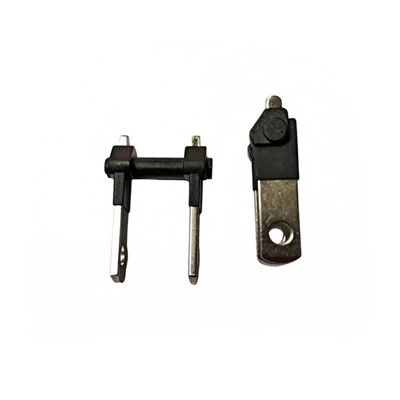
First off, let’s keep it simple. Insulation resistance (we’ll just call it IR from here on, ‘cause no one wants to say the full phrase every time) is a measure of how well a material blocks electric current from leaking where it shouldn’t. For brass switch socket parts, you’ve got two main components usually: the brass itself (that’s the conductive stuff—switches, contacts, terminals) and the insulating materials that hold the brass in place, right? Like the plastic backplates, the inserts that keep contacts from touching, or the faceplates that cover everything. Wait, but sometimes people confuse the brass’s own resistance with the insulation’s? Oh, that’s a common mistake. The brass is a conductor, so its resistance is super low—we’re talking milliohms here, basically it’s meant to carry current. The IR we care about is the insulating parts’ ability to not let current escape. That’s the stuff that keeps your house from shorting out or, worse, getting a shock.
Let’s talk specs ‘cause that’s where the science gets real, but I’ll make it painless. For electrical switch components, the standard IR requirements are set by groups like IEC (International Electrotechnical Commission) or NEC (National Electrical Code, for our friends in the US). Most residential and commercial switch sockets need a minimum IR of 1 megaohm (MΩ) when tested under normal conditions—like room temp, low humidity, no dust. But wait, that’s the baseline. If the environment gets tough—say a bathroom with high humidity, or a industrial spot with dust and temperature swings—you need way higher, like 10 MΩ or more. Why? ‘Cause insulation can break down over time if there’s moisture. Humidity makes the plastic absorb water, which is a tiny conductor, so IR drops. If IR is too low, current leaks out—triggers breakers randomly, or even builds up enough over time to cause a fire. No one wants that, right?
Now, how does brass play into this? You might think brass is just metal, so why does it matter? Let me tell you, the quality of the brass and how it’s machined for the switch parts directly impacts the insulation around it. If your brass contacts are rough, or have burrs from stamping, those burrs can nick the insulating material during assembly. That creates a tiny gap or scratch where moisture or dust can get in, dropping IR. Cheap brass that’s too soft can also warp a little when you’re screwing in wires—then the contact might press against the insulation too hard, or leave a space that traps air. Air has lower IR than solid insulation, so that’s bad news. That’s why as a supplier, we don’t cut corners on brass quality. We use leaded brass (CW617N, for the specs nerds) ‘cause it’s durable, machines clean, no sharp burrs, and when paired with our high-grade thermoset plastic insulation, it hits that consistent IR every time.
Testing IR isn’t just a one-and-done thing, either. We do it in our in-house lab before every shipment, ‘cause we’ve had clients come back with issues ‘cause their parts were stored in a damp warehouse for a week before installation. Here’s how the test works, quick: you apply a small DC voltage (usually 500V for low-voltage switches, which is what most of our parts are) between the conductive brass parts and the outer faceplate or ground contact. Then you measure how much current leaks through the insulation. IR is just voltage divided by that leak current—ohm’s law, simple as that. If the number is below the minimum, the part gets rejected. We’ve had a batch that failed once ‘cause the insulation compound had a little too much moisture when we molded it—caught it before it left the dock, saved our client from a headache. That’s the stuff no one talks about, but it’s what keeps our clients coming back.
Wait, let’s clear up a myth here. A lot of DIYers think “if it’s metal, it’s conductive, so IR is just the plastic.” But no—even the gaps between brass components and insulation matter. Like, if a brass terminal is loose, and the insulation around it has a void (an empty spot from bad molding), that void can fill with dust over time. Dust is semi-conductive, so that lowers IR too. That’s why tight tolerances on brass parts are non-negotiable. We machine our brass contacts to within 0.02mm of spec, so when we insert them into the insulation mold, there’s no gap bigger than a few microns. That keeps IR stable even after months of use.
Now, why does this matter for you, whether you’re an electrician, a builder, or someone ordering parts for a project? Let’s say you’re doing a residential rewiring and you buy cheap switch parts from a no-name supplier. Their brass is soft, their insulation is cheap plastic, no IR testing. A year later, that bathroom switch starts to shock someone ‘cause the insulation broke down from humidity. That’s a lawsuit waiting to happen. Or a commercial office building—if a switch socket’s IR drops, it can cause a server outage, which costs thousands in downtime. IR isn’t just a box to check; it’s a safety thing.
As a supplier, we field questions all the time from clients: “Can you send a sample with IR test data?” “What’s the IR range for your industrial-grade parts?” We make sure every shipment comes with a test report that shows IR is well above the minimum—like 50 MΩ for most residential, 100 MΩ for industrial. That’s not just overkill; that’s what our clients ask for, ‘cause they know we’ve been in this long enough to know what happens when IR is low.
Another thing to consider: age. Insulation resistance isn’t static. Over time, UV rays, temperature changes, and wear can make insulation degrade. So when you’re choosing switch parts, look for ones where the manufacturer uses UV-stabilized insulation, and the brass is coated with a thin layer of nickel (our parts do this) to prevent corrosion. Corrosion on brass creates an oxide layer, which is a tiny insulator, but if it builds up, it can affect the connection points and also mess with the insulation around them. Wait, no—corrosion on the brass contacts themselves is bad for conductivity, but if the insulation is intact, the IR stays high. If the corrosion eats through the insulation? That’s when you have a problem.
Let me give you a real example. A client of mine who runs a contract electrical shop told me he used another supplier’s parts for a small apartment complex. 10% of the switches failed IR testing during final inspection. Why? Their brass was stamped with burrs that cut into the insulation, and their insulation was only molded at 120°C instead of 150°C, so it had moisture trapped inside. He had to scrap 500 parts, lose money, and miss his deadline. Since he switched to us two years ago, he hasn’t had a single IR-related issue. That’s the kind of track record we’re proud of.
Now, if you’re in the market for electrical brass switch socket parts, you might be wondering what to look for beyond just IR. First, ask for test certificates that include IR values—don’t take a supplier’s word for it. Second, check the brass grade: CW617N is the standard for switch parts, it’s strong, machines clean, and is corrosion-resistant. Third, make sure the insulation is thermoset plastic (like bakelite) instead of thermoplastic—thermoset is way more stable over time, has higher IR, and doesn’t warp as much with temperature changes.
Wait, let’s circle back to the original question: what is the insulation resistance of electrical brass switch socket parts? It’s not a single number—It depends on the material quality, the machining of the brass, the testing conditions, and the environment the part will be used in. But the key takeaway is that it’s a critical safety spec, not just a technical detail. For anyone sourcing these parts, cutting corners on IR leads to headaches, safety risks, and extra costs down the line.
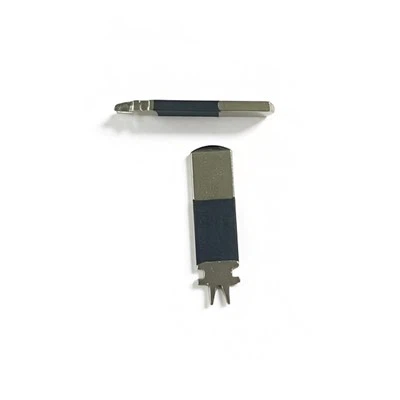
If you’re working on a project right now, whether it’s residential, commercial, or industrial, and you need brass switch socket parts that meet strict IR standards without the guesswork, hit me up to discuss your requirements. We can send free samples with IR test data, answer any questions you have about specs, and make sure you get parts that fit your exact needs without breaking the bank.
Kr Standard Plug Pin References
- International Electrotechnical Commission. (2018). IEC 60884-1: Plugs and socket-outlets for domestic and similar general use – Part 1: General requirements.
- National Electrical Code. (2023). Article 406: Outlet Devices.
- American Society for Testing and Materials. (2021). ASTM D257: Standard Test Methods for DC Resistance or Conductance of Insulating Materials.
Dongguan Fangrun Metal Products Co., Ltd.
We’re well-known as one of the leading electrical brass switch socket part manufacturers in China, specialized in providing high quality customized products. Please feel free to buy discount electrical brass switch socket part made in China here from our factory. For quotation and free sample, contact us now.
Address: New Town Industrial Zone,Xiegang Village,Xie Gang Town,Dongguan City
E-mail: 825556703@qq.com
WebSite: https://www.fangrunpin.com/
