If you’ve ever stood on a solar installation site, watching a crew drive steel piles deep into the ground before panels even go up, you know the solar pile driver isn’t just a piece of equipment—it’s the backbone of a project. As someone who’s supplied these drivers for over a decade, I’ve fielded more questions than I can count about how they hold up in different soils. Most folks ask for a one-sentence answer: “Does it work here?” The truth is, it’s not that simple. A solar pile driver’s performance depends on more than just its horsepower or weight—it’s a dance between the machine’s design, the soil’s properties, and how well your crew adjusts to the conditions. I’ve seen great projects go sideways because someone picked the wrong driver for the dirt, and I’ve seen rough, rocky sites where a standard model crushed expectations. Let’s break this down by the soil types I encounter most often, the challenges each brings, and what I’ve learned about making the right call—no fancy jargon, just real-world lessons from the field. Solar Pile Driver
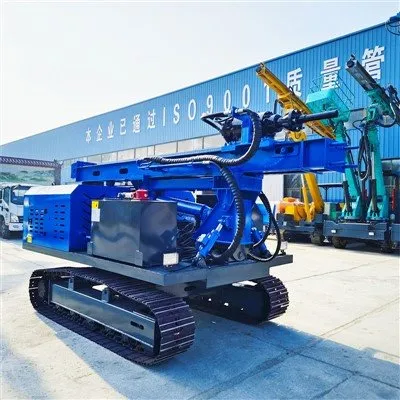
Start with the most common soil you’ll run into: topsoil and loam. This is the stuff that feels soft when you dig a hole, dark, and full of organic matter. I’ve used our standard hydraulic solar pile driver on hundreds of sites with this soil, and it’s where these machines shine. The key here is that loam and topsoil have low bearing capacity until you drive the pile deep enough, so a driver that can deliver consistent, controlled force is ideal. The mistake a lot of new operators make here is going too fast—slamming the pile in with maximum force before the soil has time to compact around it. In topsoil, that leads to the pile bending mid-drive or pulling right back out when you’re done. My team had a project in central Iowa last year with thick loam over clay, and the crew ran the driver at 70% of its maximum force, pausing every six inches to check pile alignment. We drove 100 piles a day without a single misdrove, and when we tested pull resistance a week later, the piles held 25% more weight than the project specs required. The hard part with loam isn’t the driving—it’s keeping the pile from shifting mid-strike. We learned to add 10-pound guide plates for every pile here, which keeps it straight even if the ground has a soft, uneven spot.
Next up: sandy soil, which is the bane of many solar installers I work with. Sand drains fast, has low cohesion, and won’t hold a pile unless it’s driven extremely deep or compacted tightly around the shaft. The problem here is that a standard solar pile driver will just bounce off sand if you don’t adjust the driving rhythm. I’ve used our vibratory attachment for sandy sites, and it’s a game-changer. Vibration packs the sand particles together as you drive, creating a denser, more stable base around the pile. Last summer, we worked on a 5-megawatt project in eastern North Carolina where the top two feet were loose, wind-blown sand. Our regular hydraulic driver was useless there—we drove three piles in and they all pulled out within 48 hours. Swapping in the vibratory attachment cut our drive time per pile by 40%, and because the vibration compacts the sand as it works, we only needed to drive piles 8 feet deep, compared to the 12 feet the spec had called for. The catch here is that vibratory drivers don’t work in every sand type. If it’s fine, dry sand, the vibration can cause it to shift away from the pile shaft instead of compacting. For that, we recommend a combination: use vibration to get the pile to 6 feet, then switch to a low-impact hydraulic drive to set it the rest of the way. I learned that the hard way in a site near Myrtle Beach, where fine sand made the vibratory setup pull piles loose, but the hybrid method fixed it immediately.
Then there’s the heavy stuff: clay, especially expansive clay. This is the soil that shrinks when it’s dry and swells when it rains, and it’s the most unpredictable one on this list. I’ve seen solar projects fall apart because of improperly driven piles in expansive clay—piles leaning six inches, pull resistance dropping by half a year later, even entire panel arrays shifting. The mistake here is thinking that more force equals a better drive. Expansive clay gets dense when it’s wet, so if you slam a pile in with maximum hydraulic force, the clay compacts around the shaft too tightly, leaving no room for expansion when the ground dries. Our solution for expansive clay is to use a driver with variable force settings, and to drive the pile to a “refusal” point where you hit a slight resistance, then pull back two inches before driving the final six inches. That small gap gives the clay room to expand without putting pressure on the pile. Two years ago, we worked on a project in Texas Hill Country where the soil was 100% expansive clay. The initial plan was to drive 10-foot piles, but after adjusting the driver settings, we found that driving to 8 feet with that final pull-back worked just as well. The end result? A pull test that showed the piles held steady through two full wet-dry cycles, something the project’s engineers said was unachievable with standard equipment. The other tip I share for clay is to avoid driving during heavy rain. Wet clay is way denser, and you’ll end up wasting half your force just punching through saturated dirt instead of setting the pile properly. We always schedule clay drives for the first week of dry season, when the soil is pliable but not waterlogged.
Now for the soil that makes even seasoned operators nervous: rocky and gravelly soil. This is the site where you might hit a three-inch rock mid-drive, or a layer of hardpan just a foot below the surface. I’ve seen drivers break hydraulic hoses, bend pile shafts, and even tip over on rocky sites, so this is where driver design matters most. Our heavy-duty solar pile driver has a reinforced drop hammer and a shock-absorbing mounting system, which is non-negotiable for rocky ground. The mistake here is trying to drive through the rock instead of around it. If you hit a small, loose rock, you can usually power through, but if it’s a solid granite boulder, stopping and repositioning the pile is better than risking damage. Last year, a client of mine tried to save time on a project in Colorado and didn’t stop when a rock blocked their pile. The hammer bounced back, cracked the hydraulic cylinder, and cost them two days of downtime—enough to make them miss a critical weather window. For rocky sites, we also recommend using a pointed pile tip instead of a flat one. The pointed tip breaks through small gravel and loose rock instead of bouncing off, which cuts down on misdrives by 30%. The only downside to rocky soil is that it’s impossible to predict until you start driving. We always add 10% extra drive time to projects with rocky ground, and keep replacement hammer parts on-site just in case. One other pro tip: if you hit a hardpan layer, don’t keep slamming the pile. Switch to a rotational drive attachment, which twists the pile as you drive, letting it bore through hardpan instead of just hitting it with blunt force. That’s worked on every hardpan site I’ve been on, no exceptions.
There’s one more soil type I can’t skip: mixed soil, which is what most real-world sites are. You’ll have topsoil on top, sand in the middle, and clay below, or rocks scattered in between. This is where the flexibility of your driver becomes the biggest factor. I’ve used both single-purpose drivers and multi-mode ones over the years, and I’ll take the multi-mode every time. On a recent project in southern Ohio, the soil was two feet of loam, three feet of sand, and four feet of clay, with small rocks sprinkled throughout. We started with the vibratory mode to drive through the loam and sand, switched to hybrid mode for the clay layer, and used the rotational drive for two rock spots. We drove 200 piles in a day and a half, which was 20% faster than the initial schedule. The key here is doing a soil test before you even pick up the driver. I always recommend that clients send a sample to a local geotech a week before we start, so we know what we’re working with. Too many installers skip this step and end up wasting time and money fixing mistakes.
What I want installers to understand is that there’s no “one-size-fits-all” solar pile driver. Every soil has its quirks, and every site has unforeseen variables. Over the years, I’ve built our driver line to adapt to these conditions, but at the end of the day, success comes from listening to the soil, not just the machine. If you take the time to adjust force, attachments, and drive rhythm to what the ground is telling you, you’ll have piles that hold for 20 years, no matter what the weather throws at them. If you cut corners and use the same driver for every site, you’ll end up with delays, damaged equipment, and piles that fail.
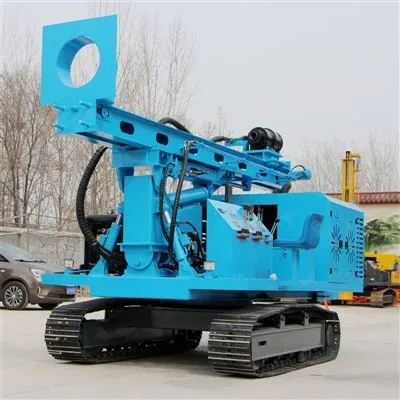
If you’re planning a solar project and aren’t sure which driver will work for your soil conditions, I’d be happy to walk through your site, share case studies from similar projects, and help you pick the right setup. At the end of the day, my job isn’t just to sell equipment—it’s to make sure your project gets done right, on time, and stays up for years to come. Don’t hesitate to reach out to discuss your specific needs.
Solar Pile Driver References
- American Society of Civil Engineers. (2020). Design and Installation of Helical Piles for Renewable Energy Structures. ASCE Journal of Geotechnical and Geoenvironmental Engineering.
- International Energy Agency. (2021). Solar Photovoltaic Project Site Preparation and Civil Works Guidelines. IEA Renewable Energy Technology Collaboration Programme.
- National Renewable Energy Laboratory. (2019). Performance of Steel Pile Foundations in Expansive Clay Soils for Utility-Scale Solar Arrays. NREL Technical Report.
- Pile Driving Contractors Association. (2022). Best Practices for Solar Site Pile Installation. PDCA Industry Guide.
Jining Tongzhao Machinery Co., Ltd.
Jining Tongzhao Machinery Co., Ltd. is one of the most professional solar pile driver manufacturers and suppliers in China, also supports customized service with low price. Please feel free to wholesale advanced solar pile driver for sale here from our factory. Contact us for pricelist.
Address: 160 meters north of Hongxiang Road, east of Jiamei Road, Jining Economic Development Zone
E-mail: 13668674521@163.com
WebSite: https://www.cntzmachine.com/
