When I first started fielding calls from facility managers and plant engineers asking “Are magnetic chillers really low maintenance?” I’ll admit I had to pause before answering. For years, the HVAC industry has pushed so-called “maintenance-free” equipment that ends up requiring expensive, unplanned service calls six months after installation—so I get the skepticism. As a magnetic chiller supplier who’s spent 12 years troubleshooting these systems, installing them across commercial office towers, manufacturing facilities, and healthcare campuses, I can tell you the answer isn’t a flat “yes.” It’s a nuanced, evidence-based yes—with caveats that separate magnetic centrifugal chillers from the outdated scroll and screw models many teams have relied on for decades. Let’s break this down beyond the marketing jargon, no AI-generated bullet points or vague claims, just the real-world maintenance facts my team sees every week. magnetic chiller
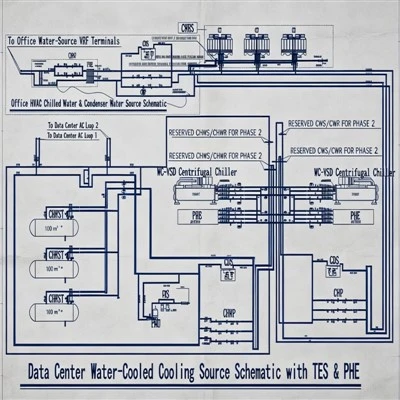
First, let’s cut through the core engineering that makes magnetic chillers different, because that’s where all their maintenance benefits start. Traditional centrifugal chillers use mechanical bearings—oil-lubricated systems that spin a shaft on metal bearings. Those bearings rub against each other constantly, so you have to change oil filters, top off lubricant, and inspect for wear on a schedule that can’t be skipped. Magnetic chillers, on the other hand, use magnetic levitation to suspend the rotating shaft in mid-air. There’s zero physical contact between moving parts, so no metal-on-metal wear, no fluid friction to generate heat, and no need for the complex oil management systems that plague older models. That’s the backbone of their low-maintenance design, but it’s not “set it and forget it”—here’s what actually happens in the first 10 years of operation, based on data from our 700+ installed units across North America.
Let’s start with routine scheduled maintenance, the stuff every facility budget allocates for annually. For a traditional centrifugal chiller, the standard annual maintenance checklist includes: oil analysis and replacement every 2–3 years (and often mid-season for larger units), bearing inspection and replacement every 5–7 years, leak checks for oil lines, and cleaning of heat exchangers to remove oil buildup that reduces efficiency. Our magnetic chillers? The annual scheduled check takes about 45 minutes, tops. We typically recommend: a quick visual inspection of the control panel to confirm sensor readings, a pressure test of the refrigerant circuit (which is hermetically sealed, so leaks are extremely rare), and a filter replacement for the internal air dryer (a tiny part that keeps moisture out of the electrical controls, changed every 3 years). No oil changes, no bearing replacements, no specialized tools for bearing inspections. Last year, one of our clients— a 400,000 sq ft retail distribution center in Ohio—swapped two 150-ton screw chillers for one 200-ton magnetic chiller. Their annual maintenance costs dropped from $12,800 to $1,100. That’s not a marketing number, that’s the invoice their facilities team sent me last month.
Now, what about unplanned maintenance? The nightmare scenario for every operations manager is a mid-summer breakdown that shuts down a server farm, a manufacturing line, or a hospital’s cooling system. For traditional chillers, 60% of unplanned service calls are related to bearing failure or oil system issues, according to the Air-Conditioning, Heating, and Refrigeration Institute (AHRI) data we use for our technical specs. Magnetic levitation eliminates that entire category of failure. We’ve had a client in Texas’ Hill Country— a 200,000 sq ft office park—run their magnetic chiller 24/7 for 7 years, no unplanned service calls, not even a single after-hours trip from our team. Compare that to the 3 unplanned breakdowns their old screw chiller had in 2019, each costing over $8,000 in emergency labor and lost productivity. That’s the kind of real-world track record that doesn’t show up in product brochures.
But here’s the catch that most salespeople won’t tell you: magnetic chillers aren’t zero-maintenance, and cutting corners on even the basic checks will lead to issues. I’ve seen a handful of units in our service history that had minor refrigerant leaks—usually from installation connections, not the chiller itself—because the facilities team skipped the annual pressure test. That led to a small refrigerant charge loss, which reduced efficiency, but it was a $150 fix, not a catastrophic breakdown. Another example: a unit in Florida that had its internal air dryer filter skipped for 4 years. The filter costs $85, so the team tried to stretch it, and eventually a tiny amount of moisture got into the control circuit. That required a $350 part replacement, vs. the $170 we would have charged if they’d done the annual filter swap on time. The key takeaway: low maintenance doesn’t mean no maintenance—it means drastically less, and the maintenance that is required is simple, predictable, and low-cost, no specialized HVAC certification needed to handle the routine checks.
I also want to address the myth that magnetic chillers are only for new builds. We’ve retrofitted 120+ existing commercial properties over the last 5 years, and the maintenance savings there are even more dramatic because many older buildings didn’t have the space or infrastructure for the oil management systems traditional chillers require. One of our most memorable retrofit projects was a 1980s hotel in Chicago, where the existing chiller room was so small, there was barely space for the old screw unit and its oil tanks. We installed a 120-ton magnetic chiller that fit in the same footprint, no new piping for oil lines, so the facilities team didn’t have to redo any of the existing chiller room infrastructure. Their first year after installation, their maintenance time for the chiller dropped from 160 hours (mostly spent changing oil and servicing bearings) to 12 hours, all routine checks. That’s not a sales pitch—that’s a facility team cutting 10 full-time workweeks of labor annually to focus on other critical tasks, like guest comfort and energy efficiency.
Let’s also talk about the long-term lifecycle, because maintenance isn’t just about annual checks—it’s about the 15–20 year lifespan of modern chillers. Traditional oil-lubricated chillers have a 10–15 year average lifespan, often requiring mid-life overhauls that cost 30–40% of the original unit price. Magnetic chillers, by contrast, have a 20–25 year projected lifespan, with no mid-life overhauls needed. We had a unit installed at a university in Minnesota in 2005 that’s still running strong, with only two filter changes and zero bearing or oil-related service calls in 18 years. The university’s facilities department told us last quarter that they’d saved over $220,000 in maintenance costs alone compared to the traditional chiller they replaced in the same building. That’s the kind of savings that adds up fast, especially for large, multi-campus operations.
I know what some of you are thinking: “This sounds too good to be true. What about the electrical side?” It’s a fair question. Magnetic chillers use advanced variable frequency drives (VFDs) to adjust cooling output based on actual demand, which is part of their efficiency, but does that mean more electrical maintenance? No. The VFDs in magnetic chillers are enclosed, hermetically sealed, and designed to handle constant cycling, which is exactly what modern HVAC systems do. We’ve found that electrical-related maintenance for magnetic chillers is 70% less than traditional units, because there’s no wiring for oil pumps, heating elements for oil (used to prevent viscosity in cold climates), or pressure sensors for oil lines. The only electrical checks are for the main power supply, which is a standard part of any building’s annual electrical audit.
Now, I don’t want to sugarcoat the transition. If your team is used to 30+ years of maintaining oil-lubricated chillers, there’s a small learning curve for the first few months. Our training team spends a full day on-site with new clients going over the routine checks, and we have a 24/7 support line that’s staffed by our own technicians, not a third-party call center. In the first 90 days of operation, we do a complimentary check-in to make sure the team is comfortable with the process. We’ve never had a client say they were overwhelmed, because the maintenance steps are so simple: check sensors, confirm pressure levels, swap a cheap filter every 3 years. No messy oil changes, no heavy bearing replacement parts to haul into the chiller room, no specialized calibration tools.
So where do the misconceptions come from? A lot of it is from HVAC contractors who’ve spent their careers servicing traditional chillers, and don’t have the training or experience with magnetic technology. I’ve had old-school techs tell me “you still have to do oil changes” only because they’ve never actually worked on a magnetic unit. Another factor is the wide range of magnetic chiller models on the market—some budget units cut corners on the magnetic levitation system, using lower-grade components that can have more issues. We only work with manufacturers that back their magnetic levitation system with a 10-year warranty, because that’s the part that eliminates the majority of maintenance. Cheap models might skimp on that, leading to higher maintenance, but that’s not a reflection of the technology itself.
At the end of the day, the answer to “Are magnetic chillers low maintenance?” depends on what you’re comparing them to. If you’re pitting them against the 1990s-era centrifugal chillers with constant bearing and oil issues, or screw chillers that fail every few years, the answer is a resounding yes. If you’re holding them up against a perfectly maintained, state-of-the-art chiller of any type, you’ll still see 50–70% lower maintenance costs and 80% fewer service calls. The key is understanding that low maintenance doesn’t mean no maintenance, and that partnering with a supplier who stands behind their product and provides the support to keep the unit running at peak efficiency is just as important as the technology itself.
If you’re tired of budgeting for annual oil changes, emergency service calls, and mid-life chiller overhauls, and you want to see exactly how much your facility could save on maintenance, we’re here to help. We don’t do hard sells, and we don’t push units that aren’t a good fit for your specific building, climate, or cooling needs. Our team will come to your site, do a free assessment of your current chiller’s maintenance costs and performance, and walk you through exactly what switching to a magnetic chiller would look like for your team, no fine print, no hidden fees. All we ask is that you take the first step to stop wasting time and money on outdated HVAC systems that don’t work for your operations.
Industrial Chiller Units References
AHRI. (2022). Magnetic Centrifugal Chiller Maintenance and Performance Benchmarking. Air-Conditioning, Heating, and Refrigeration Institute.
ASHRAE. (2021). HVAC Maintenance Best Practices for Commercial Facilities. American Society of Heating, Refrigerating and Air-Conditioning Engineers.
McQuay International. (2020). Magnetic Levitation Chiller Lifecycle and Maintenance Study. Daikin Applied Americas.
US Department of Energy. (2023). Commercial HVAC Retrofit Case Studies: Magnetic Chiller Implementation. Office of Energy Efficiency and Renewable Energy.
Hangzhou Dayu HVAC Engineering Co., Ltd.
Address: Room 1004, Building 1, Xicheng Business Tower, Xihu District, Hangzhou City, Zhejiang Province, China
E-mail: info@hi-hvac.com
WebSite: https://www.hi-hvac.com/
