What’s the Lifespan of Custom Bottle Cap Molds? Custom Bottle Cap Molds
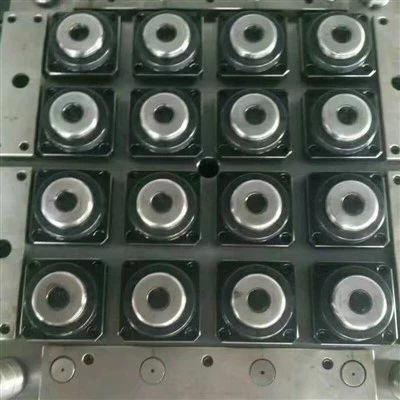
If you’ve ever run a beverage, pharmaceutical, or personal care packaging line, you know how critical custom bottle cap molds are. They’re the unsung heroes that turn plastic resin, aluminum, or even tamper-evident seals into the caps that keep your product safe and your brand looking consistent. But here’s the thing: I get DMs, emails, and calls every single week from folks asking, “How long do these molds actually last?” It’s not a one-size-fits-all answer, but I’ve been in the custom mold game long enough to break this down like it is—no industry jargon, no fluff, just real stuff that actually matters for your production.
First off, let’s cut through the myth: a mold isn’t a disposable item. A good custom cap mold, built right, should outlast a million caps—sometimes way more. But that number jumps around based on so many factors, it’s hard to lock it down to a generic “X years.” Let’s start with the basics of what a custom mold is, because if you don’t get that, you won’t get why lifespan varies. When we make a mold for you, we don’t use some random off-the-shelf tool steel. We pick a grade tailored to your cap’s specs: if you’re making water bottle caps (small, simple, high-volume), we might go with P20 tool steel, which is durable but cost-effective. If you’re making precision caps for prescription bottles (tight tolerances, no defects allowed), we might use S7 or H13 steel, which are way tougher, resist wear way better, and can handle higher injection pressures without warping. That choice alone sets the baseline for how long your mold will run.
Next up: production volume. This is the big one that most people miss. If you’re a small craft soda brand doing 100,000 caps a month, your mold will last way longer than a big brand pumping out 10 million caps a month. Let’s do quick math: a small shop might run 1 million caps a year, so a mold built for 5 million shots would last 5 years. A large CPG? They might shoot 10 million a month, so a 5 million shot mold wears out in like 15 months. And it’s not just total volume—cycle time matters too. If your line runs super fast (like 120 caps per minute, which is standard for high-speed lines), that mold is cycled every two seconds, so each year of production is way more wear than a slower line running 50 caps per minute. I’ve had clients tell me their molds are still cranking after 7 years, and others say they had to replace one after 18 months because they cranked the line to max output and didn’t maintain it right.
Then there’s the material you’re molding. Not all plastic is equal, and that eats into mold lifespan fast. If you’re using standard HDPE or PP, that’s pretty gentle on tool steel—these are common resins with low abrasion, so the mold just needs to hold shape. But if you’re using filled plastics? Like HDPE with glass fiber, or PVC, or even color concentrates with high levels of pigment? Those are abrasive as hell. Every time the resin flows through the mold, those tiny glass fibers or pigment particles are scraping against the mold’s cavity and core. We had a client a couple years back who was making caps for a cleaning product using 30% glass-filled PP; their mold wore out 2 million shots in, vs. the 8 million we quoted for standard HDPE. And aluminum molds? Yeah, they’re way cheaper, but they only last like 200,000 to 500,000 shots max. We only recommend aluminum for prototype runs or very low-volume specialty stuff, not full production.
Maintenance is another make-or-break factor, and this is where a lot of people drop the ball. Even the best H13 mold will die early if you skip basic upkeep. Let’s be real: mold maintenance isn’t sexy, but it’s non-negotiable. Things like cleaning the mold every few runs—blowing out any leftover resin with compressed air, wiping down the cavities and cores with a mild mold release (not too much, though, because too much can build up and cause defects), and checking for tiny signs of wear, like a rough edge on the cap or inconsistent dimension. If you let resin build up in the mold, it can cause flash (extra plastic on the cap) which makes you run slower, and over time that built-up resin will etch into the mold’s surface. We also tell clients to inspect the mold for things like cracked ejector pins or worn sprue bushings every 500,000 shots. If you catch a small issue early, you can fix it for a fraction of the cost of a full mold replacement. I’ve seen a client save $15k by just replacing a worn ejector pin on a mold that was still good, vs. letting the pin break and ruin the entire cavity. On the flip side, I also had a client who never cleaned their mold; after 3 million shots, the cavity was so pitted they had to re-polish the whole thing, which cost almost as much as a new mold.
Environmental factors play a role too, especially if your production floor isn’t controlled. If you’re running a line in a hot, humid warehouse? That can cause condensation on the mold, which leads to rust—even on steel molds. Rust eats away at the surface, so over time that pitting will make caps come out with rough spots or inconsistent threads. If your line is super dirty, with a lot of dust or metal shavings floating around, those can get into the mold’s moving parts and cause friction, which speeds up wear. We’ve had clients who moved their production to a climate-controlled facility and saw their mold lifespan jump by 30% just from that change. Oh, and mold storage when it’s not in use—if you’re putting a mold away for a few months, you have to coat it with a corrosion inhibitor and store it in a dry place. I once had a client who left a mold in a dirty storage closet for a year; when they pulled it out, the cavities were so rusted it was useless.
Now, let’s get to the numbers that actually matter. For custom cap molds built for high-volume production (10 million+ caps a year) with standard resins, good tool steel, and proper maintenance, you’re looking at a baseline of 5 to 10 years. That translates to 5 million to 15 million shots. If you’re running a small business, lower volume, using standard HDPE, that number goes up to 10 to 15 years, maybe even more if you’re running slow cycles. But if you’re running high-volume, abrasive resins, skipping maintenance, in a harsh environment? 1 to 3 years, tops. And don’t forget: molds don’t just “die” suddenly. You’ll start seeing warning signs way before that. Things like caps with inconsistent threading, flash on the sides, parts that don’t meet tolerance, or cycle times starting to slow down because the mold is wearing and needs more pressure to fill. If you notice those, it’s not always time to replace the mold—sometimes a re-polish or minor repair will get it back to like-new condition for a fraction of the cost.
Wait, but what about specialty molds? Like tamper-evident caps, or caps with custom logos, or child-resistant closures? Those are usually more complex, right? So do they wear out faster? Not necessarily, if they’re built right. Child-resistant molds, for example, have moving parts (like the tamper band or the closure mechanism), so those moving parts can wear out faster than the steel itself. A good custom mold maker will design those moving parts with hard chrome plating or tungsten carbide coatings to resist wear, and that can make the lifespan comparable to a standard cap mold. I’ve had a client with child-resistant pill cap molds that ran 8 million shots in 6 years, and they still work just as well as day one, because we coated the moving parts.
Another thing: custom mold design. If you cut corners on design to save money, that’s a surefire way to shorten lifespan. A mold with thin walls or sharp corners will wear way faster than a mold with proper draft angles and rounded corners. We always add draft angles (usually 1 to 2 degrees per side) to make it easier to eject caps without scratching, and rounded corners in the mold cavity reduce stress on the steel. If a mold has sharp corners, resin will flow unevenly, and those corners will crack or wear out way sooner. That’s a big one—you might save a few bucks up front by skipping proper design, but you’ll end up replacing the mold way sooner, which costs you more in the long run.
Let me also address a common question: can you extend a mold’s lifespan? Absolutely, if you’re intentional about it. First, invest in a good maintenance routine—schedule monthly cleanings, quarterly inspections, and annual deep cleans. Use the right resin for your line; if you’re using glass-filled plastic, talk to your mold maker about adding wear-resistant coatings. Store molds properly when not in use. And when you’re ready to replace a mold, go for a grade of steel that’s matched to your volume. A lot of people try to save money by going with a cheaper steel, but that backfires. For example, if you’re a high-volume brand running 10 million caps a month, don’t use P20 steel—go with H13, even if it costs 20% more, because it will last 3 to 4 times longer, so the upfront cost is worth it in the long run.
I’ve seen this play out so many times. A startup craft beer brand came to me a couple years ago, and they tried to get a mold from a cheap offshore vendor for $2,000. We quoted $4,500 for a mold made with H13 steel, proper design, and a wear-resistant coating. They went with the cheap one, and it wore out after 1.2 million shots, so they had to replace it after 8 months, total cost around $4,000—almost the same as our mold, but they had downtime on their line, which cost them way more in lost production. Then they switched to our mold, and it’s still running strong 3 years later, no issues. That’s the kind of real-world stuff that doesn’t make mold marketing materials, but it’s what actually matters.
So, to wrap this up, there’s no exact number for custom bottle cap mold lifespan. It’s a mix of the steel grade, production volume, resin type, maintenance, and design. But if you’re working with a reputable custom mold maker, building a mold that’s matched to your needs, and keeping up with basic maintenance, you can expect 5 to 10 years of solid production, sometimes more. If you cut corners, skip maintenance, or pick the wrong mold for your use case? You’ll be replacing it way sooner than you planned.

If you’re currently evaluating custom cap molds for your production—whether you’re a small brand just starting out, or a big CPG looking to replace worn molds—hit me up. I can walk through your specific needs, talk through the best steel and design for your volume and resin, and make sure you get a mold that will last as long as you need it to. No sales pitches, no overcomplicating it, just straight answers.
Medical Injection Mold References
- Tool Steel Engineering Association. (2022). Tool Steel Selection for Injection Molding Applications.
- Society of Plastics Engineers. (2021). Mold Maintenance Best Practices for High-Volume Packaging Production.
- Packaging Digest. (2020). Mold Lifespan and Durability in Custom Bottle Cap Manufacturing.
Taizhou Koni Mould Co., Ltd.
As one of the most professional custom bottle cap molds manufacturers and suppliers in China, we also support customized service. Please feel free to wholesale high quality custom bottle cap molds made in China here from our factory. For pricelist, contact us now.
Address: No. 97 Jinju Road, Chengjiang Subdistrict, Huangyan District, Taizhou City, Zhejiang Province
E-mail: kn@kenimould.com
WebSite: https://www.kenimouid.com/
