If you’ve ever stood on a job site watching an electric hoist heave a heavy pallet of steel or a bundle of prefabricated building components, you’ve seen one small but critical part at work: the load limiter. As someone who’s spent the last 12 years supplying electric hoists and their auxiliary components to construction sites, manufacturing facilities, and warehouse operations across the Midwest, I can tell you this piece isn’t just a “nice-to-have”—it’s the thing that keeps crews coming home safe at the end of every shift. I still remember the first time a regular customer of mine stopped calling after a failed hoist incident; a load limiter he’d skipped on a new unit had triggered a catastrophic overload that bent the hoist’s arm and nearly crushed two laborers. That loss of trust stuck with me, and it’s why I never skip explaining exactly what a load limiter is, how it works, and why it’s non-negotiable for any hoist that carries loads worth risking people’s safety for. Electric Hoist

First, let’s cut through the jargon. A load limiter for electric hoists is an integrated safety device designed to prevent a hoist from lifting loads heavier than its rated capacity. That rated capacity—usually stamped on the hoist’s frame as a number like 1 ton or 5 tons—is calculated by the manufacturer based on the hoist’s structure, motor strength, and cable rating. A load limiter acts like a safety guard that enforces that number, no matter how much pressure the operator or site manager applies.
But how does it do that, exactly? Most modern load limiters work using strain gauge technology, which is straightforward in practice. Strain gauges are small, thin sensors attached to the hoist’s load-bearing components—typically the hook shaft, the chain or cable’s anchor point, or the hoist’s lifting frame. When a load is applied, the steel component bends just a tiny, almost unnoticeable amount; the strain gauge measures this micro-bend and converts it into an electrical signal. The limiter’s control unit takes that signal and calculates the actual weight being lifted, compares it to the hoist’s pre-programmed rated capacity, and triggers an action if the load exceeds that limit. That action is almost always two-fold: it cuts power to the hoist’s lifting motor so it can’t hoist further, and sometimes triggers an alarm—either a soft chime for minor overages or a loud, piercing alert for critical overloads. Some higher-end models add a separate display that shows real-time load weight, so operators can adjust before they hit the limit.
For a long time, there was a misconception among small business owners that load limiters were only for big construction cranes or industrial hoists rated over 10 tons. That’s not true. I’ve installed them on ½-ton electric chain hoists used to lift HVAC units onto rooftops, and on 2-ton wire rope hoists for auto parts factories moving engine blocks. Every hoist has a rated capacity, and every load over that capacity creates stress that adds up over time. A 10% over-load on a 5-ton hoist might not snap the cable on the first lift, but after 50 lifts, the metal fatigue from that extra weight is enough to cause the cable to fray or the hoist’s gear to strip. A load limiter stops that wear before it starts, extending the hoist’s lifespan and eliminating hundreds of hours of unplanned downtime for repairs.
I’ve also seen the difference between basic and advanced load limiters play out in real jobs. Last year, a local warehouse manager called me in a panic because their old 3-ton hoist kept triggering its basic load limiter every time they lifted a full pallet of plastic bins. When I went to check, I realized the basic limiter was calibrated for a static load, not dynamic load—meaning it didn’t account for the extra weight from the swinging pallet as the hoist moved it across the warehouse. We swapped it for an advanced dynamic load limiter that adjusts for movement, and that site hasn’t had a false trigger in 18 months. That’s the thing about these devices: not all load limiters are created equal, and picking the right one means matching it to the job’s specific needs.
Let’s break down the main types of load limiters I supply, because choosing the wrong one is as bad as skipping it entirely. First, there’s the standard static load limiter, which is the most common for small to mid-size warehouses and light manufacturing. It’s calibrated to measure weight when the load is stationary, so it’s perfect for lifts that happen right at ground level or between fixed points where the hoist doesn’t move sideways during lifting. It’s affordable, easy to install, and requires almost no maintenance beyond annual calibration checks.
Next is the dynamic load limiter, which we use for construction sites and open warehouse layouts where hoists move loads horizontally during a lift. The dynamic limiter accounts for acceleration and deceleration, so it doesn’t trigger false alarms when a load swings or speeds up as it’s lifted. That’s a game-changer for crews that lift materials to the top of a multi-story building or across a 100-foot warehouse aisle—you don’t want the hoist shutting off mid-lift, leaving a load hanging 20 feet in the air while your crew scrambles to fix it.
Then there’s the emergency load limiter, which is a backup layer of safety for high-risk applications like lifting heavy machinery or working near power lines. This limiter is calibrated to shut down the hoist entirely if the load exceeds 120% of the rated capacity, and it locks out all power to the hoist until a certified technician resets it. I always recommend these for sites where even a small overload could cause a catastrophic accident, like steel mills or nuclear facility maintenance.
A question I get all the time is: do load limiters need maintenance? The short answer is yes, but not as much as you might think. Most limiters only need to be checked for calibration once a year, or every 1,000 lift cycles, whichever comes first. Calibration uses a test load—usually a certified weight that the site keeps on hand to verify the limiter’s readings. Some of the newer wireless limiters we supply even send automated alerts to our service team when their calibration is off, so we can swing by and adjust it before it causes a problem. I always tell customers that skipping calibration is like skipping an oil change on a truck: it might run for a while, but eventually it will break down when you need it most.
Over the years, I’ve seen too many hoist accidents that could have been prevented with a load limiter, and far too few that were. Two years ago, a small contractor called me to replace a hoist on a job where his crew had been lifting concrete blocks to the third floor of a new apartment building. He’d bought a used hoist to save money, and it didn’t have a load limiter. On the 12th lift, the cable snapped, sending 12 blocks crashing down onto the ground below—luckily, no one was hurt, but it set his project back three days and cost him $12,000 in repairs and lost revenue. When he came to me a week later, the first thing he asked was, “How do I make sure this never happens again?” The answer was a load limiter, a calibrated hoist, and a safety checklist for every single lift. That contractor is now one of my regulars, because he learned the hard way that cutting corners on safety doesn’t save money in the long run.
Another common myth is that load limiters make hoists less efficient, or that they get in the way of operators who need to lift heavy loads quickly. That’s not true, either. When an operator knows the load limiter will stop them before they overload, they don’t have to guess at how much they’re lifting, or worry about bending the hoist or breaking the cable. I’ve had operators tell me that having a real-time load display from the limiter lets them plan their lifts better, scheduling multiple small lifts instead of trying to cram too much into one, which actually speeds up their work. It’s a win-win: safer operations and more consistent productivity.
If you’re shopping for an electric hoist right now, the single most important thing to ask your supplier is whether the unit comes with a load limiter, and what type it is. A lot of budget hoist suppliers will skip the load limiter to cut costs, but that savings comes at the expense of safety and reliability. When I supply a hoist, I don’t just sell the unit and go— I work with every customer to figure out which load limiter fits their specific job, walk their operators through how to use it, and set up a maintenance schedule to keep it calibrated. I’ve been in this business long enough to know that a happy customer is one who doesn’t have to deal with accidents, downtime, or unexpected repairs.
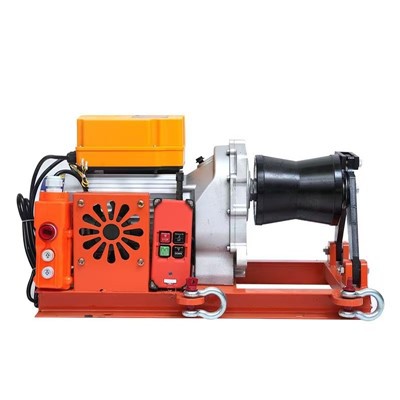
At the end of the day, a load limiter is more than a piece of equipment—it’s a promise. It’s the promise that the people operating the hoist, the people working around it, and the loads they’re lifting will be protected. It’s the reason I started my supply business 12 years ago, not just to sell hoists, but to keep construction sites, factories, and warehouses safe for everyone who shows up to work every day. If you’re looking for an electric hoist with the right load limiter for your operations, or have questions about which type fits your needs, don’t hesitate to reach out. We can walk through your project requirements, show you different load limiter options, and make sure you get a system that’s both safe and reliable.
Electric Hoist References:
- Occupational Safety and Health Administration (OSHA). 29 CFR 1910.179: Overhead and Gantry Cranes. U.S. Department of Labor, 2023.
- Hoist Manufacturers Institute (HMI). Load Limiter Specifications and Calibration Standards for Electric Hoists. HMI Technical Report 12, 2022.
- American National Standards Institute (ANSI). ANSI/ASME B30.16: Overhead Hoists (Underhung). American Society of Mechanical Engineers, 2021.
- International Association of Crane and Hoist Operators (IACHO). Safety Best Practices for Load Monitoring and Limiting Devices. IACHO Practice Bulletin 7, 2023.
Hebei Hengtai Crane Machinery Manufacturing Co., Ltd.
As one of the leading electric hoist manufacturers in China, we warmly welcome you to buy bulk discount electric hoist in stock here from our factory. All customized products are with high quality and low price. For more cheap products, contact us now.
Address: Weigezhuang Village, Donglu Township, Qingyuan District, Baoding City, Hebei Province
E-mail: hbht@cnhengtai.com
WebSite: https://www.cnhengtai.com/
