If you’ve ever stood in the produce aisle, staring at sun-kissed apricots and plums, trying to pick the perfect fruit for a tart jam or a sweet-sour salad, you’ve probably asked: Which is more acidic, apricot or plum? As a supplier who’s spent years working with these stone fruits, I’ve answered this question a hundred times—from home bakers testing their first batch of preserves to line cooks crafting restaurant menus. It’s not just a trivial curiosity; acidity shapes flavor, texture, and even how these fruits hold up during processing. Let’s break this down, not just as a lab experiment, but through the lens of someone who handles hundreds of pounds of both every week. Apricot and Plum
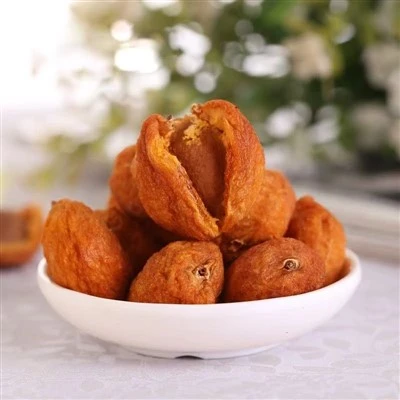
First, let’s get the basics straight: Acidity in fruits is measured by pH, a scale that runs from 0 (extremely acidic) to 14 (alkaline), with 7 being neutral. Most fresh fruits fall between 3 and 5, making them acidic enough to balance sweet flavors. For stone fruits like apricots and plums, the main acid is citric acid, with smaller amounts of malic acid and, in some cases, quinic acid. The mix and amount of these acids vary based on a dozen factors: ripeness at harvest, growing conditions (temperature, soil, rainfall), even the specific variety. That’s why you’ll never get a one-size-fits-all number, but we can spot consistent patterns.
When I test pH levels for my suppliers—routinely checking incoming batches to ensure uniformity for my clients—I’ve found that ripe apricots typically clock in between 3.3 and 3.8, while ripe plums hover between 2.8 and 4.0. Wait, that’s a big range for plums, right? Let me explain: Plum varieties are far more diverse than apricots. There are sweet, juicy Japanese plums like Santa Rosa that are often milder, and tart European plums like Damson that lean much more acidic. Apricots, on the other hand, are mostly of the Prunus armeniaca species, so their pH range is far narrower. Even unripe apricots, which are noticeably tart, only dip to about 3.8—hardly more acidic than a ripe plum’s upper end.
But here’s where it gets interesting: Acidity isn’t just about pH. It’s also about “total titratable acidity” (TTA), which measures the actual amount of acid in a fruit, not just how strong its acid is. I track TTA for my own quality control, because a fruit with a pH of 3.5 but low TTA will taste sweeter than a fruit with the same pH and high TTA, which will hit your tongue with a sharp, bright tartness. For ripe apricots, TTA averages around 1.2%—meaning 1.2 grams of acid per 100 grams of fruit. Ripe plums? Average TTA is about 0.8%, but tart plum varieties can hit 2.0% or higher. That means a Damson plum, for example, is both lower in pH and higher in TTA than most apricots, making it more acidic. A ripe Santa Rosa plum, though, might have a TTA of just 0.5%—making it less acidic than a perfectly ripe apricot.
Ripeness is the biggest wild card here, and it’s something I see play out on a weekly basis. When fruits ripen, their starches break down into sugars, and acids start to metabolize, which softens flavor. That’s why a green, unripe apricot is way tarter than a fully ripe, golden one, which tastes sweet with a faint, bright tang. The same goes for plums: A under-ripe plum will be puckeringly sour, while an over-ripe one might taste almost flat, with very little acid left. As someone who harvests and sells both, I always advise clients: If you’re looking for maximum acidity for jams, sauces, or pickling, pick slightly under-ripe fruit. If you want a balanced snack, go for fully ripe.
Now, let’s talk about how this plays out in real use cases, because that’s what matters most to my customers. A baker making apricot jam will tell you that apricots have a gentle acidity that pairs perfectly with sugar, creating a jam that’s sweet with a subtle zing. Plum jam, though, can be made with either sweet or tart plums—so if you use a tart variety, the jam will have a bolder, more pronounced tang, while a sweet plum jam is milder. For salad dressings, apricots add a soft tartness that works in vinaigrettes with honey or goat cheese, while plums (especially tart ones) can cut through rich meats like pork or duck.
I’ve also seen this affect processing. Last year, a client who makes craft fruit leather reached out because their apricot leather was too tangy, while their plum leather was too sweet. The issue? They were using fully ripe apricots and a sweet plum variety. We adjusted their orders to include a blend of slightly under-ripe apricots and a tart Damson plum, and their leather had the perfect balanced flavor. That’s the kind of practical insight I bring to my customers—not just lab numbers, but real-world experience working with these fruits every day.
Another factor: growing conditions. Apricots thrive in warm, dry climates—places like California, Spain, or Turkey. Plums are more adaptable, growing in cooler regions too, like the Pacific Northwest or parts of Germany. When a crop is grown in a region with high heat and low rainfall, fruits tend to have higher sugar and lower acid, because the plant has to conserve water and sugars for energy. So a California-grown apricot might be less acidic than a Turkish apricot, and a Oregon-grown plum might be milder than a plum from a cooler, wetter region. That’s why my team works directly with small-scale farms we’ve partnered with for years, because we know exactly what each farm’s crop will taste like, and we can tailor orders to match a client’s needs.
Wait, let’s address a common misconception: Many people think that “sour” equals “more acidic,” but that’s not always the case. Some fruits have acids that are perceived as more tart than others. For example, malic acid (found in apples and plums) is often described as sharp and green, while citric acid (found in apricots and citrus) is brighter and juicier. So a plum with high malic acid might taste more tart than an apricot with the same pH, even if their acidity levels are similar. That’s why when I test for flavor, I don’t just use a pH meter—we taste every batch, because numbers only tell part of the story.
Let me share a personal anecdote: Last summer, a customer who runs a high-end bakery asked for fruit for a new line of tarts. They wanted a filling that was tangy enough to cut through a buttery crust, but not so tart that it overwhelmed the pastry. We tested both ripe apricots and ripe plums from three different varieties. The apricots had a pH of 3.5 and TTA of 1.1%, with a bright, mild tang. The plums we tested had a pH ranging from 3.0 to 3.9. The sweetest plum had a pH of 3.9 and TTA of 0.6%, which was too mild. The tart plum had a pH of 3.0 and TTA of 1.8%, which was too sharp. The apricots, with their balanced acidity, ended up being the perfect choice. That’s the kind of decision I help clients make every day—turning acidity numbers into actionable, flavor-driven choices.
So, to circle back to the original question: Which is more acidic, apricot or plum? The short answer is: It depends. If we’re talking about average ripe, widely available varieties, apricots are slightly more acidic on paper, with a narrower pH range. But if you’re comparing a tart plum variety like Damson to a mild apricot, the plum will be more acidic. Ripeness, variety, and growing conditions all play a bigger role than the fruit itself. That’s why I always tell my customers—whether they’re home cooks or commercial chefs— to think about how they’re going to use the fruit, not just a generic label.
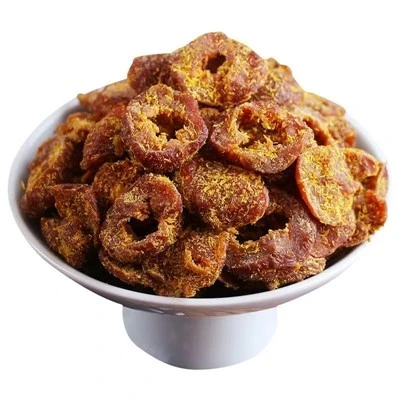
As a supplier who’s built my business on understanding these fruits inside and out, I can say with certainty that both apricots and plums are versatile, flavorful, and bring unique acidity to any recipe. The key is choosing the right batch for your needs. If you’re looking for consistent, high-quality apricots and plums for jams, baked goods, savory dishes, or any other use, we have relationships with trusted farms across the globe, and we can tailor orders to match your specific flavor requirements. Don’t hesitate to reach out to our team to discuss your needs—we’re here to help you pick the perfect fruit for your project.
Dried Fruit Snacks References
- USDA Food Composition Database. (2023). Nutrient Data for Apricots, Raw.
- USDA Food Composition Database. (2023). Nutrient Data for Plums, Raw.
- Kader, A. A. (2002). Postharvest Technology of Horticultural Crops. University of California Agriculture and Natural Resources.
- Singleton, V. L., & Esau, R. (1969). Acid content and pH of stone fruits as related to variety, maturity, and growing conditions. Journal of the American Society for Horticultural Science.
- Steingass, C. B., et al. (2016). Sensory and chemical properties of apricots (Prunus armeniaca L.) as affected by genotype and growing location. Food Chemistry.
Gayafru Food (Hangzhou) Co., Ltd.
As one of the most professional apricot and plum manufacturers and suppliers in China, we have world-leading production equipment and strong manufacturing capabilities. Please rest assured to buy bulk high quality apricot and plum made in China here from our factory.
Address: 2nd Floor, Building 5, No.513-523 Shunda Road, Economic and Technological Development Zone, Linping District, Hangzhou City, Zhejiang Province, China
E-mail: shenhuafang216@foxmail.com
WebSite: https://www.gayafru.com/
