Hey there! I’m part of a substation structures supplier team, and today I want to chat about how substation structures are integrated with other power system components. It’s a super important topic in the power industry, and I’m stoked to share some insights from our side of the business. Substation Structures

First off, let’s talk about what substation structures actually are. Simply put, they’re the physical frameworks that hold all the electrical equipment in a substation. Think of them as the "bones" of the substation, providing support and stability for transformers, circuit breakers, disconnect switches, and all the other gadgets that make the power system work.
Now, let’s dig into how these structures are integrated with other power system components. One of the key aspects is the electrical connection. Substation structures need to be designed in a way that allows for easy and safe connection of all the electrical equipment. This means that the placement of busbars, which are like the highways for electricity in a substation, needs to be carefully planned. The structures should provide proper mounting points for the busbars, ensuring that they are securely attached and have the right electrical clearance to prevent any short – circuits.
For example, when we’re designing a substation structure for a large transformer, we have to consider how the transformer’s leads will connect to the busbars. The structure needs to have enough space and the right configuration to accommodate these connections. We also need to make sure that the structure can handle the physical stress that comes with the weight of the transformer and the vibrations it generates during operation.
Another important integration point is with the grounding system. A proper grounding system is crucial for the safety and reliability of the power system. Substation structures play a vital role in this. They need to be properly grounded themselves, and they also need to provide a connection path for the grounding of other electrical equipment. This helps to protect the equipment from lightning strikes and other electrical faults.
When we’re building a substation structure, we install grounding rods around the perimeter and connect them to the structure using grounding conductors. Then, all the electrical equipment in the substation is connected to the grounded structure. This creates a low – resistance path for electrical current to flow into the ground in case of a fault, preventing damage to the equipment and ensuring the safety of the personnel working in the substation.
Substation structures also need to integrate well with the protection and control systems. These systems are responsible for monitoring the electrical parameters in the substation, detecting faults, and taking appropriate actions to isolate the faulty section. The structure needs to provide space for mounting the protection relays, control panels, and communication equipment.
We often have to work closely with the electrical engineers who are designing the protection and control systems. They tell us where they need to place the equipment, and we design the structure accordingly. For instance, if they need to install a large number of control panels, we’ll make sure the structure has enough room and the right access points for easy maintenance.
Communication is another crucial aspect of integration. In modern power systems, there is a lot of data that needs to be transmitted between different components of the substation and between the substation and the control center. Substation structures need to support the installation of communication cables, such as fiber – optic cables.
We have to design the structure in a way that protects these cables from physical damage. This may involve installing cable trays or conduits on the structure. The cables need to be routed in an organized manner to avoid interference and to ensure reliable data transmission.
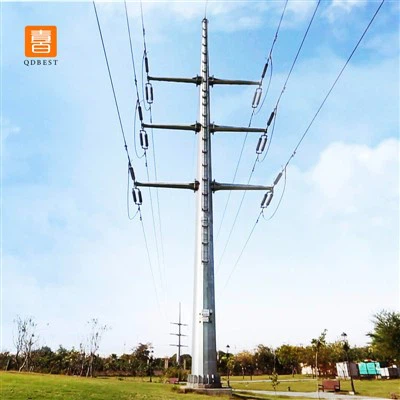
When it comes to integration with the power grid, substation structures are like the gateways. They connect the local substation to the larger power grid. The transmission lines that carry electricity from the power plant to the substation are connected to the substation’s incoming terminals, which are mounted on the structure.
We need to make sure that the structure can handle the mechanical forces exerted by the transmission lines, such as the tension and wind loads. The design also needs to take into account the future expansion of the power grid. If there are plans to add more transmission lines or increase the capacity of the existing ones, the substation structure should be able to accommodate these changes without major modifications.
In addition to the technical aspects, we also have to consider the environmental factors. Substation structures are often located in outdoor environments, and they need to withstand various weather conditions. This means using materials that are resistant to corrosion, such as galvanized steel or fiberglass.
We also have to design the structure in a way that minimizes the impact of wind, rain, and snow. For example, we may use aerodynamic shapes to reduce wind resistance or add proper drainage systems to prevent water accumulation.
At our company, we’ve been in the business of supplying substation structures for a long time, and we’ve learned a lot about how to make these integrations work. We work closely with our clients, which include power utilities, independent power producers, and engineering firms. We start by understanding their specific requirements and the overall design of the power system.
Then, we use our engineering expertise to come up with a substation structure design that not only meets the technical specifications but also fits well with the other power system components. We use advanced 3D modeling software to visualize the design and make sure that all the components can be integrated smoothly.
Once the design is finalized, we manufacture the substation structure in our state – of – the – art facility. We pay close attention to quality control, ensuring that every part of the structure meets the highest standards. After manufacturing, we provide installation and commissioning services, working hand – in – hand with the other contractors involved in the project to make sure that the integration is seamless.
If you’re involved in a power system project and you’re looking for high – quality substation structures that integrate well with other components, we’d love to talk to you. Our team of experts is always ready to help you find the best solution for your needs. Whether you’re building a new substation or upgrading an existing one, we can provide you with the right substation structures and the support you need throughout the project. So, don’t hesitate to reach out to us and start a conversation about how we can work together.
Tubular Tower References
- Power System Engineering Handbook, various authors
- Electrical Substations Engineering, Turan Gonen
Qingdao BEST Steel Structure Co., Ltd.
Qingdao BEST Steel Structure Co., Ltd. is one of the most professional substation structures manufacturers and suppliers in China. We warmly welcome you to buy customized substation structures made in China here from our factory. If you have any enquiry about OEM service, please feel free to email us.
Address: Jiaobei Industrial Park, Qingdao, China
E-mail: sales@qdbsstower.com
WebSite: https://www.qdbsstower.com/
