Hey there! I’m a supplier of product specifications, and I’ve been in this game for quite a while. One question that pops up a lot is, "Are product specifications used in product performance evaluation?" Well, let’s dive right into it. Product Specification

First off, what are product specifications? In simple terms, they’re like a detailed blueprint of a product. They tell you everything about what a product should be like – its size, materials, features, and all the technical details. For example, if you’re talking about a smartphone, the specs would include things like the screen size, processor speed, battery capacity, and camera resolution.
Now, why are these specs so important in product performance evaluation? Let me break it down.
1. Setting the Benchmark
Product specifications set the standard for how a product should perform. When you develop a product, you base it on certain goals and requirements. These are written down in the specs. So, when it comes time to evaluate the product, you can compare its actual performance against these pre – set standards.
Take a car for instance. The specs might say that it should be able to accelerate from 0 to 60 miles per hour in 6 seconds. When you test the car, you see if it can actually meet this target. If it can, great! The car is performing as expected. But if it takes 8 seconds, then you know there’s an issue that needs to be addressed.
2. Quality Control
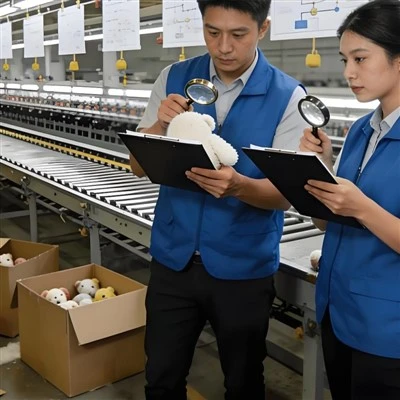
Specifications are a key part of quality control. They help manufacturers ensure that every single product coming off the production line meets the same high – quality standards. By referring to the product specs during the manufacturing process, workers can check if each item is being made correctly.
Let’s say you’re making clothing. The specs will define the fabric type, the stitching quality, and the sizing. During production, you can use these specs to inspect each piece of clothing. If a shirt is made with the wrong fabric or has loose stitches, it doesn’t meet the specs, and it can be rejected before it reaches the customer. This way, product specifications help in maintaining a consistent level of quality across all products.
3. Customer Expectations
Customers also rely on product specifications to understand what they’re buying. When they look at the specs of a laptop, for example, they can get an idea of its processing power, memory, and storage capacity. Based on these specs, they set their expectations for the laptop’s performance.
If the laptop’s actual performance doesn’t match up to the specs, customers are likely to be disappointed. So, during product performance evaluation, companies need to make sure that they’re meeting these customer – facing promises. After all, happy customers mean repeat business and good word – of mouth.
4. Competing in the Market
In today’s competitive market, product specifications play a huge role in differentiating your product from the competition. Suppose you’re selling headphones. Your product might have a spec that says it has noise – canceling technology with a certain level of effectiveness. This is a feature that can set your headphones apart from others on the market.
When evaluating the product performance, you need to ensure that the noise – canceling feature actually works as advertised. If it does, you can highlight this in your marketing and gain an edge over your competitors.
Challenges in Using Product Specifications for Performance Evaluation
Of course, it’s not all smooth sailing. There are some challenges when using product specifications for performance evaluation.
One challenge is the accuracy of the specs themselves. Sometimes, specs can be a bit too optimistic or not fully representative of real – world conditions. For example, a battery’s spec might say it has a certain battery life, but in actual use, factors like screen brightness, background apps, and network connectivity can greatly affect how long the battery really lasts.
Another challenge is the interpretation of the specs. Different people might understand the same spec in different ways. For example, what one person considers "high – resolution" might be different from what another person thinks. This can lead to misunderstandings during the performance evaluation process.
Real – World Examples
Let’s look at a few real – world examples to see how product specifications are used in product performance evaluation.
In the tech industry, Apple is well – known for its strict product specifications. When they release a new iPhone, the specs are highly anticipated. They set the bar for features like camera quality, display resolution, and battery life. Apple conducts rigorous performance evaluations to ensure that the iPhone meets or exceeds these specs. If the battery life doesn’t match the advertised spec, they’ll work to find a solution, whether it’s improving the battery technology or optimizing the software.
In the automotive industry, Tesla has disrupted the market with its electric cars. Their product specifications focus on things like range, acceleration, and self – driving capabilities. Tesla continuously evaluates the performance of their cars against these specs. They use over – the – air software updates to improve performance and fix any issues that might be discovered during evaluation.
Our Role as a Product Specification Supplier
As a product specification supplier, we play a crucial role in this whole process. We work closely with manufacturers to create accurate and detailed product specs. We understand the importance of getting these specs right, as they form the basis for product performance evaluation.
We use our industry knowledge and expertise to ensure that the specs are realistic and achievable. We also help in updating the specs as technology evolves and market demands change. By providing high – quality product specifications, we’re helping manufacturers produce better products and meet their performance goals.
Conclusion
So, to answer the question, "Are product specifications used in product performance evaluation?" – absolutely! They’re an essential part of the process. They set the benchmark, aid in quality control, manage customer expectations, and help in competing in the market.
Quality System Audit If you’re a manufacturer looking for reliable product specifications, we’d love to have a chat with you. We’ve got the experience and know – how to provide you with the best specs for your products. Whether you’re in the tech, automotive, clothing, or any other industry, we can help you define and refine your product specifications to ensure successful performance evaluation. Reach out to us to start the conversation and take your product to the next level.
References
- Anderson, P. (2019). Product Management in the Digital Age. Wiley.
- Kotler, P., & Armstrong, G. (2018). Principles of Marketing. Pearson.
- Ulrich, K. T., & Eppinger, S. D. (2016). Product Design and Development. McGraw – Hill.
Verittek Standards Co., Ltd.
As a professional product specification service provider in China, we help clients improve overall product quality and stability by providing third-party inspection services. If you have any enquiry about cooperation, please feel free to email us.
Address: Room 1002, Building 1, Tian’an Industrial Building, Panyu Energy Saving Technology Park, No.555 North Panyu Avenue, Donghuan Street, Panyu District, Guangzhou City, China.
E-mail: sales@verittek.com
WebSite: https://www.verittek.com/
