What is the Hydraulic Resistance of Tubular Modules?
As a supplier of tubular modules, I’ve often been asked about hydraulic resistance. It’s a concept that is fundamental to understanding the performance and efficiency of tubular modules in various applications. In this blog, I’ll delve into what hydraulic resistance is, why it matters in tubular modules, and how it impacts your systems. Tubular Modules
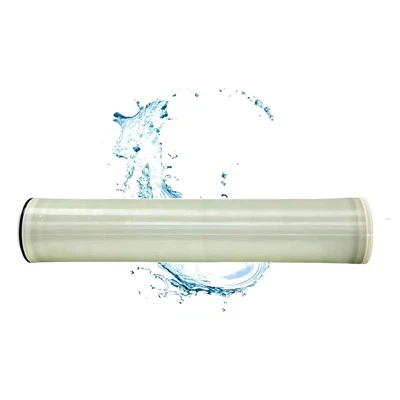
Understanding Hydraulic Resistance
Hydraulic resistance, in simple terms, is the opposition that a fluid (such as water or a chemical solution) encounters as it flows through a conduit. In the context of tubular modules, these conduits are the tubes themselves. When a fluid moves through a tube, it experiences frictional forces between the fluid molecules and the inner surface of the tube. This friction creates a resistance to the flow, and this is what we refer to as hydraulic resistance.
The concept of hydraulic resistance is based on the principles of fluid mechanics. According to Poiseuille’s law, for a laminar flow of a viscous fluid through a cylindrical tube, the volumetric flow rate (Q) is related to the pressure difference (ΔP) across the ends of the tube, the radius (r) of the tube, the length (L) of the tube, and the dynamic viscosity (μ) of the fluid. The law is expressed as:
[Q=\frac{\pi r^{4}\Delta P}{8\mu L}]
From this equation, we can see that the flow rate is inversely proportional to the length of the tube and the viscosity of the fluid, and directly proportional to the fourth power of the tube radius and the pressure difference. The hydraulic resistance (R) can be defined as the ratio of the pressure difference to the flow rate:
[R = \frac{\Delta P}{Q}=\frac{8\mu L}{\pi r^{4}}]
This equation shows that the hydraulic resistance increases with the length of the tube and the viscosity of the fluid, and decreases with the fourth power of the tube radius. This means that even a small change in the tube radius can have a significant impact on the hydraulic resistance.
Importance of Hydraulic Resistance in Tubular Modules
In tubular modules, hydraulic resistance plays a crucial role in determining the overall performance and efficiency of the system. Here are some of the key reasons why it matters:
Energy Consumption
Higher hydraulic resistance means that more energy is required to maintain a certain flow rate. In a tubular module system, this energy is typically provided by a pump. If the hydraulic resistance is too high, the pump has to work harder, consuming more electricity and increasing operating costs. By optimizing the hydraulic resistance, we can reduce the energy consumption of the system and make it more cost – effective.
Flow Distribution
Uneven hydraulic resistance in different tubes of a tubular module can lead to non – uniform flow distribution. Some tubes may receive more fluid flow than others, which can affect the efficiency of processes such as filtration, heat transfer, or chemical reactions that occur within the tubes. For example, in a membrane filtration tubular module, if some tubes have a higher hydraulic resistance, they may become clogged more quickly, reducing the overall filtration efficiency of the module.
Pressure Drop
The pressure drop across a tubular module is directly related to the hydraulic resistance. A large pressure drop can cause problems such as damage to the module components, especially in high – pressure applications. It can also limit the maximum flow rate that can be achieved in the system. By managing the hydraulic resistance, we can control the pressure drop and ensure the safe and efficient operation of the tubular module.
Factors Affecting Hydraulic Resistance in Tubular Modules
Several factors can influence the hydraulic resistance in tubular modules. Understanding these factors is essential for optimizing the design and performance of the modules.
Tube Geometry
The radius and length of the tubes are the most significant geometric factors affecting hydraulic resistance. As mentioned earlier, the hydraulic resistance is inversely proportional to the fourth power of the tube radius. So, even a slight increase in the tube radius can significantly reduce the hydraulic resistance. On the other hand, increasing the length of the tube will increase the hydraulic resistance.
The inner surface roughness of the tubes also plays a role. A rougher surface will create more friction between the fluid and the tube wall, increasing the hydraulic resistance. Tube manufacturers often use smooth – walled tubes to minimize this effect.
Fluid Properties
The viscosity of the fluid is a key property that affects hydraulic resistance. Fluids with higher viscosity, such as thick oils or syrups, will experience more resistance to flow compared to low – viscosity fluids like water. Temperature can also affect fluid viscosity. For most fluids, viscosity decreases with increasing temperature. So, in applications where the fluid temperature can vary, the hydraulic resistance may also change accordingly.
The density of the fluid can also have an impact, especially in turbulent flow conditions. In turbulent flow, the inertial forces of the fluid become more significant, and the density of the fluid can affect the energy losses due to turbulence.
Flow Regime
The flow regime, whether laminar or turbulent, can greatly influence the hydraulic resistance. In laminar flow, the fluid moves in smooth, parallel layers, and the frictional forces dominate. The hydraulic resistance in laminar flow can be accurately predicted using Poiseuille’s law. However, in turbulent flow, the fluid has chaotic motion, and there are additional energy losses due to eddies and vortices. The hydraulic resistance in turbulent flow is generally higher than in laminar flow and is more complex to calculate.
The transition from laminar to turbulent flow depends on the Reynolds number (Re), which is a dimensionless quantity that relates the inertial forces to the viscous forces in the fluid. The Reynolds number is calculated as:
[Re=\frac{\rho vd}{\mu}]
where ρ is the fluid density, v is the average fluid velocity, d is the tube diameter, and μ is the fluid viscosity. For flow in a circular tube, the flow is typically laminar when Re < 2000 and turbulent when Re > 4000.
Measuring and Controlling Hydraulic Resistance
Measuring the hydraulic resistance in tubular modules is important for evaluating their performance and optimizing their design. There are several methods that can be used to measure hydraulic resistance:
Pressure Drop Measurement
One of the most common methods is to measure the pressure drop across the tubular module using pressure sensors. By measuring the pressure at the inlet and outlet of the module and knowing the flow rate, the hydraulic resistance can be calculated as the ratio of the pressure drop to the flow rate.
Flow Rate Measurement
Another approach is to measure the flow rate through the module at a known pressure difference. By adjusting the pressure and measuring the corresponding flow rates, the relationship between pressure and flow rate can be determined, and the hydraulic resistance can be calculated.
To control the hydraulic resistance in tubular modules, we can take several measures:
Tube Design
Optimizing the tube radius and length can significantly reduce the hydraulic resistance. For example, using larger – diameter tubes or reducing the length of the tubes can decrease the resistance. Additionally, ensuring a smooth inner surface of the tubes can minimize frictional losses.
Fluid Management
Controlling the fluid properties, such as temperature and viscosity, can also affect the hydraulic resistance. For example, heating a viscous fluid can reduce its viscosity and therefore lower the hydraulic resistance.
Flow Regulation
In some cases, adjusting the flow rate or using flow control devices can help manage the hydraulic resistance. For example, installing valves or flow restrictors can control the pressure drop and ensure a more uniform flow distribution.
Conclusion

In conclusion, hydraulic resistance is a critical factor in the performance and efficiency of tubular modules. As a tubular module supplier, we understand the importance of managing hydraulic resistance to ensure that our products meet the needs of our customers. By considering factors such as tube geometry, fluid properties, and flow regime, we can design and manufacture tubular modules with optimal hydraulic resistance.
Containerized Water Treatment System If you are in the market for tubular modules and want to learn more about how our products can be tailored to your specific hydraulic requirements, we invite you to contact us for a procurement discussion. We have a team of experts who can provide you with detailed information and guidance to help you make the best decision for your application.
References
- White, F. M. (2006). Fluid Mechanics (6th ed.). McGraw – Hill.
- Bird, R. B., Stewart, W. E., & Lightfoot, E. N. (2007). Transport Phenomena (2nd ed.). Wiley.
- Mickley, H. S., Sherwood, T. K., & Reed, C. E. (1957). Applied Mathematics in Chemical Engineering. McGraw – Hill.
Hangzhou Nanoimp Environmental Technology Co., Ltd.
With abundant experience, we are one of the most professional tubular modules manufacturers and suppliers in China. Welcome to wholesale high quality tubular modules in stock here and get pricelist from our factory. We also accept customized orders.
Address: Road 25, Baiyang Street, Qiantang District, Hangzhou City, Zhejiang Province
E-mail: keith.wang@nano-sepmer.com
WebSite: https://www.nanoimp-membrane.com/
