Hey everyone, it’s Jake here, and if you’ve ever had to deal with grain that just won’t stop going bad in the bin, you know how much of a headache it is. A while back, I was talking to a local farmer, Mike, who lost like 20% of his corn crop last winter because he tried to skip a proper dry job—said he thought “air-drying it in the field” would work, but nope, by December, half of it was moldy and unfit to sell. That’s when I realized a lot of folks don’t really get what low moisture grain drying actually is, and why it’s not just a “nice-to-have” but a make-or-break step for anyone growing grain for a living. Today, I’m breaking it down like I would over a cup of coffee at the feed store, no fancy ag jargon that makes your eyes glaze over. Grain Dryer
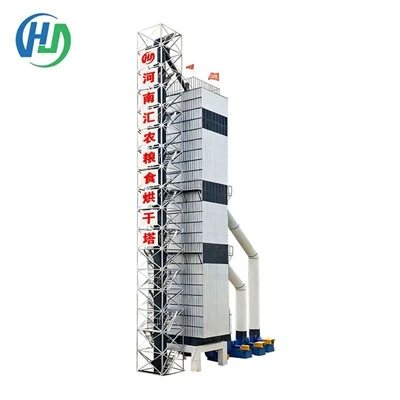
First off, let’s keep it simple: low moisture grain drying is the process of removing excess water from freshly harvested grain to get it to a specific, safe moisture level—usually between 10% and 14%, depending on what grain you’re working with. Wait, but why not just leave it in the field until it’s dry on its own? I get the urge—save on equipment costs, right? But field drying has major flaws. For one thing, weather’s totally out of our control. One week of rain, a early frost, or even just high humidity can undo weeks of waiting, and suddenly your grain’s sitting at 18% moisture or higher, which is prime real estate for mold, bacteria, and even bugs. Last harvest season, I had a customer whose soybeans went from 16% to 22% moisture in 48 hours because of a random thunderstorm—by the time he got them into a standard dryer, half the load was already starting to heat up, and he lost 10% to mold before we could get it cured. That’s the kind of hit that makes a farmer’s quarterly profit vanish fast.
Now, let’s talk about what “low moisture” actually means, because it’s not one-size-fits-all. Corn, for example, needs to get down to 13-14% for long-term storage (like if you’re keeping it to feed livestock or sell next spring). Wheat’s a little different—usually 12-13%, because lower moisture helps preserve its protein content, which is what buyers pay top dollar for. Even things like oats and barley have their own sweet spot, around 12-14%. If you go too low, you start running into issues too—grain gets brittle, cracks when you handle it, which can mess up germination if you’re saving seed, or even lower the quality for ethanol production if that’s your market. I’ve seen guys dry corn down to 8% because they thought “drier is safer,” but when it went through a combine, half the kernels cracked, and the buyer docked them 15% on the load. So it’s a balance—getting to that safe, specific level without overdoing it.
How does low moisture grain drying work, exactly? Let’s walk through the basics, no fancy engineering degree required. Freshly harvested grain has a lot of “free water” on the surface and inside the kernels—way more than it needs to stay stable. The dryer’s job is to pull that water out slowly and evenly, using controlled airflow and heat. Wait, “controlled” is the key word here. If you blast grain with too much hot air too fast, the outside of the kernels dries first, which traps moisture inside. That leads to “core heating” in storage—you know, that musty smell when you open a bin, or even worse, spontaneous combustion if it’s really bad. Low moisture drying uses lower, more consistent temperatures (usually between 100°F and 180°F, depending on grain type) and good, steady air flow to make sure every kernel loses moisture at the same rate. For small batch drying, that might be a batch dryer that loads up, runs through a cycle, and unloads. For larger operations, continuous flow dryers move grain slowly through a heated air stream, so it’s drying 24/7 during harvest, which is perfect because harvest season doesn’t wait around for bad weather.
A lot of folks ask me, “Why low moisture instead of just regular drying?” Great question. The biggest benefit is storage life. If grain’s at that 10-14% sweet spot, it can sit in a bin for 6+ months (or longer, if you have aeration fans) without molding, heating up, or getting infested. Last year, a customer stored his wheat at 12% moisture over the winter, and when he sold it in March, it tested at full protein—he got $2 more a bushel than the guy down the road who stored his at 16% and lost 5% to mold. Low moisture drying also cuts down on transportation costs. If your grain’s at 18% moisture, that’s 18 pounds of water for every 100 pounds of grain—you’re paying to haul extra weight, which adds up when you’ve got thousands of bushels. Dry it to 14%, and that extra weight’s gone, so every truckload is more profitable.
Another big plus: pest control. Most grain bugs (like weevils) can’t survive in grain with moisture below 13%. So if you dry to low moisture, you don’t need to use as many fumigants, which is better for the environment and saves you money on chemicals. I had a small-scale soybean grower come to me last fall—he was using a fumigant every 3 months because his grain was staying at 15% moisture. We dried it to 12%, and he hasn’t needed a single fumigant since. That’s hundreds of dollars he’s saving that he can put back into his operation.
Now, let’s get real about common mistakes guys make with low moisture drying. First, skipping the pre-drying cleaning step. If your grain’s full of dirt, straw, or broken kernels, that stuff traps moisture, so your dryer has to work harder, and some kernels won’t dry evenly. It’s like trying to dry a wet towel that’s wrapped in a plastic bag—no good. I always tell customers to run their grain through a cleaner first to get rid of debris, it cuts down drying time by like 20% and gives you more consistent results.
Second, not monitoring moisture levels during the process. You can’t just set the dryer and walk away. If you pull grain out too early, it’s too wet and will mold in the bin. If you leave it in too long, you get brittle kernels that crack. We recommend using a portable moisture tester (way cheaper than losing a whole load!) to check levels mid-cycle. For larger dryers, you can even get automated sensors that track moisture in real time, so you get an alert when it’s at the perfect level. I’ve had guys call me panicking at 2 a.m. because their dryer stopped working and they didn’t check the moisture—don’t be that guy. Invest in a cheap tester, it’s worth every penny.
Third, ignoring post-drying cooling. This is super important! When grain comes out of the dryer, it’s warm—like 100°F or more. If you put warm grain straight into a bin, it cools down slowly, which creates condensation inside the bin. That moisture condenses on the top layer of grain, and boom—mold. So you have to cool the grain down to ambient temperature before storing it. Most good dryers work with aeration fans, so after the drying cycle, you can run cool air through the grain for a few hours to get it down to the temperature of the outside air. I once had a customer who skipped this step, put 500 bushels of corn straight into a bin after drying, and by morning, the top 6 inches were moldy. He had to haul it all out and re-dry it, which cost him $1,200 in extra fuel and labor. That’s a lesson hard learned, but one I pass on to every new customer.
Now, if you’re thinking about getting a low moisture grain dryer, you’ve got options, right? Batch dryers for small farms with 1,000 bushels or less, continuous flow dryers for bigger operations that need to handle 10,000+ bushels a day, even portable dryers if you harvest different fields and need to move the dryer around. The key is matching the dryer to your operation size and the grain you grow. I’ve seen guys try to use a small batch dryer for a 50,000 bushel corn crop and end up waiting way too long, missing the harvest window before rain hit. I’ve also seen a big continuous flow dryer sitting in a guy’s pole barn when he only has 500 bushels a year—total waste of money. So talk to someone who knows what they’re doing, ask about fuel efficiency (propane is way cheaper than electricity or oil for most small to mid-sized farms), and make sure it’s easy to use—you don’t want to be fumbling with a complicated machine when you’re tired at 3 a.m. during harvest.
Let’s wrap this up with a quick story that drives home why low moisture drying matters. Last harvest, I worked with a corn farmer named Ray who’s been in the game for 35 years. He tried to skip drying last year, thought he’d get by with aeration fans. His corn came in at 17% moisture, and by mid-October, the bin was smelling like mildew. He called me in a panic, we got his batch dryer running, and we dried it to 13.5%—just in time before the next storm hit. When he sold that corn in January, he got a perfect grade, no dockage, and made an extra $3,800 compared to the neighbor who lost his whole load to mold. Ray told me, “I thought drying was just turning a knob and waiting, but that low moisture stuff isn’t just about not losing the crop—it’s about making money off it.” That’s exactly it. At the end of the day, farming’s a business, and every bushel you save, every dollar you don’t lose to mold or broken kernels, adds up.
If you’re dealing with grain spoilage, tight harvest windows, or just tired of losing money on loads that go bad in storage, let’s chat. I’ve helped hundreds of farmers figure out the right low moisture drying setup for their operation, no pressure, just straight talk like I’d give my own brother. Shoot me a message, or reach out whenever works for you—we can walk through what you need, answer any questions, no fancy sales pitch, just real help for real farmers.
Grain Processing Equipment References:
- USDA Agricultural Marketing Service. (2022). Grain Storage and Drying Guidelines.
- ASABE Standards. (2021). Practice S454: Moisture Measurement for Grains and Seeds.
- Sauer, D. B. (2020). Grain Drying and Storage: A Practical Guide for Producers. St. Joseph, MI: American Society of Agricultural and Biological Engineers.
Henan Huinong Machinery Co., Ltd.
Henan Huinong Machinery Co., Ltd. is one of the most professional grain dryer manufacturers and suppliers in China, featured by quality products and low price. Please rest assured to buy discount grain dryer from our factory. We also accept customized orders.
Address: No.6, Northeast Corner of the Intersection of Renmin Road and Zhujiang Road, New District, Huaxian County, Henan Province
E-mail: frank.tang@huinongmachinery.com
WebSite: https://www.huinongmachinery.com/
